A simple, step-by-step way to wrap Christmas tree lights so they glow evenly from trunk to tips, plus a lights-per-foot guide, safety checks, and plug-hiding...
The Festive Dwell
Warm White vs. Cool White Christmas Lights
See how warm white and cool white Christmas lights look on a tree, a mantel, and your home’s exterior, including flocked branches and nighttime photos. Learn why mixing tones often clashes and how to choose the right color temperature for your style.

Clara Jenkins
Clara Jenkins is a former visual merchandiser and lifelong holiday enthusiast who believes every season is worth celebrating. She helps readers transform their everyday spaces into magical, welcoming homes through budget-friendly DIYs, elegant tablescapes, and clever styling tricks. When she isn't untangling fairy lights or hot-gluing autumn wreaths, Clara can be found hunting for vintage ornaments at local flea markets.
Published November 17, 2026
I learned the hard way that “white” Christmas lights are not all the same. One December, I added a new box of “white” mini lights to my tree halfway through decorating, plugged everything in, and immediately thought, “Why does my tree look like it’s wearing two different foundations?” It was not subtle. Half the lights glowed like candlelight, and the other half looked crisp and icy. Ever since, I treat warm white vs. cool white like I treat paint undertones. If you see it once, you cannot unsee it.
Let’s walk through what each tone actually looks like on a tree, on a mantel, and outside your house, plus the quickest way to choose a temperature you will love all season.
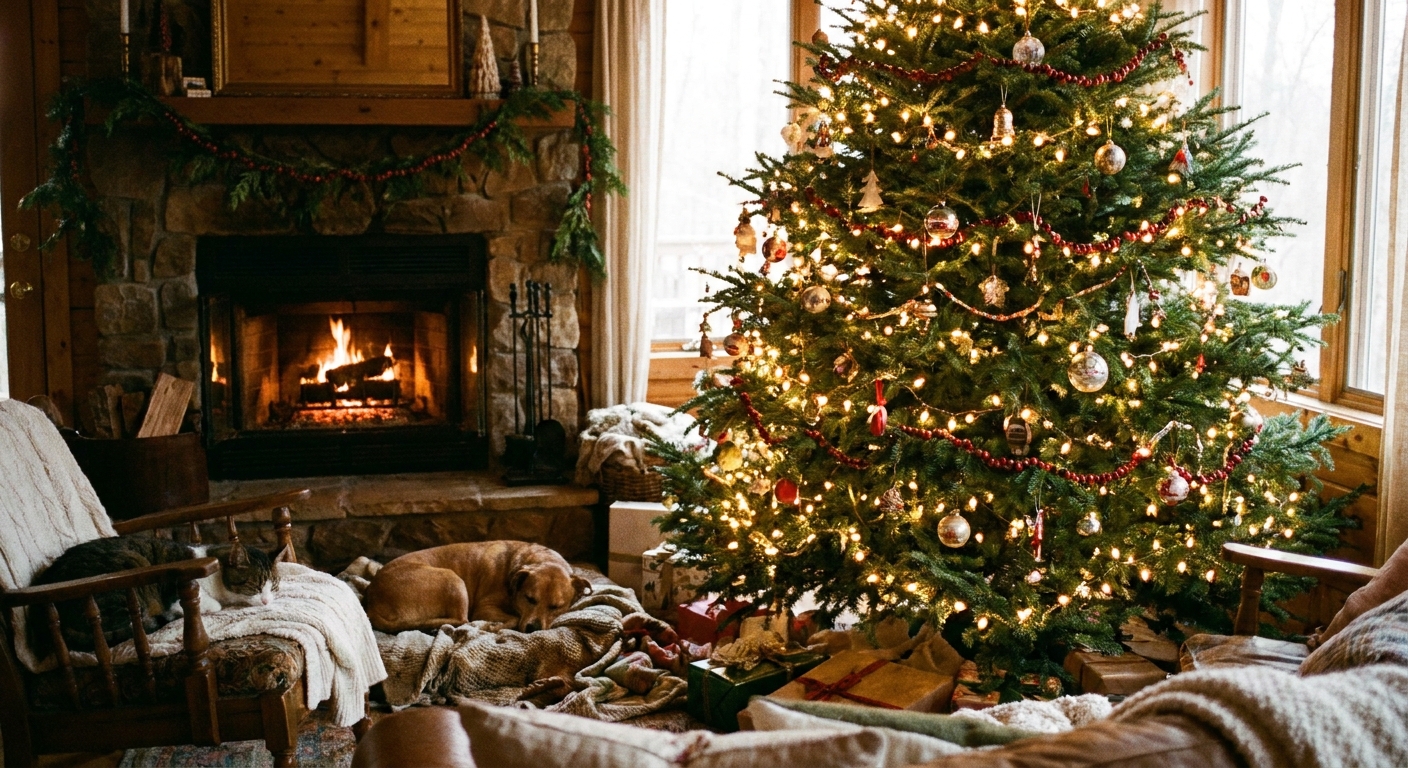
Warm white vs. cool white: what you’re seeing
Warm white looks like candlelight. It has a soft golden, slightly amber cast that makes rooms feel cozy and nostalgic. If you grew up with classic incandescent lights, warm white feels familiar.
Cool white looks bright, crisp, and a little blue-toned. It can feel modern and “clean,” like fresh snow under moonlight or a boutique hotel at the holidays.
If you have ever held two “white” bulbs next to each other and noticed one looks creamy and one looks icy, you have spotted color temperature in action. Brands do not always label it consistently, so trust your eyes and the words on the box when possible: warm white, soft white, and candlelight usually land on the warm side, while cool white, bright white, and daylight usually land on the cool side.
If the packaging lists Kelvin (K), that is the most reliable clue. Typical ranges look like this:
- Warm white: about 2200K to 3000K
- Cool or bright white: about 3500K to 4100K
- Daylight: about 5000K to 6500K
On a Christmas tree: glow and ornament color
Warm white on a tree
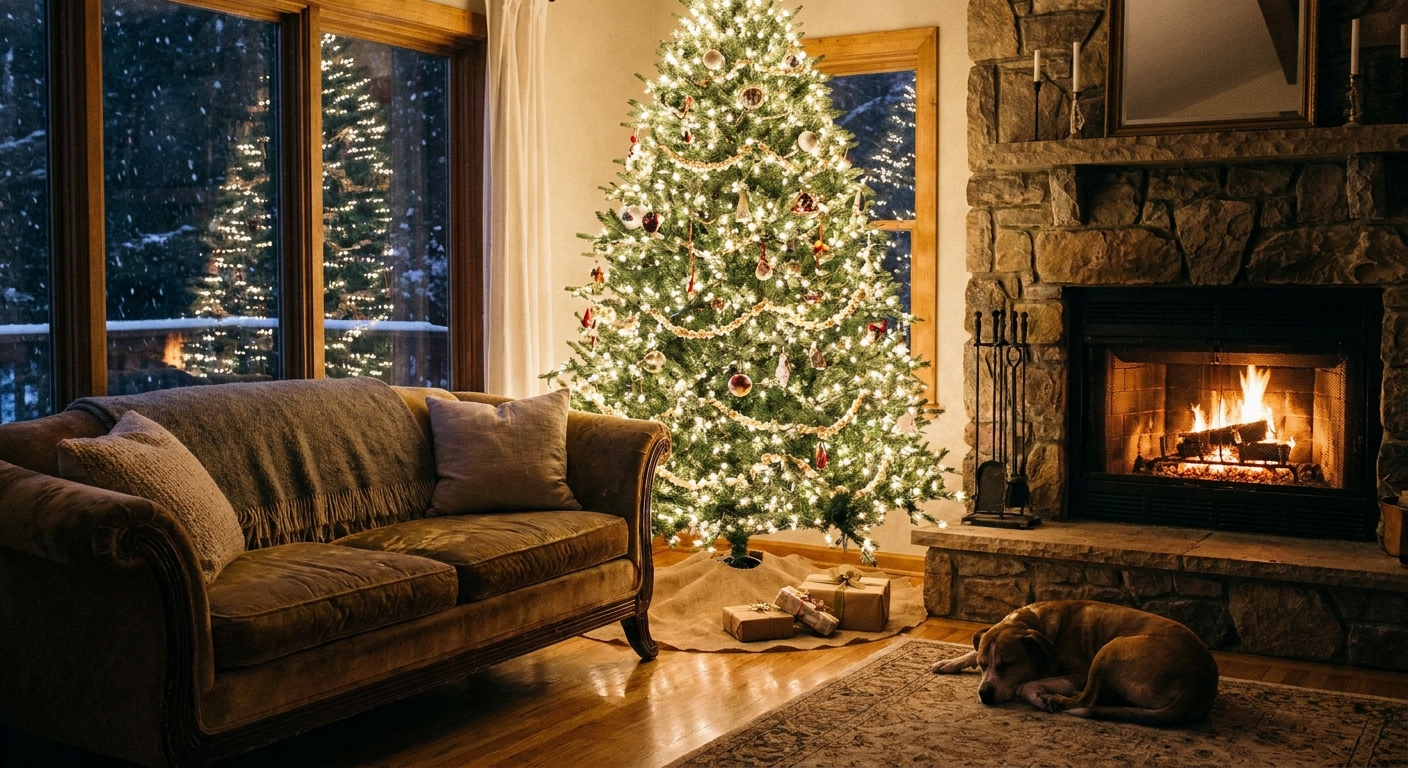
Warm white lights make a tree look fuller and softer because the glow blends into the green. This is why warm white is so forgiving, especially on natural trees where branch density varies.
- Best for: traditional, cozy, vintage, cottage, and “hallmark movie” trees
- Ornaments it flatters: gold, champagne, bronze, wood, felt, velvet, tartan, and anything with warm metallics
- Overall effect: twinkly, inviting, a little nostalgic
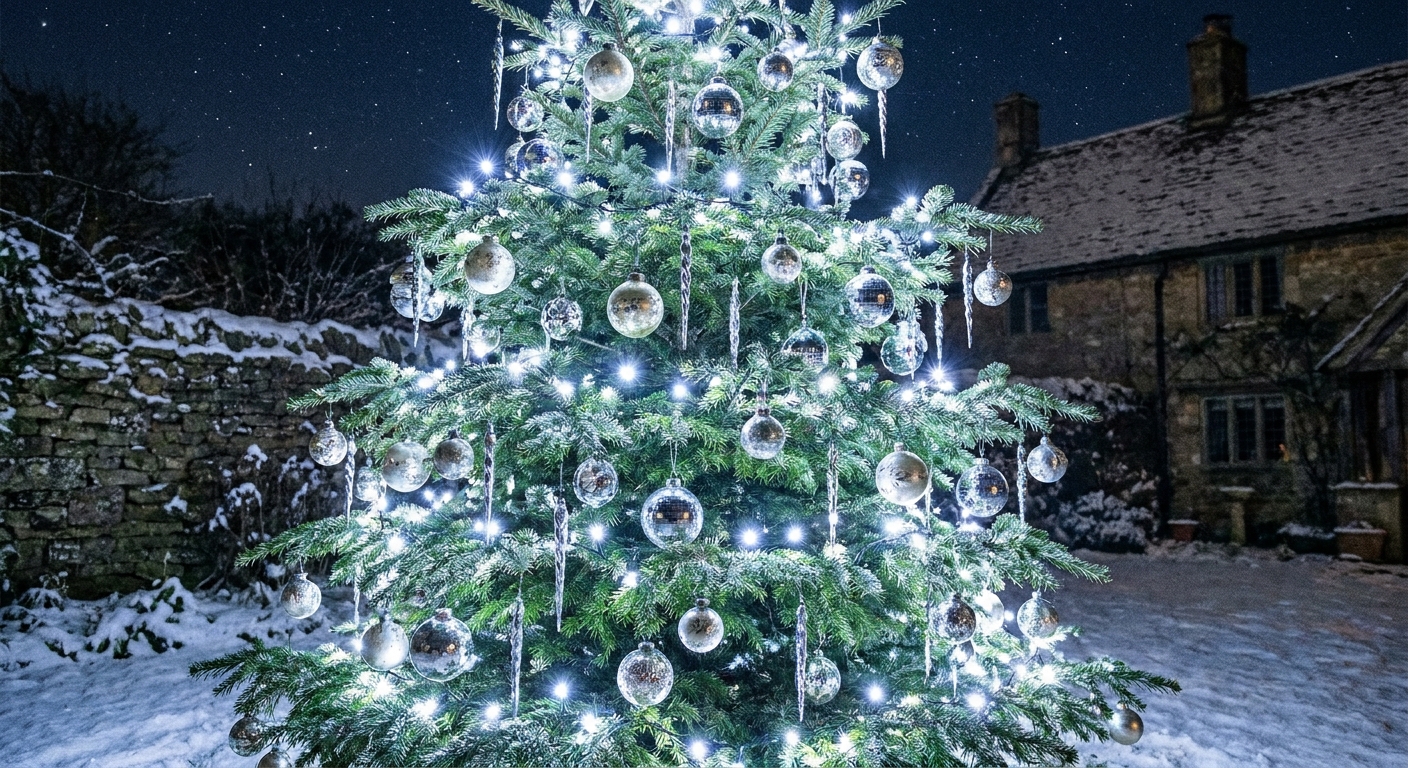
Cool white on a tree
Cool white lights make details pop. You see each point of light more sharply, which can look incredibly sparkly, especially with glass ornaments and reflective finishes.
- Best for: modern, minimalist, glam, winter wonderland, icy, and monochrome trees
- Ornaments it flatters: silver, chrome, clear glass, mirrored finishes, white-on-white, pale blue, and icy pastels
- Overall effect: crisp, bright, high sparkle
Micro-tip from my “do not learn this the hard way” file: Brightness matters as much as temperature. A strand with more bulbs per foot (or higher lumens) will look more sparkly, even if the color temperature is identical.
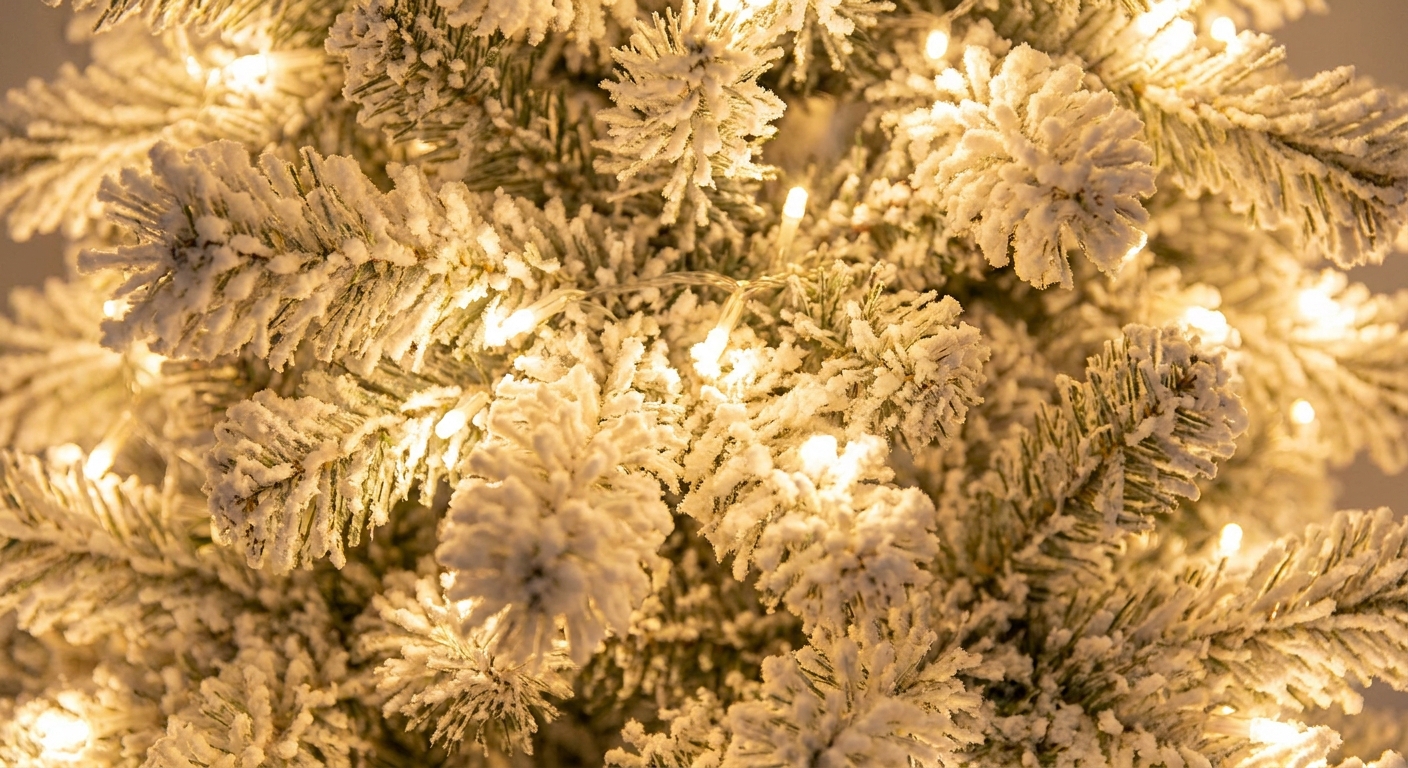
On flocked branches: choose carefully
If there is one place where the difference screams, it is flocking. Flocked trees and garlands are basically little light reflectors.
Warm white on flocking
Warm white makes flocking look creamy and cozy, like fresh snow seen through lamplight. It can read slightly toasty, which is perfect if your home leans traditional and you love warm wood tones, brass, or soft neutrals.
Cool white on flocking
Cool white makes flocking look brighter and whiter, which is gorgeous for a true winter vibe. It can also highlight shadows and texture more strongly, giving flocking a crisp, snowy definition.
Quick tip from my merch days: If your flocking looks a tiny bit beige in daylight, warm white will usually make that feel intentional. If your flocking looks stark white in daylight, cool white will look especially clean and snowy.
On a mantel: match your room lighting
Mantels sit right in the middle of your everyday lighting, which means white temperature matters more than people think. You are not just decorating a holiday moment, you are styling something you see nightly with lamps on and the TV glowing.
Warm white on a mantel
Warm white blends beautifully with most living room lighting, especially if you use warm bulbs in lamps. It smooths everything out and makes greenery look richer. If you love that “gather around” feeling, warm white is usually the safer bet.
- Looks best with: brass, gold frames, warm woods, terracotta, cream stockings, red and green palettes
- Creates: a gentle glow across garland and stockings
Cool white on a mantel
Cool white can look chic and intentional on a mantel when the whole palette supports it. Think white stockings, silver accents, glass, and fewer colors. If your room lighting is already warm, cool white can feel a little sharp unless you keep the rest of the styling clean and minimal.
- Looks best with: silver, black, white, icy blues, clear glass, mirrored decor
- Creates: a crisp outline and higher contrast

Outside: curb appeal and nighttime mood
Outside, temperature is less about cozy versus modern and more about how your home reads from the street. Your siding, brick, stone, and landscaping all bounce light differently.
Warm white outdoors
Warm white tends to look welcoming and classic. On brick and warm-toned stone, it feels seamless, like the house is softly lit from within.
- Best for: traditional homes, historic styles, warm brick, tan stone, and landscapes with lots of evergreens
- Night effect: soft glow, “come on in” warmth
Cool white outdoors
Cool white often reads brighter at a distance, especially when you have high contrast surfaces like white trim, gray siding, or modern architecture. It also pairs naturally with a snowy climate vibe, even if you are just wishing for snow.
- Best for: modern homes, gray or white exteriors, black windows, minimalist landscaping
- Night effect: crisp, high visibility sparkle
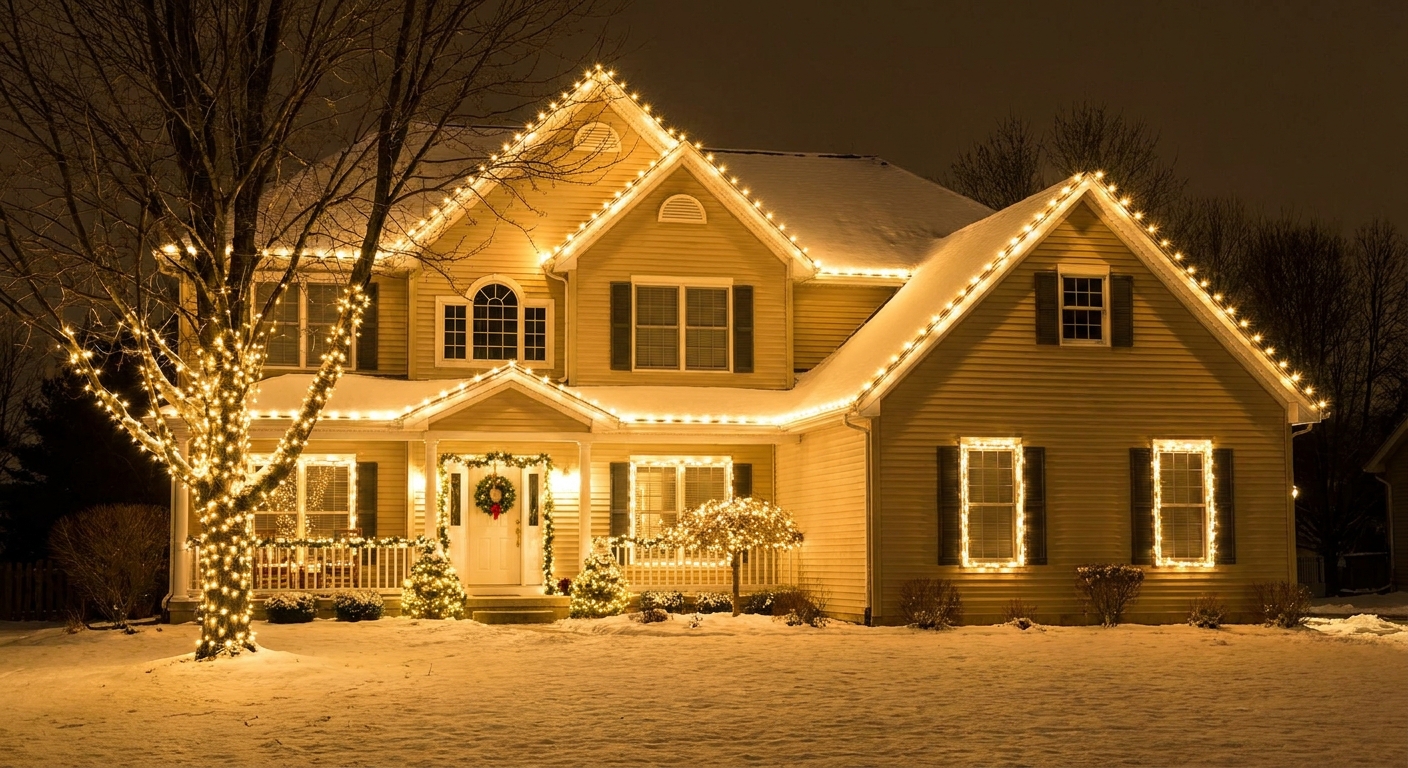
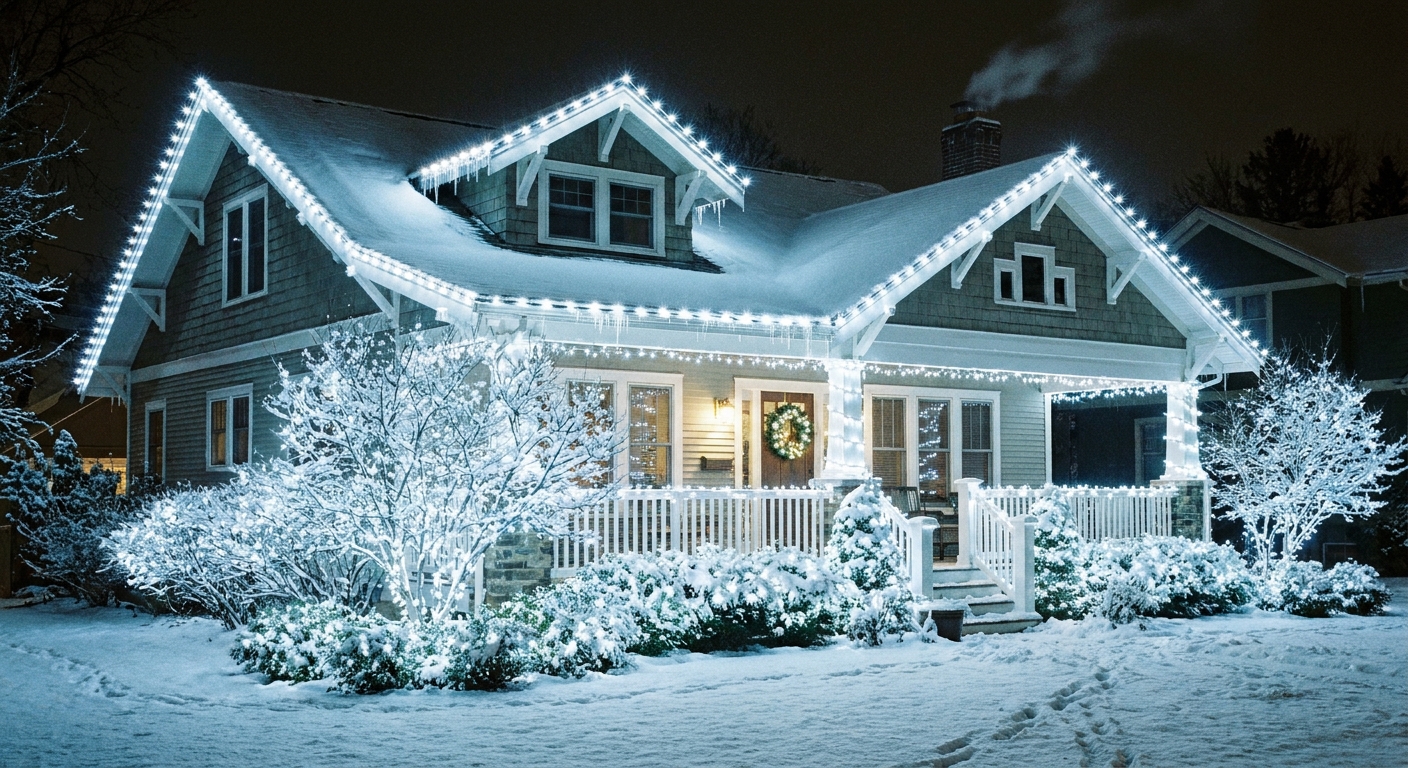
How each tone photographs at night
Here is the funny thing about holiday lights: your phone camera is constantly making decisions for you. It tries to white balance the scene, which can shift how warm or cool the lights look in photos.
- Warm white in photos: often looks extra cozy, sometimes more yellow than it appears in person, especially next to white walls or white ornaments.
- Cool white in photos: often looks very bright and clean, sometimes slightly blue, especially when there is snow or reflective surfaces.
If you care a lot about evening photos for holiday cards or hosting pics, pick the temperature that matches the mood you want the camera to capture. Warm feels intimate. Cool feels crisp and wintry.
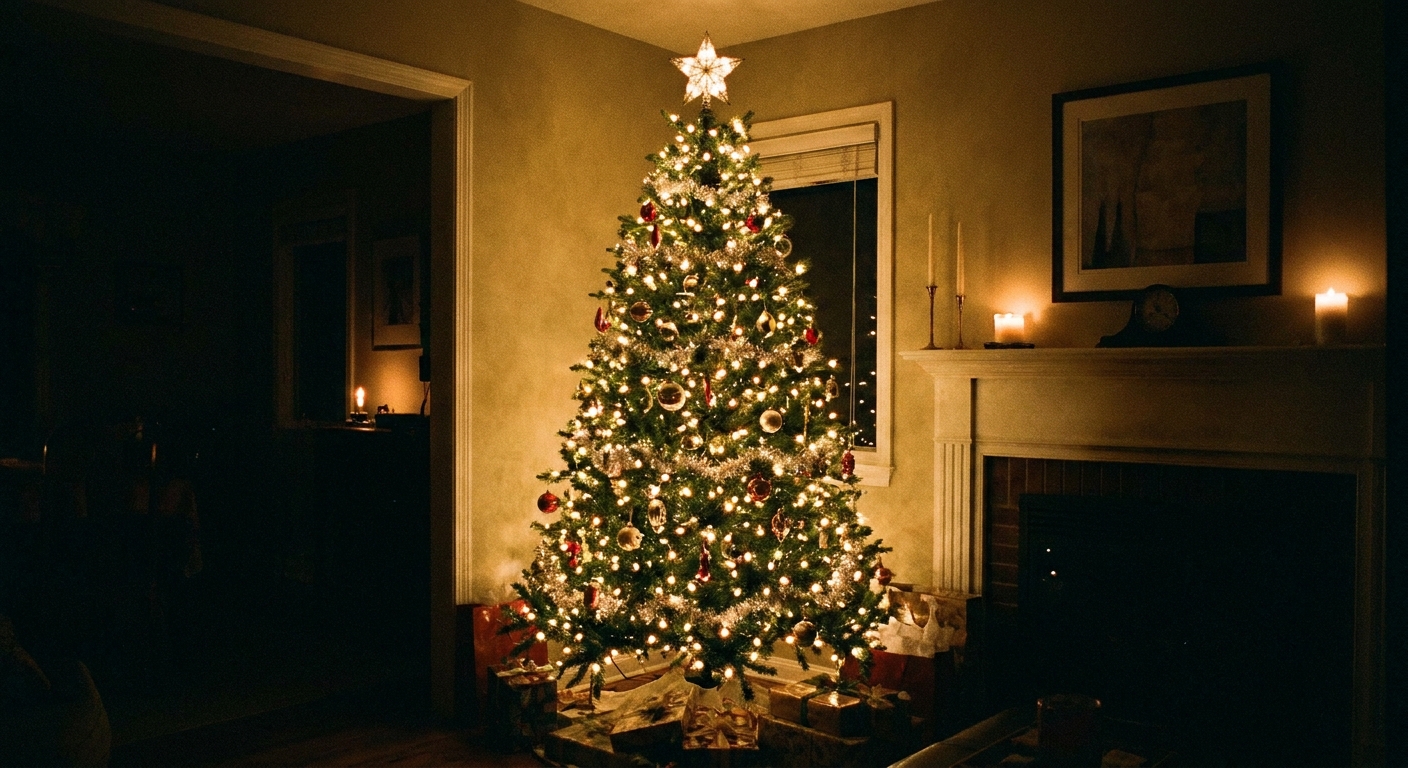
Why mixing warm and cool usually clashes
Mixing warm and cool white in the same visual zone tends to look accidental because your eye treats them like competing color casts, not like a coordinated palette. Instead of layered, it reads mismatched.
The clash is most obvious in these situations:
- On one tree: your ornaments pick up different reflections, so half the tree looks golden and half looks icy.
- Along one mantel garland: the greenery shifts from cozy to sharp in patches, like different rooms collided.
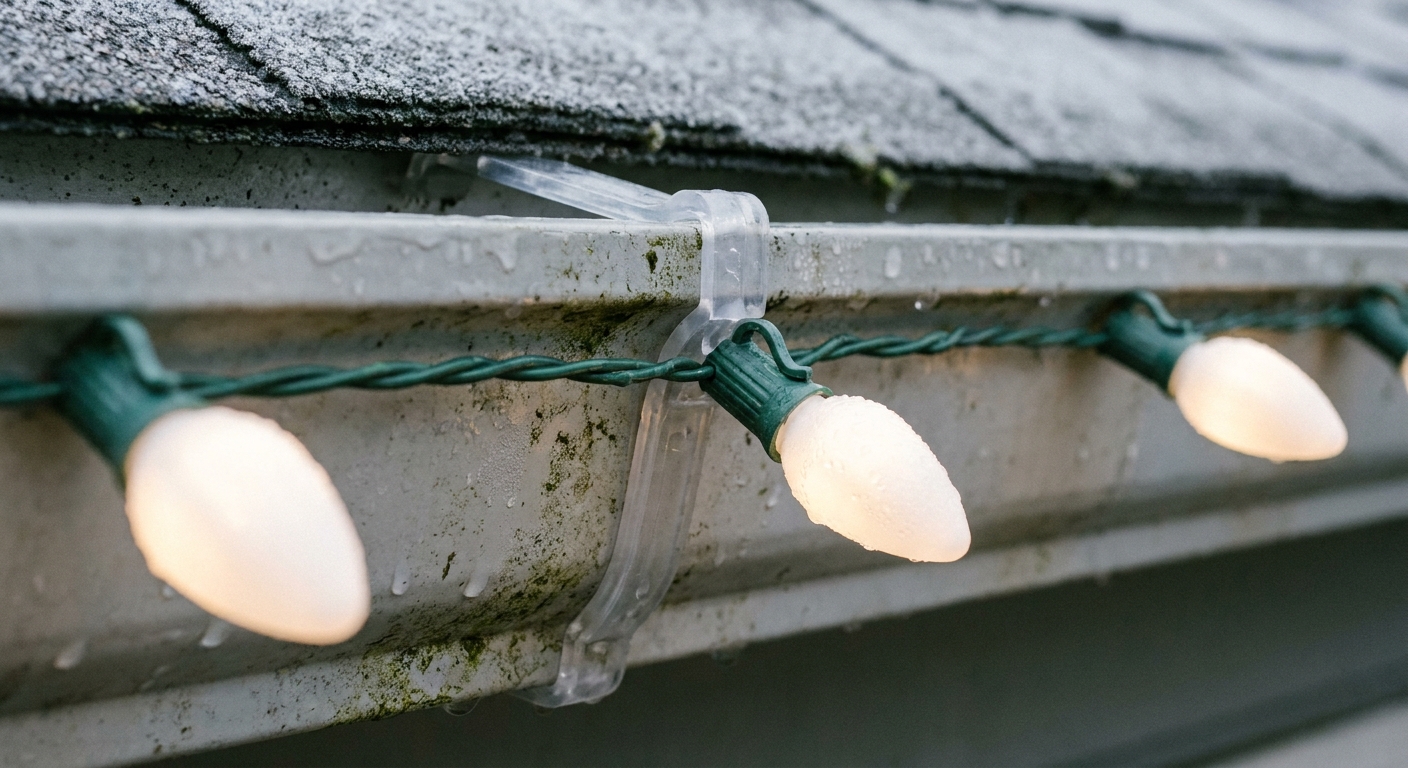
- Across a roofline: you can see sections change tone from one strand to the next.
When can mixing work? If the tones are separated into different zones and the zones make sense. For example, warm white inside and cool white outside can look fine because your brain reads them as separate scenes. What usually fails is having both temperatures touching each other on the same surface.
Another lesson from experience: even within “warm white,” different manufacturers can skew slightly green or pink. If you are expanding an existing setup, buying the same brand and the same product line (or matching Kelvin) is your best shot at an invisible add-on.
How to choose the right white
If you are torn, I like to make this decision the same way I style a room. Pick the anchor mood first, then support it everywhere the lights appear.
Choose warm white if you want:
- a cozy, traditional Christmas
- gold and red accents, warm metals, candlelit vibes
- your tree to look soft and full
- your mantel to blend with typical warm indoor lighting
Choose cool white if you want:
- a modern, crisp winter look
- silver, white-on-white, icy blues, or glam styling
- high sparkle and strong contrast
- your outdoor display to read bright and clean from the street
My one minute decision trick
Stand where you will actually view the lights most often. For the tree, that is usually the sofa. For the exterior, it is the curb. Then ask: do you want the scene to feel golden and welcoming or bright and snowy? Your gut answer is almost always the right one.
Quick at-home test: Before you wrap anything, plug in the new strand next to one strand you already own, then look at it from across the room with the lamps on. If it does not match in the spot you actually live in, it will not magically match once it is on the tree.
Quick FAQ
Is warm white the same as soft white?
Most of the time, yes. Both usually feel candle-like and cozy, but naming varies by brand. If you can, look for a Kelvin number on the box, or at least a photo of the lit strand on the packaging and compare it to what you already own.
Is cool white the same as daylight?
Not always, but in many product lines, daylight is cooler and bluer than cool or bright white. If you want a true icy look, daylight can be perfect. If you want crisp without looking blue, cool white is often the sweet spot.
What if my decorations are mixed metals?
Mixed metals can work with either temperature. The deciding factor becomes the overall mood: warm white makes mixed metals feel collected and cozy, cool white makes them feel sleek and sparkly.
What is the easiest choice if I only want one type for everything?
Warm white is the most commonly chosen for an all-around, classic look, and it tends to be the most forgiving across trees, mantels, and traditional outdoor decor. Cool white is stunning when your home and palette already lean modern and wintry.
What if I need to replace one strand on a pre-lit tree?
Match the manufacturer replacement set whenever possible. Pre-lit trees are the spot where mismatched whites show up the fastest, even when the box says the same words.