Pack ornaments, garlands, wreaths, lights, and trees the right way with simple protection, smart grouping, and a labeling system that makes next season faster.
The Festive Dwell
Christmas Lights Out? 5 Checks Before You Replace the Strand
Before you toss that dark or half-lit strand, try these five quick checks: outlet, plug fuses, loose bulbs, series-section issues, and common LED failure patterns.

Clara Jenkins
Clara Jenkins is a former visual merchandiser and lifelong holiday enthusiast who believes every season is worth celebrating. She helps readers transform their everyday spaces into magical, welcoming homes through budget-friendly DIYs, elegant tablescapes, and clever styling tricks. When she isn't untangling fairy lights or hot-gluing autumn wreaths, Clara can be found hunting for vintage ornaments at local flea markets.
Published November 12, 2026
I have a very specific holiday superstition: the first night I plug in the lights sets the mood for the whole season. So when a strand goes dark, I do not accept defeat. I troubleshoot. Because most of the time, the problem is something small, fixable, and honestly kind of satisfying to solve.
Here are the five checks I do before I even think about replacing a strand, whether it is totally out or only half lit.
Before you start: quick safety reset
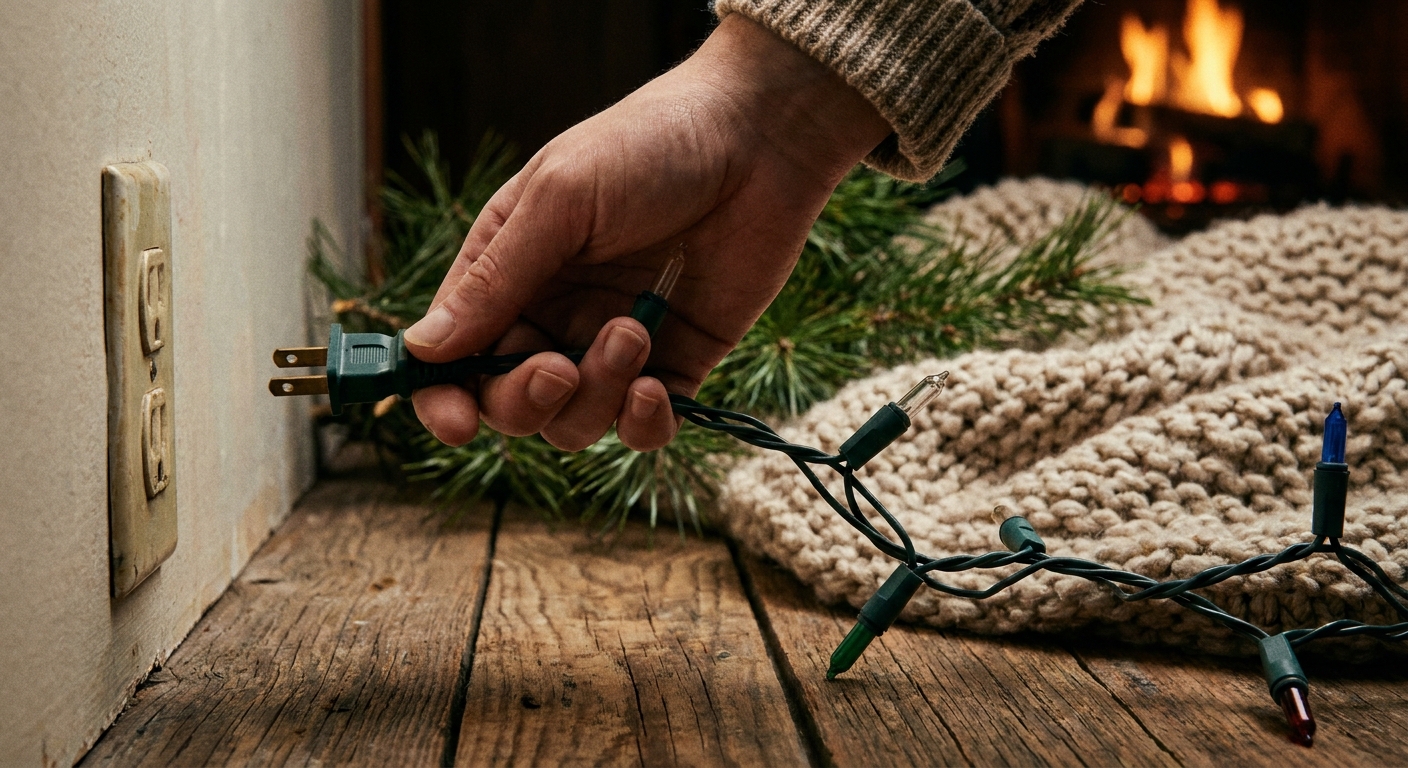
- Unplug the strand before inspecting bulbs or the plug.
- Let lights cool down if they were on recently, especially incandescent strands.
- Do not use a strand if you see scorched plastic, melted sockets, exposed copper, or a cracked plug. That is a retire-and-recycle situation.
If you are working outdoors, make sure your hands are dry and the connection point is off the ground.
Check 1: The outlet (and the wall switch you forgot exists)
This is the simplest fix and the most common. In my merchandiser days, we called it the “is it plugged in” check, and yes, it saved us constantly.
What to do
- Plug a lamp or phone charger into the same outlet to confirm it has power.
- If it is a switched outlet, flip the wall switch on and off once.
- If you are using a power strip, make sure the strip is on and the reset button is not tripped.
If you are outside
- Press TEST and then RESET on the GFCI outlet.
- If you are using an extension cord, confirm it is rated for outdoor use and fully seated at both ends.
Also check any inline connections: if you have multiple strands plugged end-to-end, unplug and firmly reconnect each join. A loose end plug between two strings can mimic a “dead section.”
If the outlet is dead even with another device, you have found the real culprit. Time to reset the GFCI, check a tripped breaker, or use a different outlet.
Check 2: The tiny fuses in the plug
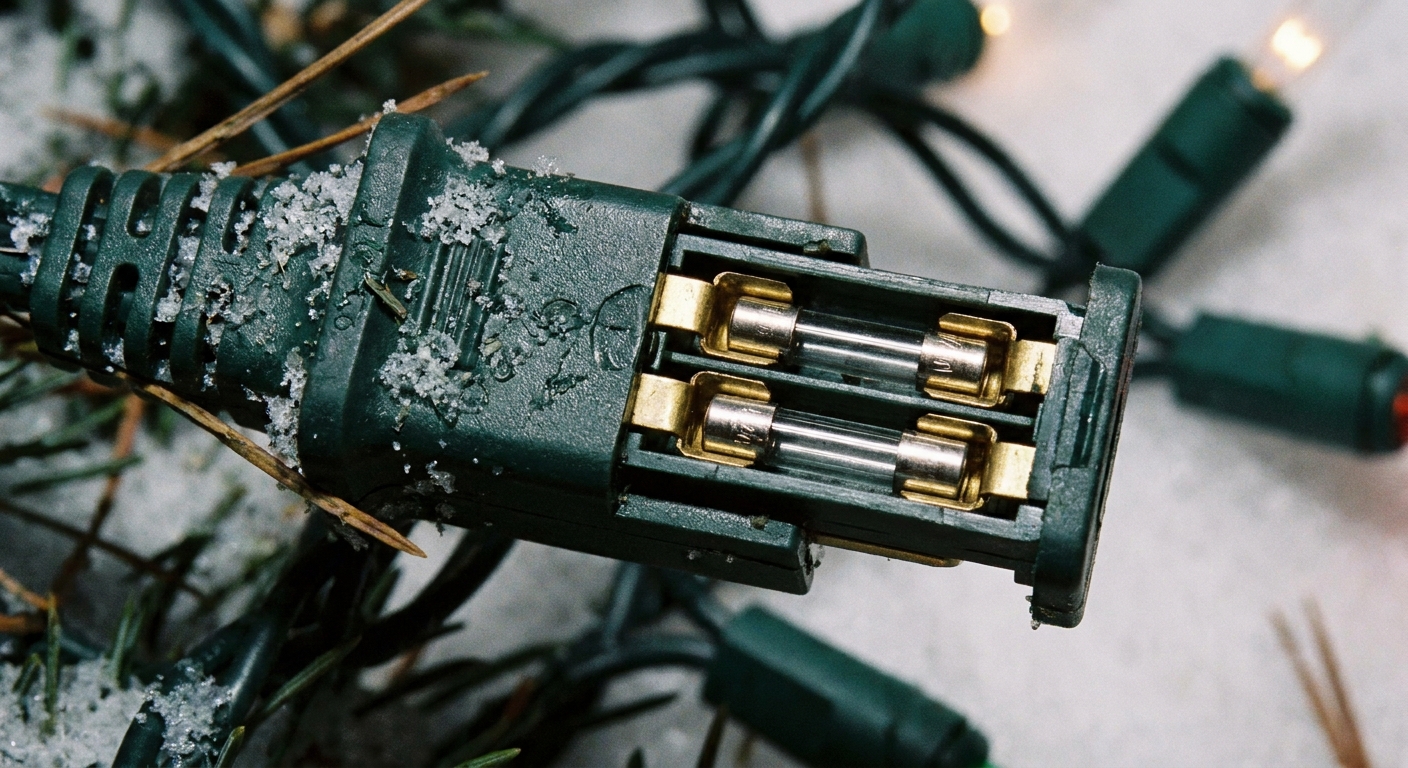
Many traditional mini light sets and some LED sets have replaceable fuses hidden in the plug. If the whole strand is out, this is one of the first things I check.
What to do
- Unplug the strand.
- Look for a small sliding door on the plug labeled for fuses.
- Use a small flathead screwdriver or your fingernail to slide it open.
- Remove the fuses and inspect them. A blown fuse may look darkened or have a broken filament.
If you have spare fuses that match the rating for that strand, replace them. Many light sets include extras in the box, and I try to tape them inside my lights storage bin so they do not vanish into the holiday abyss.
If you are unsure what fuse to use, check the printing on the plug, the tag on the cord, or the box for the fuse rating.
If the new fuse blows again immediately, stop using the strand. That points to a short or internal damage that is not worth risking.
Check 3: Loose, missing, or mis-seated bulbs
If you have a section out or flickering, do a socket-by-socket glance. A bulb that is not fully seated can break the circuit on many styles of string lights.
What to look for
- Missing bulbs, especially if the strand was stored loosely or tangled.
- Bulbs sitting crooked or not pushed in all the way.
- Cracked bulbs or corrosion around the base.
What to do
- Unplug the strand.
- Gently press each bulb in the dark section to make sure it is snug.
- Replace any missing or broken bulb with the same type and voltage intended for that set, and the same wattage if it is an incandescent strand.
A quick note from someone who has rushed this and regretted it: if the bulb type does not match, you can create overheating, uneven brightness, or repeated failures. When in doubt, pull a working bulb from that same strand and match it exactly.
Check 4: One dead bulb can take out a whole section in a series set
This is the classic “half my lights are out” mystery. Many traditional strands are wired in series, which means the electricity flows through each bulb in that section.
On older series sets, or on sets where a built-in shunt does not kick in, one failed or loose bulb can interrupt the path and darken everything after it. Some newer mini lights have shunts designed to keep the rest of the string lit, so your exact failure pattern may vary.
Some sets are built with multiple series sections, which is why you might see only the top half of the tree go dark, or one chunk along the roofline quit while the rest stays bright.
How to find the culprit bulb
- Start where the dark section begins. Often, the problem bulb is near the first unlit bulb in the run.
- Check for an obviously darkened bulb or one that looks slightly different than its neighbors.
- Swap-test method: take a known working bulb from the lit portion and swap it into the first unlit socket. Plug in and test. Move along until the section comes back on.
Go easy while you swap. Frequent bulb changes can bend leads or loosen a base. Keep bulbs aligned with the socket and do not force anything.
If your bulbs have removable bases, be gentle. Bent wires on the base or a loose fit can create the same issue as a dead bulb.
When the section relights, you have found the trouble spot. Replace that bulb with the correct one and put your “borrowed” working bulb back where it belongs.
Optional shortcut: if you do this every year and want help, there are holiday light tester tools (often called a “light keeper”) that can speed up finding the problem bulb on compatible incandescent mini-light strands. Not required, just handy.
Check 5: LED strands fail differently
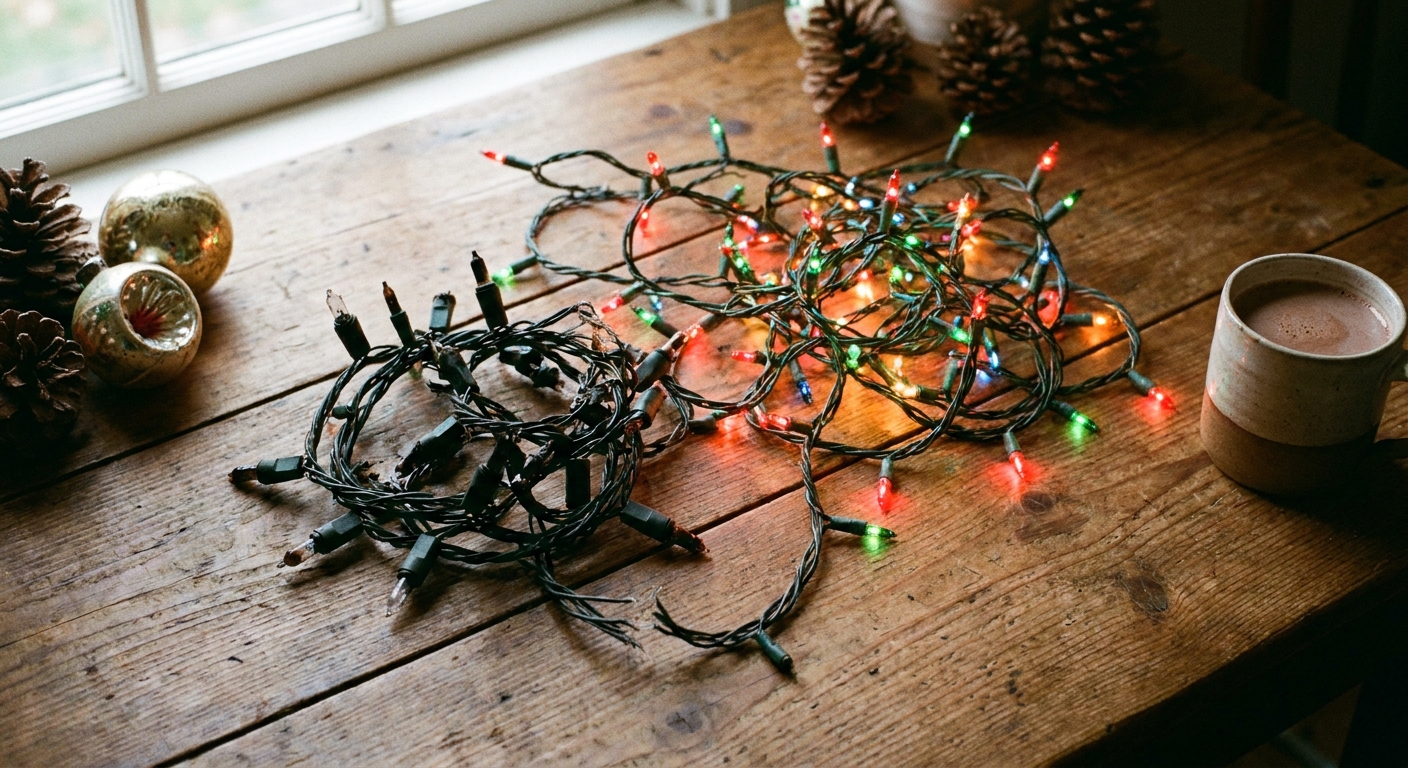
LED holiday lights are efficient and usually longer-lasting, but when they fail, the pattern can feel confusing. Part of the reason is that LED strands can be built in different ways: series segments, parallel branches, and sometimes small rectifiers or control modules in the plug.
With LEDs, you may see:
- A whole strand out even though the outlet is fine.
- Random dead bulbs scattered through the strand.
- A section out that does not respond to bulb swapping the way older mini lights do.
What to do with LED sets
- Still do the first two checks: outlet and plug fuses. Yes, some LED plugs have fuses.
- Look for a loose bulb. Some LED strands have push-in bulbs that can back out slightly during storage.
- Check the connections if you are running LED strands end-to-end. Reseat the plug between strands.
- If your LED set uses sealed, non-replaceable bulbs (common on many newer strands), your repair options are limited. If a section is out and you cannot reseat anything, the strand may be at end of life.
If you have a strand that only works when you wiggle the wire near the plug or a specific socket, that suggests an internal break or weak connection. I treat that as a retire-it issue, especially for outdoor use.
When the strand is done (and should be recycled)
I love rescuing decorations, but there is a point where the safest, sanest choice is to let a strand go. Recycle or dispose of the strand if:
- The cord is brittle, cracked, or sticky to the touch.
- You see scorch marks on sockets, plugs, or wire.
- The strand keeps blowing fuses after you replace them correctly.
- Multiple sections are out and you have already checked for loose or missing bulbs.
- LEDs are sealed and a large portion is dead with no reseating fix.
How to recycle: Rules vary by location, so check your local program before you toss them in any bin. Many curbside recycling programs do not accept holiday lights. Instead, look for seasonal light recycling drives at hardware stores or community events, or take them to a local waste facility that accepts e-waste or scrap metal. Coil the strand neatly, bag it so it does not tangle in transit, and drop it off with other electronic items.
My five-minute troubleshooting routine
If you want the fastest path from “ugh” to “twinkle,” here is my personal order of operations:
- Confirm power at the outlet and reset GFCI if needed.
- Reseat any end-to-end plugs between strands.
- Check the plug fuses if the whole strand is out.
- Walk the strand for missing, loose, or cracked bulbs.
- If a section is out, focus on the first bulb in the dark section and swap-test carefully.
- If it is LED and sealed and still dead, call it and recycle.
Holiday decorating is supposed to feel magical, not like a wiring exam. A little methodical checking goes a long way, and it keeps perfectly good lights out of the trash.