A fresh-cut tree can still dry out indoors. Here’s how to get it drinking again, what to do if the stand runs dry, and when it’s time to take the tree down.
The Festive Dwell
Real vs. Artificial Christmas Tree: What Changes at Home
Choosing a real or artificial Christmas tree changes more than your décor. Compare scent, mess, setup, storage, fullness, timing, scale, safety, pets, cost, and sustainability so your tree fits your home and habits.

Clara Jenkins
Clara Jenkins is a former visual merchandiser and lifelong holiday enthusiast who believes every season is worth celebrating. She helps readers transform their everyday spaces into magical, welcoming homes through budget-friendly DIYs, elegant tablescapes, and clever styling tricks. When she isn't untangling fairy lights or hot-gluing autumn wreaths, Clara can be found hunting for vintage ornaments at local flea markets.
Published November 16, 2026
The year I moved into my first apartment, I bought a real tree that was just a tiny bit too tall and a whole lot too ambitious for my schedule. It smelled incredible for about a week (sometimes longer, sometimes less, depending on the tree), shed like a nervous cat whenever I brushed past it, and taught me a very grown-up lesson: the best Christmas tree is the one that matches the way you actually live at home.
If you are deciding between a cut tree and an artificial one, here is what truly changes inside your space once the lights are on and daily life begins. No guilt, no superiority, just the honest home realities.
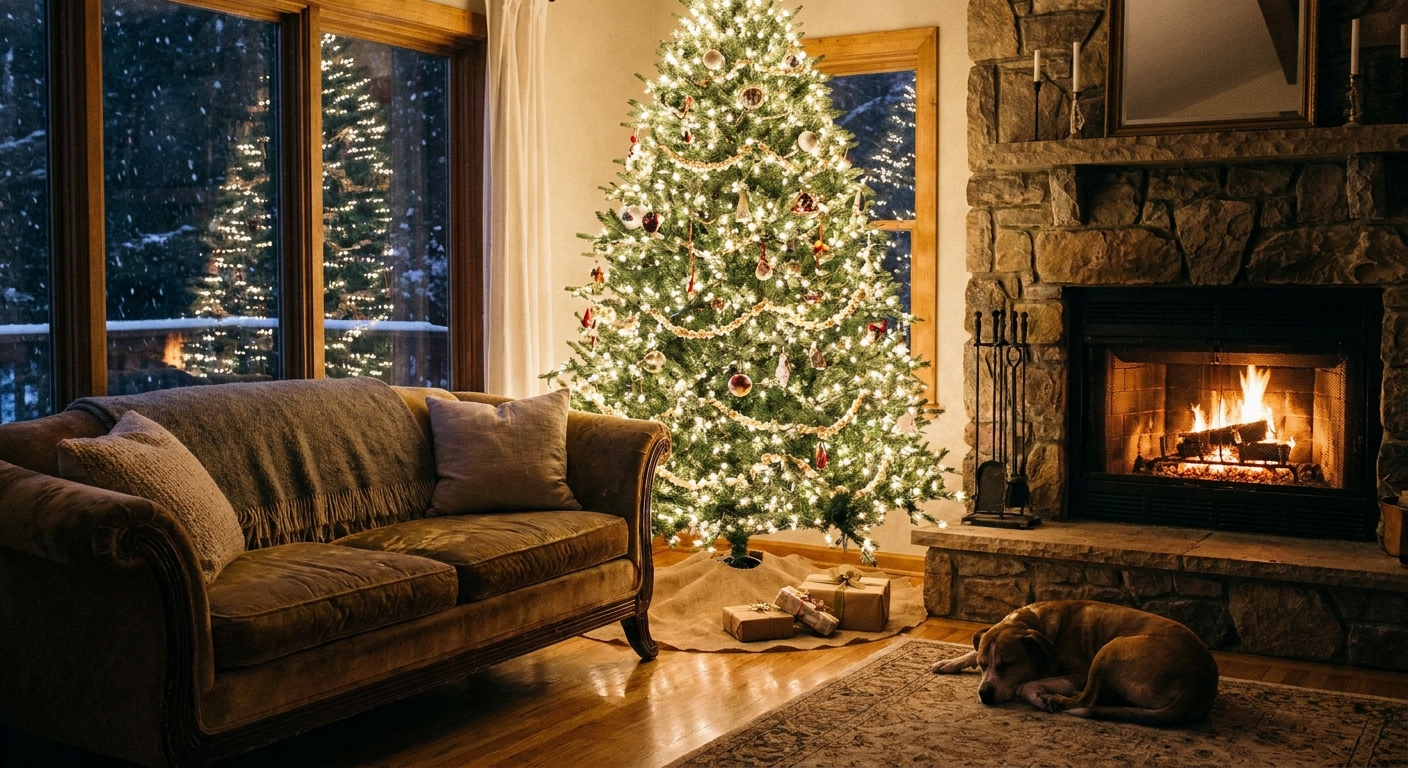
The feel: scent and atmosphere
A real tree gives you that instant, unmistakable evergreen scent that hits as soon as you walk in the door. If your favorite part of the season is the sensory side of it, the smell, the crisp outdoorsy vibe, the little ritual of bringing nature inside, a cut tree delivers it in a way faux just cannot fully replicate.
An artificial tree, on the other hand, is more about visual consistency. The atmosphere comes from lights, ornaments, and whatever you do in the room (cocoa nights, music, movie marathons). If you love the look but do not care about the scent, or if anyone in your home is sensitive to strong smells, faux can feel calmer and cleaner.
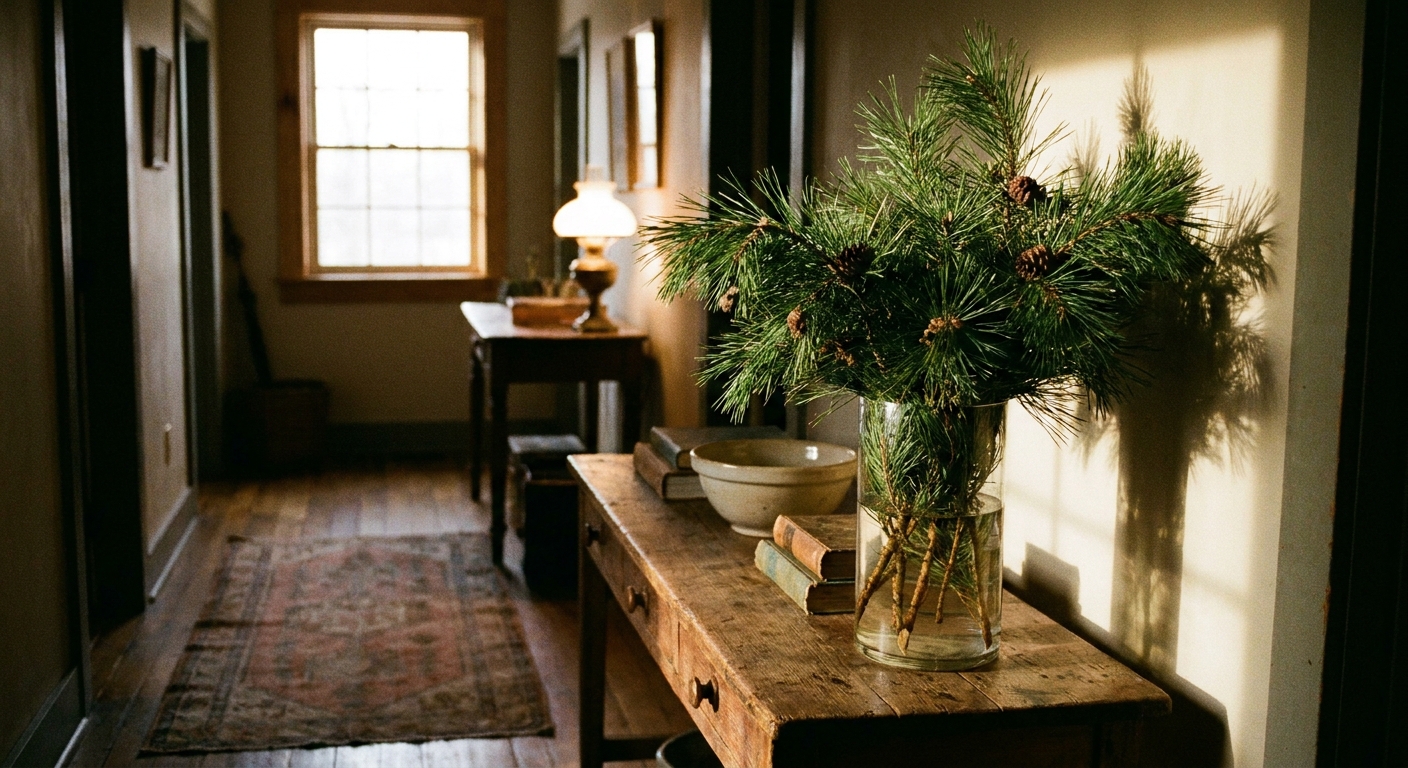
Clara note: If scent is your only reason for a real tree, you can still get that evergreen moment with fresh pine stems in a vase, a wreath near your entry, or garland on the mantel. It is the same cozy signal, just in a smaller dose.
Mess: needles, sap, and cleanup
This is where the decision becomes very practical very fast.
With a real tree
- Needles travel. They land in the tree skirt, embed in rugs, and somehow appear in rooms the tree has never seen.
- Sap happens. You might get sticky spots on hands, ornaments, or the floor while decorating and adjusting.
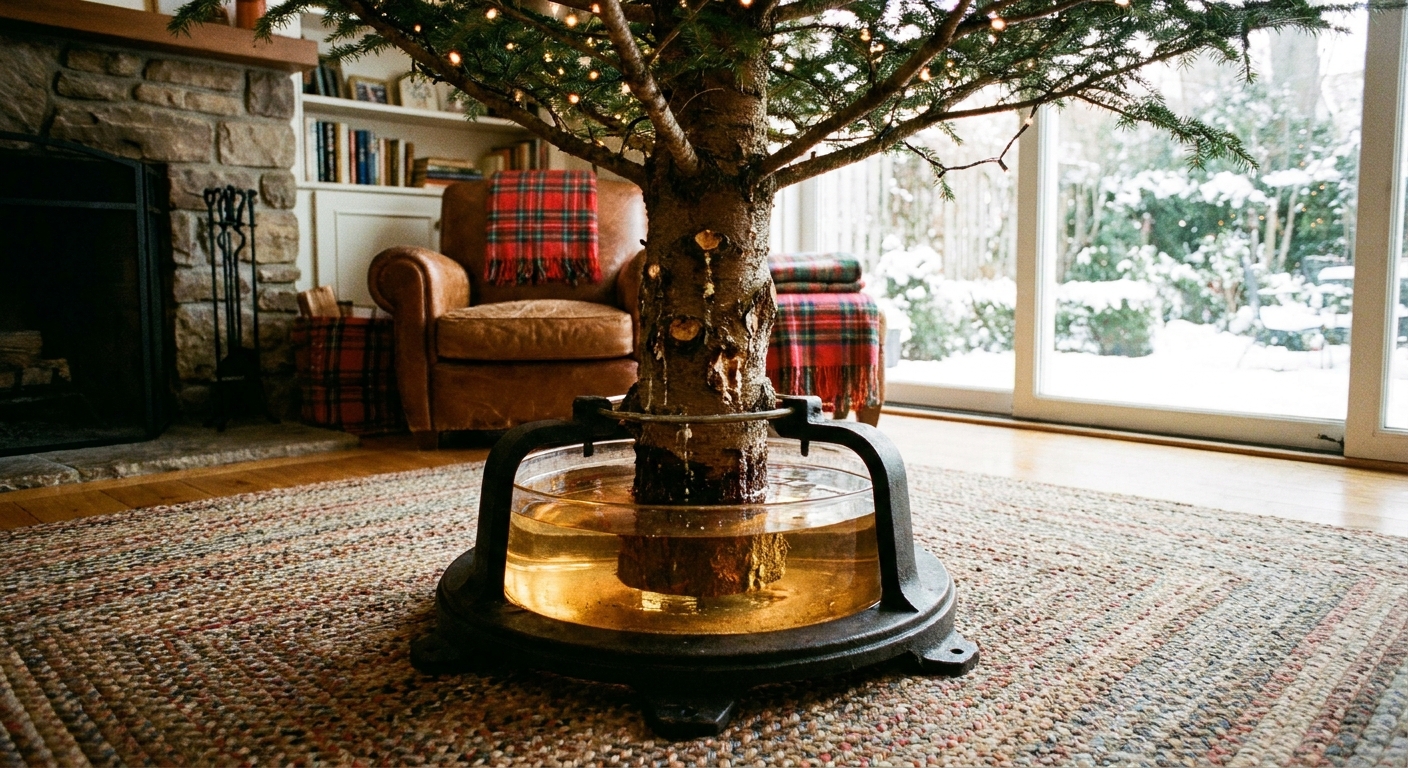
- Watering adds a “wet zone.” Even if you are careful, the base area becomes a little maintenance station in the middle of your living room.
Clara note: A simple waterproof mat or a shallow tray under the stand can save your floors and your sanity, especially on hardwood.
With an artificial tree
- Almost no day-to-day mess. You may sweep up a little flocking or PVC “confetti” the first year, then it settles down.
- Dust is the main issue. Especially if the tree lives in a garage or attic between seasons.
- Storage debris is real. The mess shows up when you pack it away, not while it is up.
If you have wall-to-wall carpet, a crawling baby, or you just cannot handle stepping on needles for three weeks, faux tends to feel easier in real life.
Setup: what tree day looks like
As a former visual merchandiser, I adore a good “tree day,” but I also know how quickly it can turn into a whole production.
Real tree setup usually means
- Getting the tree home and inside without scraping walls or dropping needles everywhere
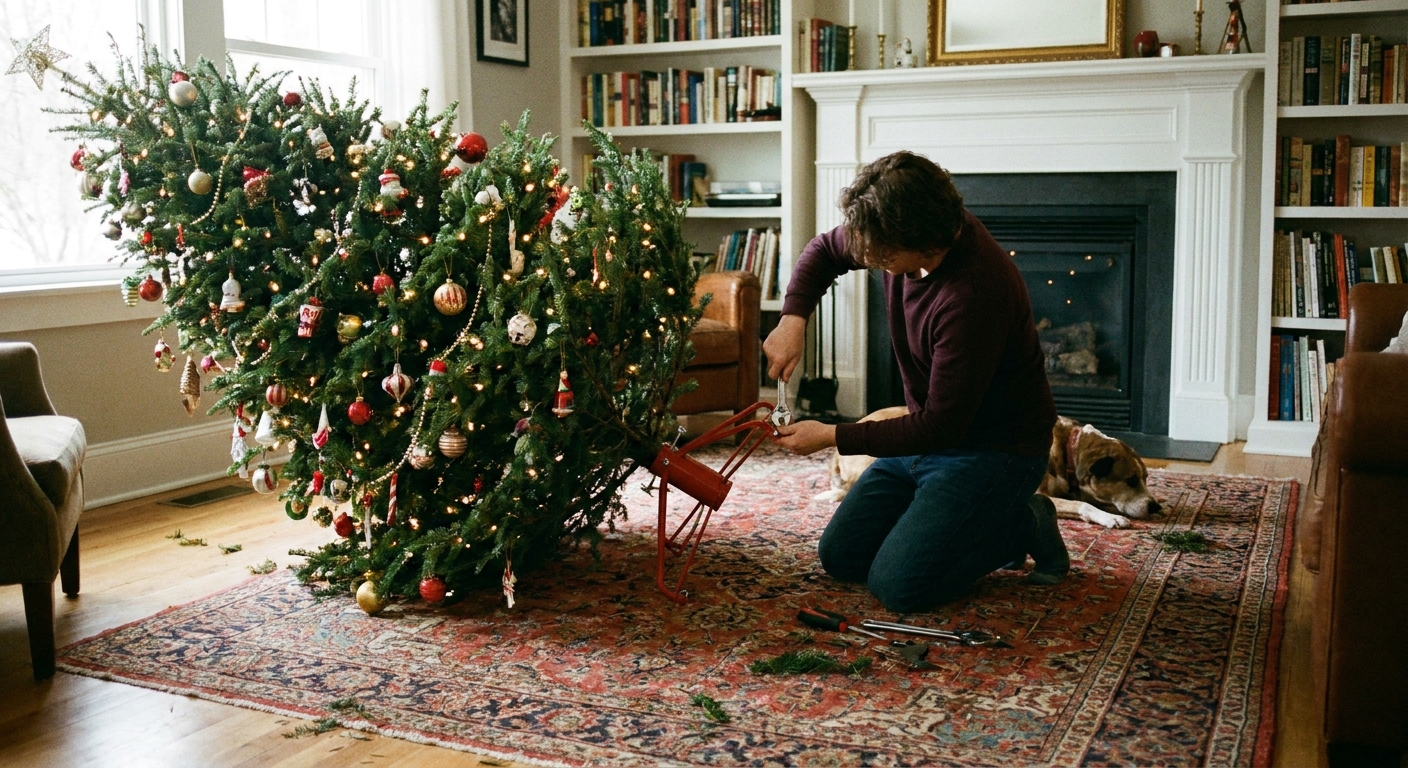
- Trimming the trunk and getting it stable in the stand
- Letting branches relax a bit before you fully judge shape
- More stepping back and turning the tree to find the best face
Artificial tree setup usually means
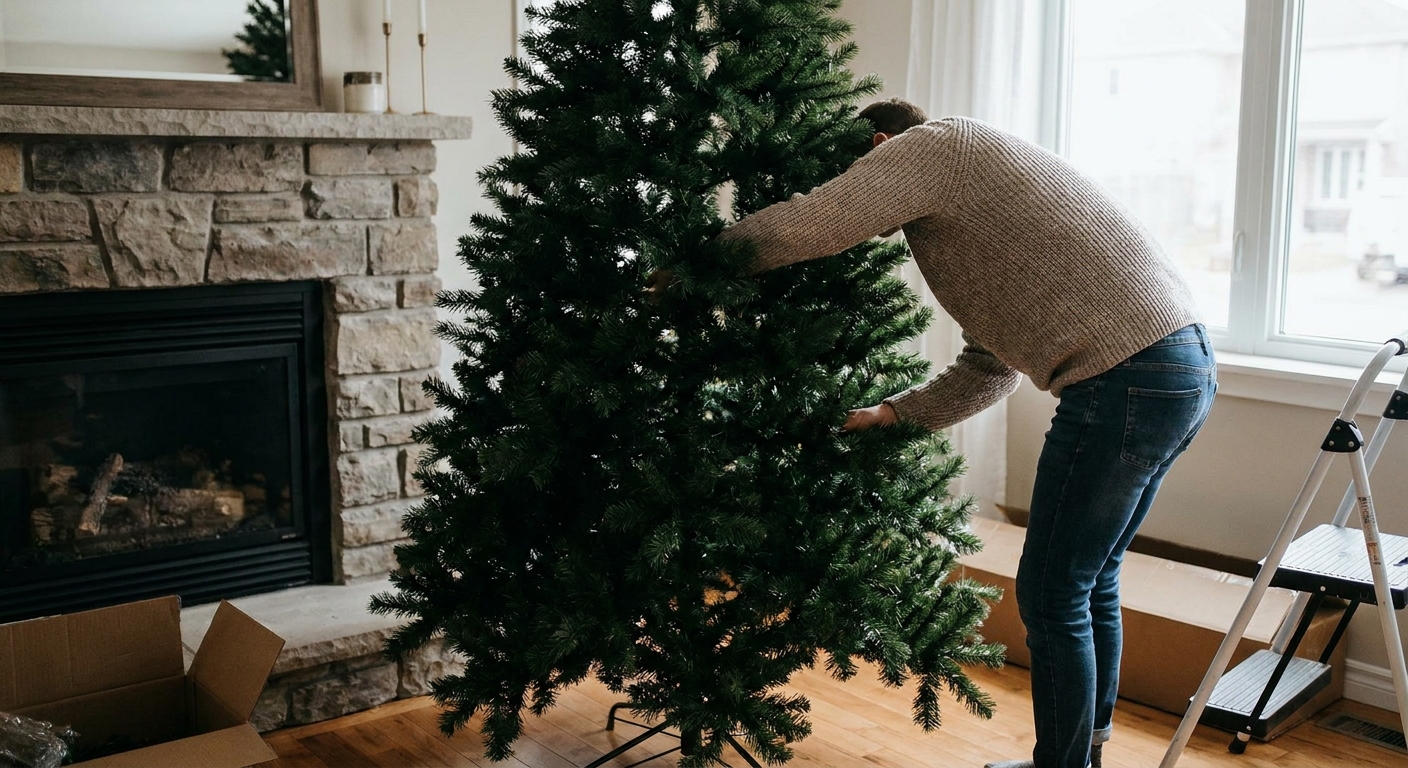
- Assembling sections
- Fluffing and shaping branches for fullness
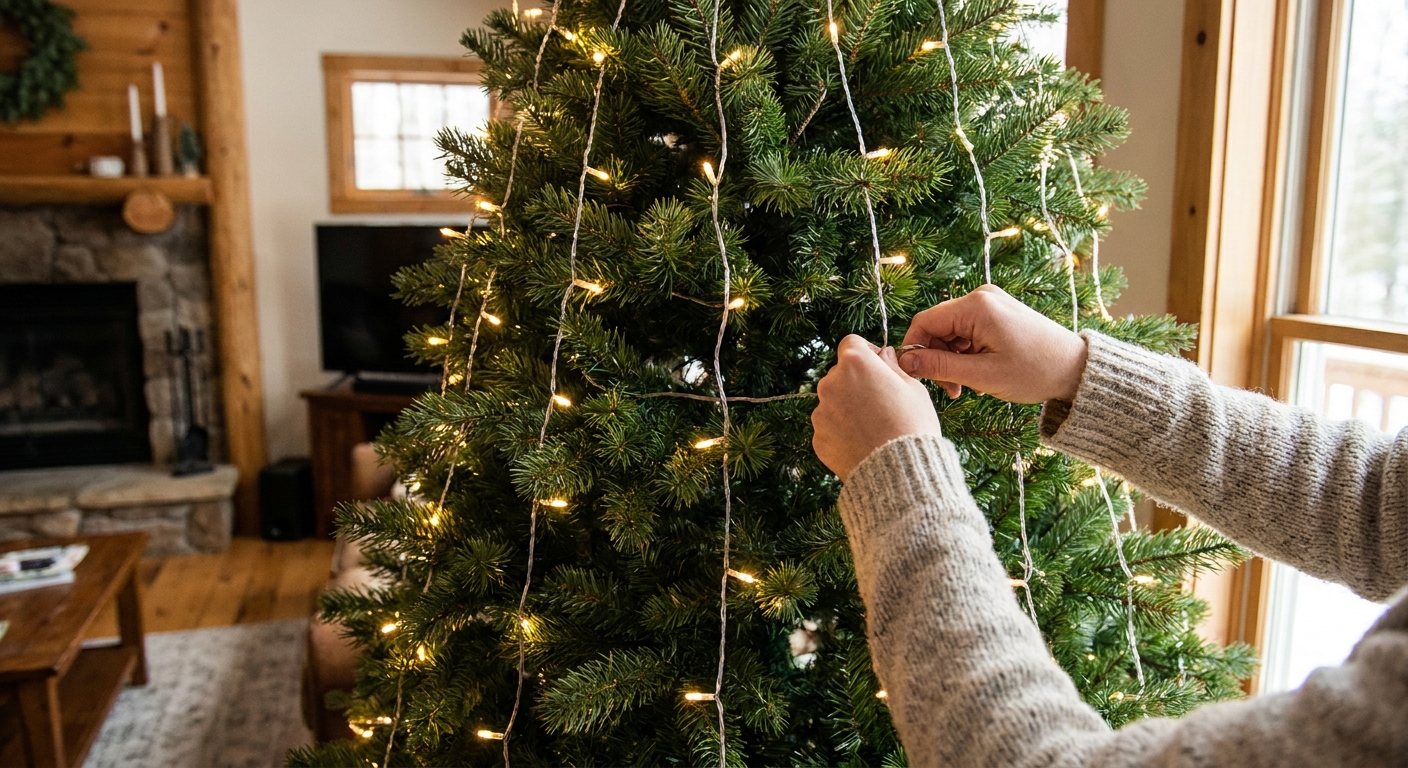
- Plug testing if it is pre-lit
In many homes, a real tree feels faster up front (stand it, straighten it, decorate), while an artificial tree can take longer the first night because fluffing is its own little workout. The trade-off is that faux usually feels easier on the back end, because you are not wrestling a dry, dropping tree out the door.
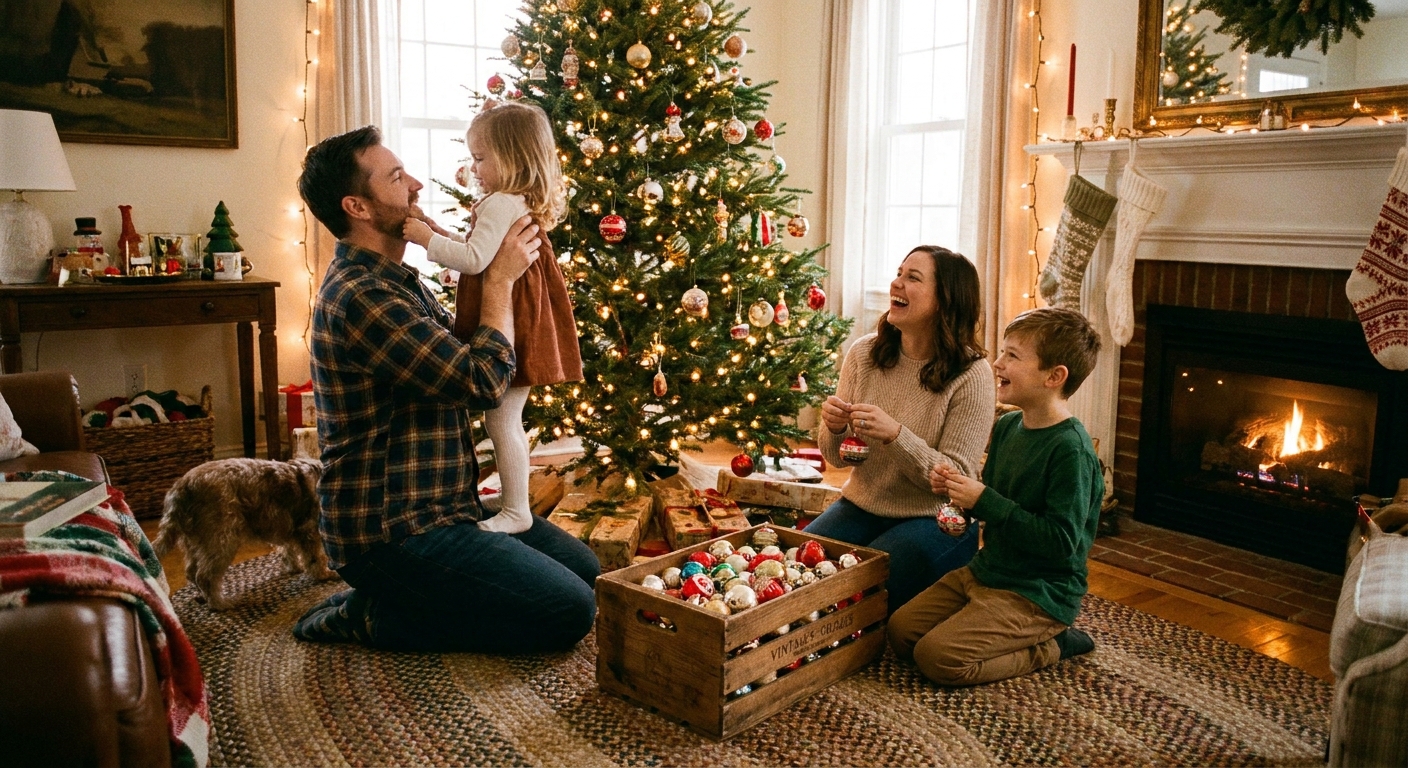
Shape: what you see from the couch
From a styling perspective, the biggest visual difference is predictability.
A real tree is unique every time. Some are gorgeously full, some are charmingly sparse, and some have a surprise gap right at eye level where you wanted your star ornament moment. That can be part of the magic, or it can feel like you are fighting the tree.
An artificial tree is consistent by design. If you buy a full, symmetrical faux tree, it will be full and symmetrical every year. If you prefer a more natural silhouette, you can find faux trees that mimic that look too, but the key is that you are choosing the shape on purpose.
If you love a very “designed” tree (ribbon cascades, ornament clusters, themed color palettes), artificial often makes that easier because the structure is reliable. If you love a tree that looks like it just came from the woods, real wins on authenticity.
Timing: how long it stays up
This is one of the most underrated factors, because it affects your whole December rhythm.
Real trees fit a defined window
A cut tree is a seasonal sprint. Even in the best conditions, it is living on borrowed time once it is indoors. That means many households naturally stick to a tighter schedule: put it up, enjoy it hard, take it down on time.
Artificial trees support the long glow
If you are someone who likes the glow through New Year, or even through that quiet first weekend of January, artificial makes it easy. No pressure, no nagging sense that you are pushing your luck, and no last-minute scramble because the tree suddenly looks tired.
If you typically take your tree down quickly: a real tree can be perfect because it matches your momentum. If you like to keep it up past New Year: artificial is usually more relaxing.
Storage: where it lives in July
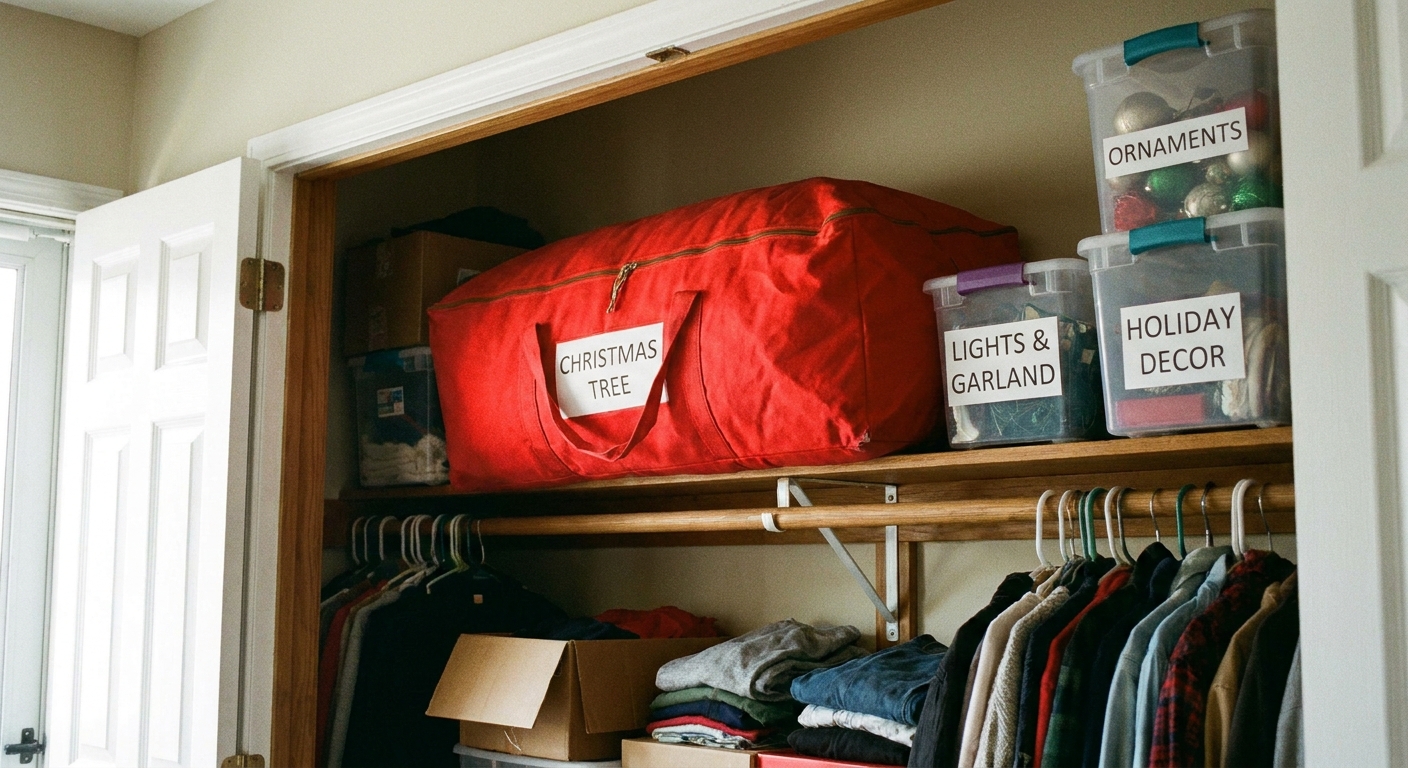
A real tree leaves your home when the season ends. That is a big perk if you live in an apartment, have limited closets, or already store enough holiday bins to qualify as a small seasonal warehouse (no judgment, I am speaking from my own craft room chaos).
An artificial tree needs off-season real estate. Before you buy, think about:
- Box size versus storage space. Closets, basements, garages, and attic access all matter.
- Weight and carry distance. Especially if you live upstairs or you decorate solo.
- Keeping it clean. A dusty storage area can mean a dusty tree next year.
If storage is your main constraint, a real tree is often the simplest choice. If you have a dedicated storage spot, faux becomes much more appealing.
Scale: height and proportions
When readers tell me they bought “the wrong tree,” it is usually not about real versus artificial. It is about scale.
For low ceilings or tight rooms
- Real tree advantage: you can often find a tree that feels airy and visually lighter, which helps small rooms breathe.
- Artificial tree advantage: you can buy a pencil or slim profile that stays narrow and predictable.
For tall ceilings or open spaces
- Real tree advantage: a taller tree can look breathtakingly grand if you have the height and can manage the transport.
- Artificial tree advantage: you can commit to a statement height every year without worrying about what the lot has in stock.
My quick fit check: measure your ceiling, then subtract 6 to 12 inches for the tree stand and the topper. In a room with a ceiling fan, subtract more so nothing feels crowded overhead.
Pets and kids: real life chaos
I love a home that feels lived-in, and that includes pets who think the tree is a new club house.
Real tree considerations
- Needles can end up in paws and mouths. For many pets it is just irritating or causes tummy trouble, but if your pet chews plants, it is worth checking with your vet about what is safe for your specific situation.
- Water at the base is tempting. Some pets will drink from the stand, which can be messy and can introduce additives if you use them.
- Stability matters. A wobbly stand is the real problem. A sturdy stand and, if needed, a discreet anchor can make a huge difference.
Artificial tree considerations
- Often more stable in a heavier base. This can matter with climbers and zoomies.
- Flocking and loose fibers. If you have a chewer, be mindful of what your tree is made of and what could be swallowed.
- Wires and pre-lit strands. Pets that nibble cords need extra management either way.
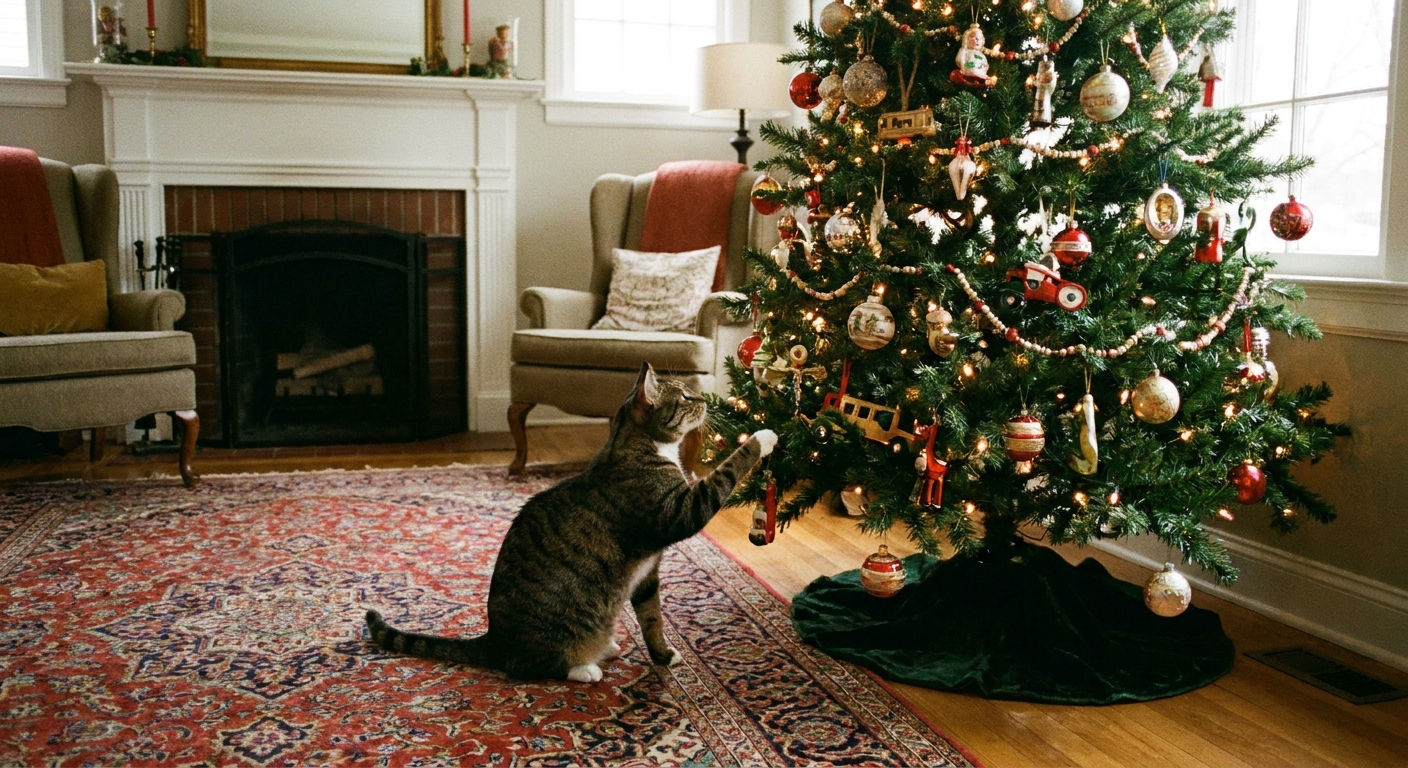
Best match for many pet homes: a slim artificial tree secured well, with shatterproof ornaments on the lower third. If you go real with pets, plan for extra vacuuming and keep the base area as protected as possible.
Safety: the not-fun but important part
Whether your tree is real or artificial, the safest tree is the one that is stable, not overheated, and not left to turn into a hazard.
- If you go real: keep it well-watered and do not keep a tree up once it is noticeably drying out or dropping heavily. A drier tree is also a bigger risk if something goes wrong with lights.
- If you go artificial: check cords and connections each season, especially if it is pre-lit and has been stored for months.
- For both: use a solid stand, keep walkways clear, and consider anchoring if you have toddlers, pets, or a high-traffic layout.
Cost and sustainability: a quick reality check
Two questions show up in my inbox every year: “Which is cheaper?” and “Which is greener?” The honest answer is that it depends.
- Cost: real trees are usually a recurring seasonal cost, while artificial trees are an upfront investment that can pay off over multiple years if you store it well and actually keep using it.
- Sustainability: real trees can be a renewable option when sourced from responsible farms and recycled or composted after the holidays. Artificial trees typically last for years, but they are often made from materials that are harder to recycle. If you go faux, using it for many seasons is where it starts to make more sense.
Clara note: The most “responsible” choice is often the one you will truly keep and maintain. A beloved faux tree used for years can be a better choice than a cheap faux tree replaced every two seasons, and a locally sourced real tree recycled properly can be a lovely seasonal option too.
Quick guide: which fits your life
If you are torn, use your habits as the tie-breaker.
- Choose a real tree if: scent matters most, you do not want to store a tree, you love a natural look, and you usually take the tree down on a fairly set schedule.
- Choose an artificial tree if: you want consistent fullness, you prefer less day-to-day mess, you like to keep your tree up through New Year (or longer), you have pets or little kids who create chaos, or you want a specific shape like pencil-slim.
FAQ
Which feels cleaner in a busy household?
Most busy households find artificial trees feel cleaner day to day because you are not dealing with needles and sap. The cleanup moment is more about storage when the season ends.
Which looks more full with fewer decorations?
Artificial trees often look full right out of the box once fluffed, which can be great if you decorate minimally. A real tree can look lush too, but fullness varies year to year.
Which works better if I travel in December?
Artificial is usually lower stress if you are away for several days because it does not rely on daily watering or monitoring. A fresh, well-watered real tree can be fine over a long weekend, but longer trips increase the chance it dries out faster, which can become a safety concern.
Which works better for small spaces?
It depends on the layout. If width is your issue, a slim artificial tree is a space saver. If visual heaviness is the issue, a real tree with an airier silhouette can feel lighter in a compact room.