A fresh-cut tree can still dry out indoors. Here’s how to get it drinking again, what to do if the stand runs dry, and when it’s time to take the tree down.
The Festive Dwell
How to Straighten a Leaning Christmas Tree
Fix a crooked Christmas tree fast with practical, no-fuss steps: reseat the trunk, tighten stand screws evenly, shim uneven floors safely, stop sliding, and rebalance decor for a stable, level tree.

Clara Jenkins
Clara Jenkins is a former visual merchandiser and lifelong holiday enthusiast who believes every season is worth celebrating. She helps readers transform their everyday spaces into magical, welcoming homes through budget-friendly DIYs, elegant tablescapes, and clever styling tricks. When she isn't untangling fairy lights or hot-gluing autumn wreaths, Clara can be found hunting for vintage ornaments at local flea markets.
Published November 14, 2026
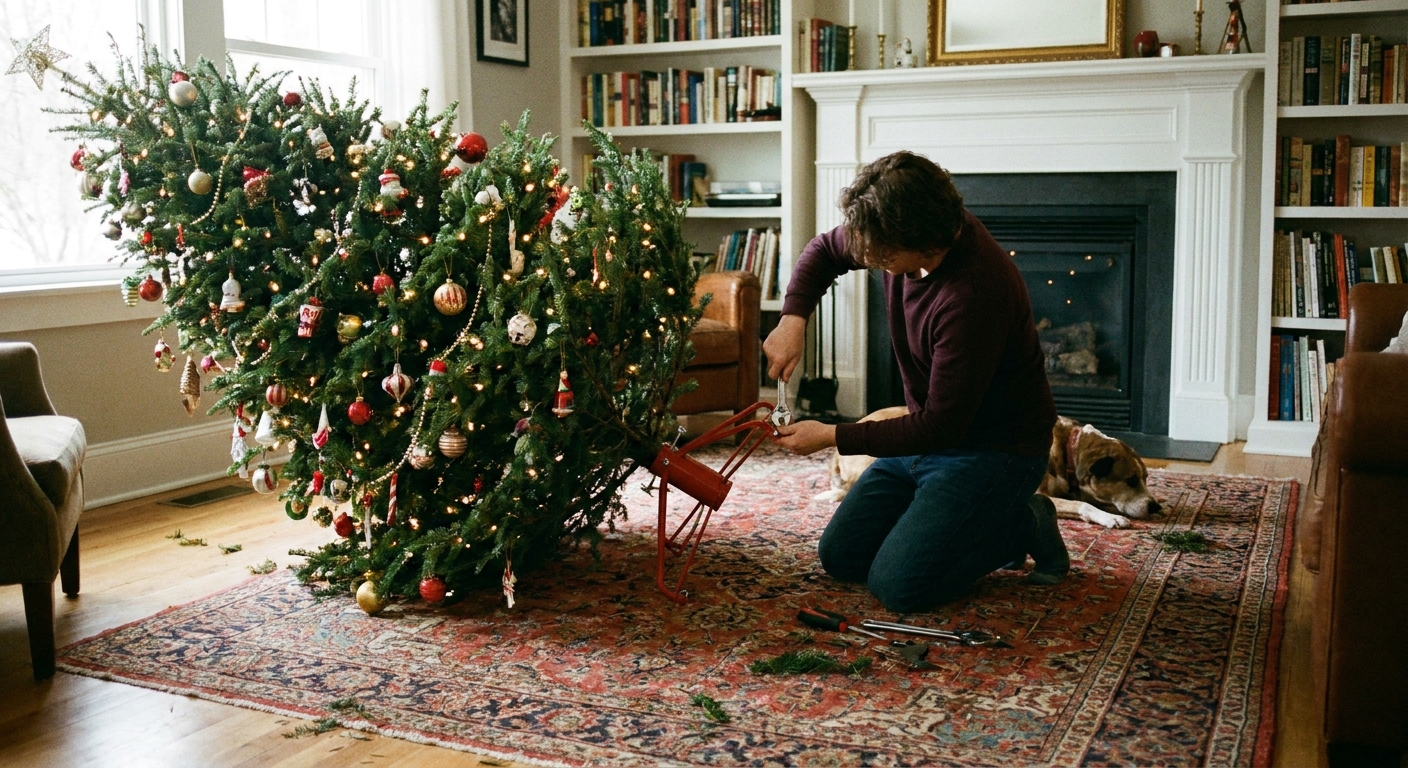
The first year I hosted Christmas in my own place, my tree did that slow, dramatic lean like it was posing for a vintage postcard. I had ornaments in one hand, cocoa in the other, and a very real fear that the whole thing was going to topple right into my carefully styled mantel moment. The good news: most leaning trees are not “bad trees.” They are just trees that are not seated, not tightened, or not on a level surface.
This is a nuts-and-bolts guide to getting your Christmas tree straight and stable. No fluffing tips, no watering advice, just the mechanical fixes that stop the wobble.
Before you start: quick safety reset
Leaning trees can fall surprisingly fast once you start adjusting. Take one minute to set yourself up safely.
- Unplug the lights so cords do not tug while you move the tree.
- Remove anything heavy or breakable from the tree first (tree topper, large ornaments, heirlooms).
- Keep kids and pets out of the room while you level and tighten.
- Wear gloves if you have them. Sap, needles, and stand hardware are a great way to ruin your mood.
- Grab a helper if you can. One person holds the trunk steady while the other tightens and shims.
- Protect the floor with an old towel or thin piece of cardboard under the stand if you will be sliding it.
Quick fit check: before you wrestle with anything, confirm your stand is actually sized for your tree (max trunk diameter and height or weight rating). A too-small stand can be impossible to “fix” with tightening alone.
Diagnose the lean in 30 seconds
You will fix this faster if you identify what kind of lean you have. Stand back and look at the tree from two angles.
- Tree leans but stand base looks flat: trunk is likely not seated straight or screws are uneven.
- Stand base rocks or you can slip a finger under one edge: uneven flooring, the stand is sitting on a thick rug edge or tree skirt, or there is debris under a foot.
- Tree is straight at the bottom but pulls to one side higher up: weight imbalance (lights, garland, ornaments) is dragging the top.
- Tree was fine, then started leaning later: screws loosened, trunk settled deeper, or the stand shifted on a slick surface.
If you have a small level, place it across the stand rim and then against the trunk. If not, use a phone level app or even eyeball it against a door frame.
Fix #1: Reseat the trunk
If the trunk is not sitting flat in the stand’s cup, no amount of tightening will make it truly straight. This is especially common if the trunk is cut at a slight angle or the stand has a small center spike that the trunk missed.
Step-by-step
- Loosen all the stand screws until the trunk can move freely.
- Lift the tree slightly (have a helper hold the trunk upright) and wiggle the trunk so it drops fully into the cup.
- Check the trunk cut visually. If it is very angled or jagged, the tree will fight you. The cleanest fix is a fresh, straighter cut, but do it safely: take the tree outside, remove decorations first, brace the trunk securely, and use the right saw. If you are not set up for that, many tree lots will recut it quickly.
- Center the trunk so it is not touching one side of the stand collar.
- Tighten screws gradually in a pattern (like tightening lug nuts): snug one, then the opposite, repeating until all are firm.
Tip: When you tighten one screw fully before the others, it pushes the trunk off-center and creates a new lean. Even pressure is everything.
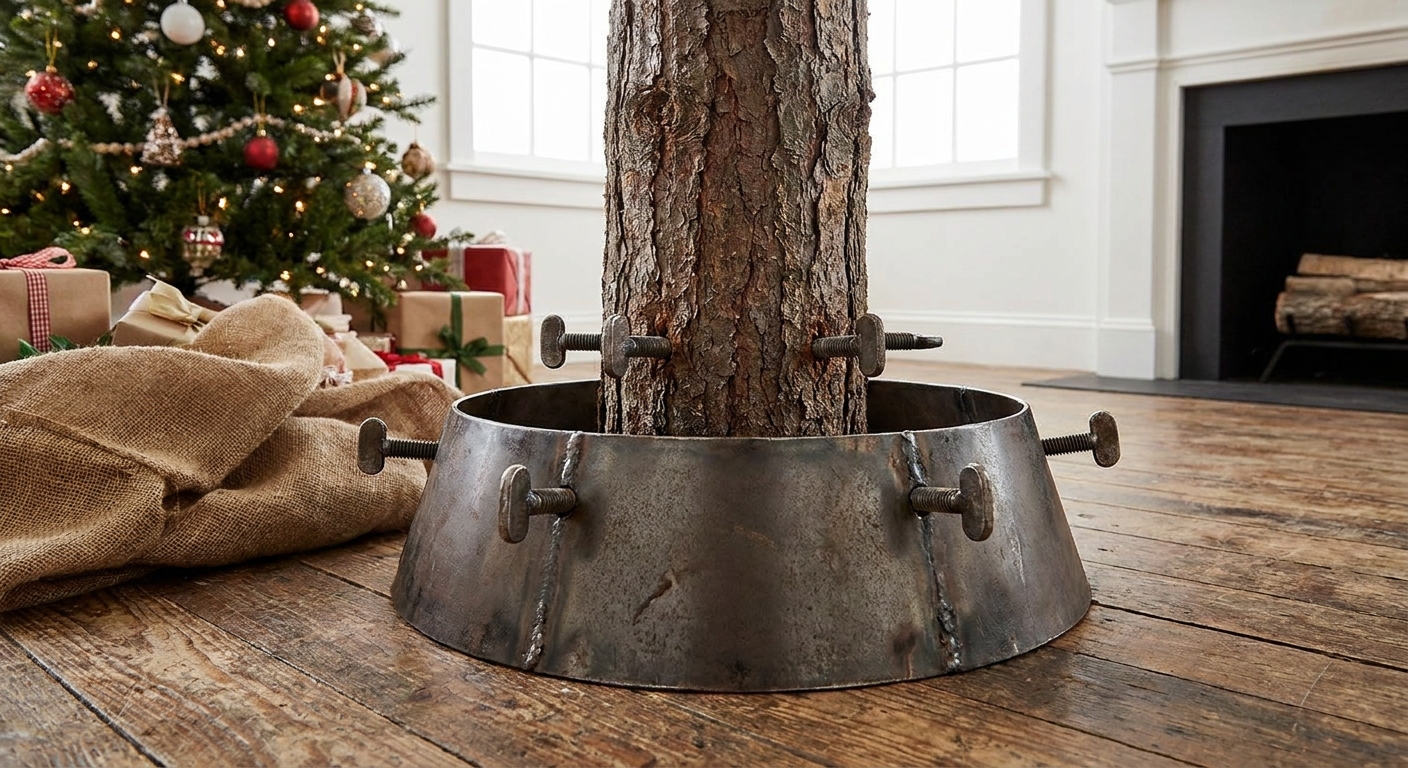
Fix #2: Tighten collars and clamps
Different stands fail in different ways. The good news is the fix is usually the same: even tension and the right tightness.
If your stand has side screws
- Do not overtighten one screw as a shortcut. Alternate between screws and keep checking the trunk plumb.
- Use the right tool if needed. Hand-tight is fine for many stands, but some require a wrench or screwdriver for a solid bite.
- Recheck after 10 minutes. As the trunk settles, you may get a tiny bit of play that needs one more quarter turn.
If your stand has a pedal, ratchet, or clamp ring
- Confirm the clamp is centered around the trunk, not caught on bark ridges.
- Lock it fully according to the stand mechanism, then test by gently pushing the trunk. If it shifts, unlock and reseat again rather than forcing the lock tighter.
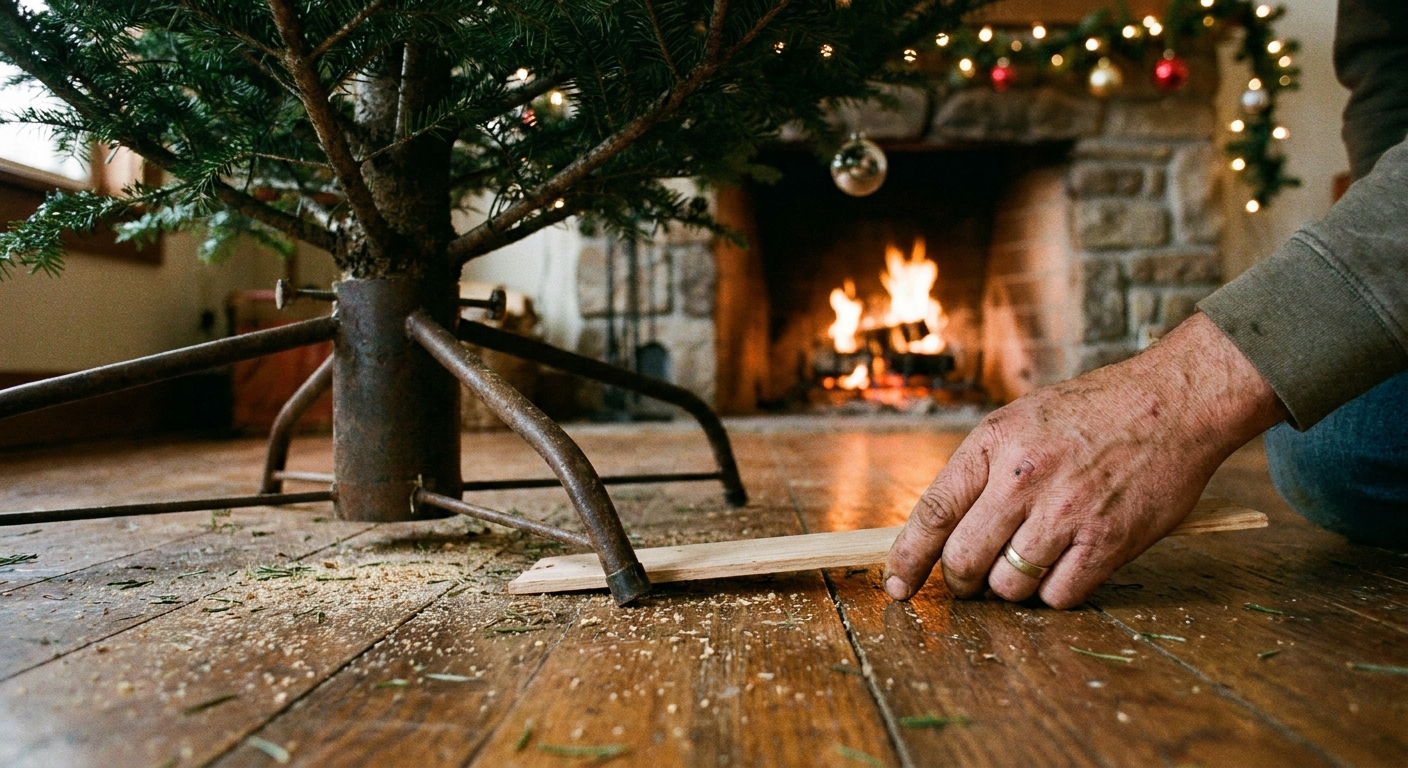
Fix #3: Shim the base
Even “flat” floors are not always flat, especially near thresholds, old hardwood, thick carpet padding, or tile grout lines. If the stand rocks, shimming is the cleanest solution.
What to use as shims
- Wood shims (best option, inexpensive, very stable)
- Felt furniture pads for tiny adjustments on hardwood
- Rubber shelf liner folded into layers for grip on slick surfaces
- Coins for micro-leveling under a metal foot (temporary only). Place a thin grippy layer under them if you can, and skip this on delicate floors because metal can scratch and can slip.
Avoid anything squishy (like folded fabric) that compresses over time. That is how a tree slowly starts leaning again during dinner.
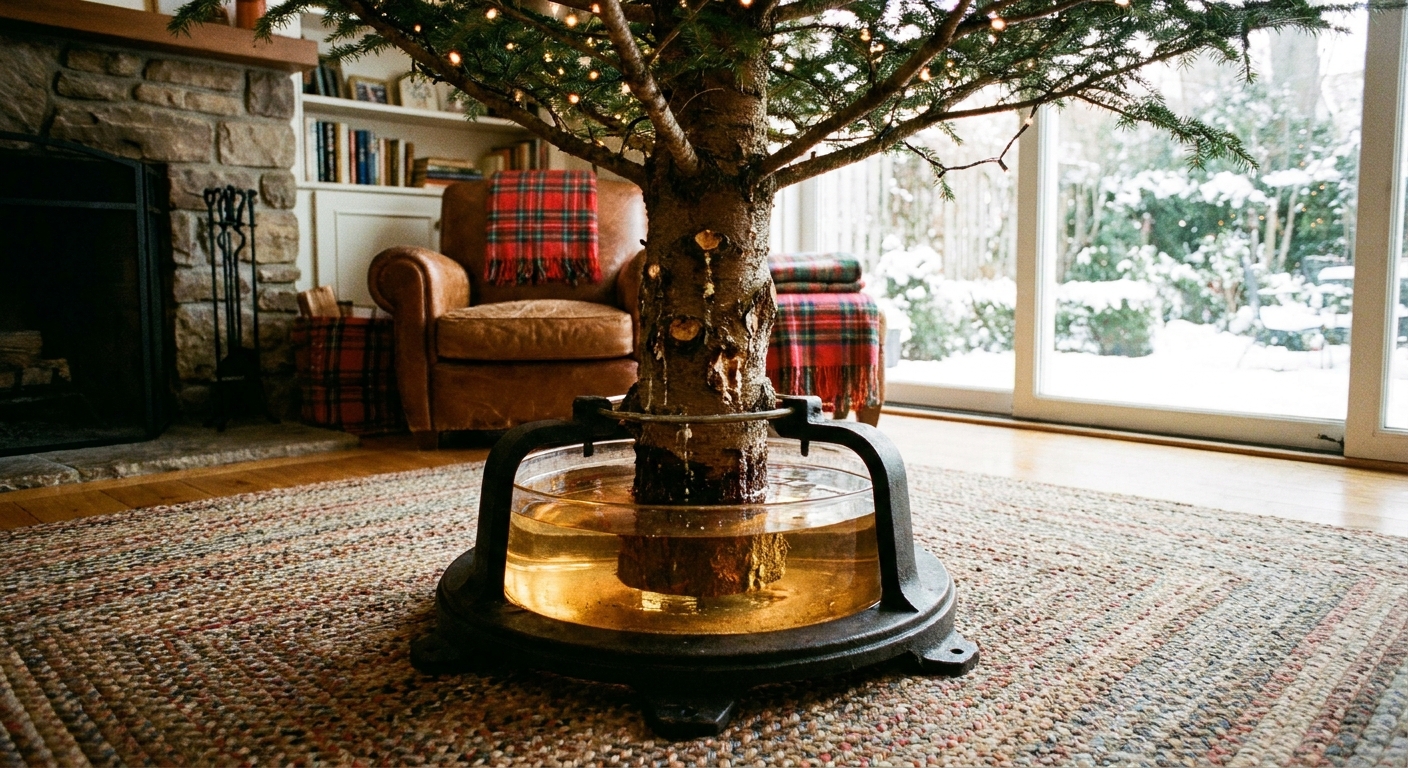
If you have a water-holding reservoir stand, keep shims clear of the fill opening, and recheck stability once the stand is filled. Water adds weight and can change how a shim sits.
Step-by-step shimming
- Find the low side by gently rocking the stand and noting where it lifts.
- Lift the stand edge slightly and slide in a shim under the low area or under the specific foot that is off the floor.
- Test for wobble with a gentle push. Add or trim shims until the stand sits solid with no rocking.
- Hide the shims later with your tree skirt. The goal is stability first, pretty second.
Fix #4: Stop sliding
Sometimes the tree is straight, but the whole stand gradually migrates, especially on thin flatweave rugs, a tree skirt under the base, polished tile, or when the cord gets tugged.
- Add grip under the stand: place a rectangle of non-slip rug pad or rubber shelf liner under the stand base. Keep it flat so the stand does not perch on a wrinkle.
- Check cord tension: route the plug so it has slack and is not pulling the tree toward an outlet.
- Anchor to the wall for high-traffic homes: use a tree safety strap or clear line from the upper trunk to a wall hook or sturdy anchor point. Use a stud, or a properly rated drywall anchor. Avoid lightweight adhesive hooks.
If you have toddlers, pets, or enthusiastic dancers, anchoring is not overkill. It is sanity.
Fix #5: Balance the weight
If the stand is solid and the trunk is seated, but the tree still seems to drift to one side, your decorations may be creating a gentle tug. This is most common with heavy toppers, thick garland, or ornaments clustered on the front.
How to confirm it is a weight issue
- With the tree stabilized, remove the topper and step back. If the lean improves, you found it.
- Temporarily remove heavy items from the leaning side and see if the trunk returns upright.
How to correct it fast
- Support the topper: for a heavy topper, add a topper stabilizer or gently secure the topper to the upper trunk with floral wire so it does not act like a lever.
- Split heavy garland into two runs rather than one thick run on the front.
- Redistribute the big stuff: shift a few heavier ornaments to the opposite side or deeper into the tree closer to the trunk.
Think of the tree like a mobile. Small shifts make a big difference.
When it still leans
If you have reseated, tightened evenly, and shimmed, but the tree will not stay straight, the stand itself may be the issue.
Stand issues to check
- Trunk diameter is too small or too large for the stand collar, so screws cannot grip evenly.
- Stand bowl is shallow, so the trunk never feels locked in.
- Plastic threads are stripped and screws keep loosening.
- Base is narrow compared to the tree height, making it top-heavy.
If any of these are happening, switching to a sturdier stand can be the fastest fix. Look for a wide base, a deep bowl, and metal screws with strong threads. Match the stand to your trunk diameter and tree height, not just the label on the box.
Fast checklist
If you want the quick version, here is my “tree is leaning and guests arrive in 20 minutes” order of operations:
- Unplug lights and remove topper.
- Loosen screws, reseat trunk fully in the cup.
- Tighten screws evenly in an alternating pattern.
- Check for stand wobble, shim under the low side.
- Add non-slip grip under the base if it is sliding.
- Put topper back on and rebalance any heavy decor pulling the top.
FAQ
How do I straighten a tree without taking it out of the stand?
If the trunk is seated properly and the stand is not rocking, you can often fix a mild lean by loosening all screws slightly, having someone hold the trunk straight, then retightening evenly. If the trunk is not seated flat, you will need to lift and reseat it, even if only by an inch.
Why does my tree keep leaning after I tighten the screws?
Usually one of three things is happening: the trunk is cut at an angle and cannot sit flat, the screws are tightened unevenly and push the trunk off-center, or the floor is uneven and the stand is rocking. Work through reseating, alternating screw tension, and shimming.
What can I put under a tree stand to level it?
Wood shims are the most stable option. Felt pads work for tiny corrections on hardwood, and folded rubber shelf liner adds both leveling and grip. Coins can work in a pinch, but they can scratch and can slip, so use them carefully and temporarily.
Is it OK if the trunk touches one side of the stand collar?
It can be, but it often signals the trunk is off-center. Ideally, you want the trunk centered so the screws can apply even pressure. If the trunk is pressing hard against the collar, loosening and reseating usually helps.
How can I keep my tree from tipping if I have pets or kids?
Start with a wide, stable stand and solid shimming. Then add a discreet anchor: a tree safety strap or clear line from the upper trunk to a stud-mounted hook or a properly rated wall anchor. Also route cords so they do not tug the tree toward the outlet.
Final steadiness test
Once you think you have it fixed, do a gentle two-finger push test. Place two fingers on the trunk and lightly press from two directions. The stand should not rock, and the trunk should not shift inside the collar. If it passes that test, you can go right back to the fun part, admiring your tree from every doorway like the holiday-obsessed home stylist you are becoming.