Long weekend after Thanksgiving or the first Sunday of Advent? Learn the origin of each tradition, how to choose your ideal start date, real-tree timing tips...
The Festive Dwell
How to Keep a Cut Christmas Tree from Drying Out
Stop needle drop fast. Learn how to recut the trunk, keep the stand full, and place your real Christmas tree away from heat so it stays fresh and drinking water longer.

Clara Jenkins
Clara Jenkins is a former visual merchandiser and lifelong holiday enthusiast who believes every season is worth celebrating. She helps readers transform their everyday spaces into magical, welcoming homes through budget-friendly DIYs, elegant tablescapes, and clever styling tricks. When she isn't untangling fairy lights or hot-gluing autumn wreaths, Clara can be found hunting for vintage ornaments at local flea markets.
Published November 13, 2026
The fastest way for a real Christmas tree to turn from magical to messy is simple: it stops drinking. I learned this the hard way back in my visual merch days, when a showroom tree went from “fresh forest moment” to “crispy confetti” in what felt like two shifts. A big early clue is when you top off the stand and the water line barely drops.
The good news is that most drying problems are fixable with a few quick moves, especially in the first 24 hours.
Below is my practical, no-fuss routine for keeping a cut Christmas tree hydrated, plus exactly what to do when it is already dropping needles or the water level is mysteriously not moving.
Why cut trees dry out indoors
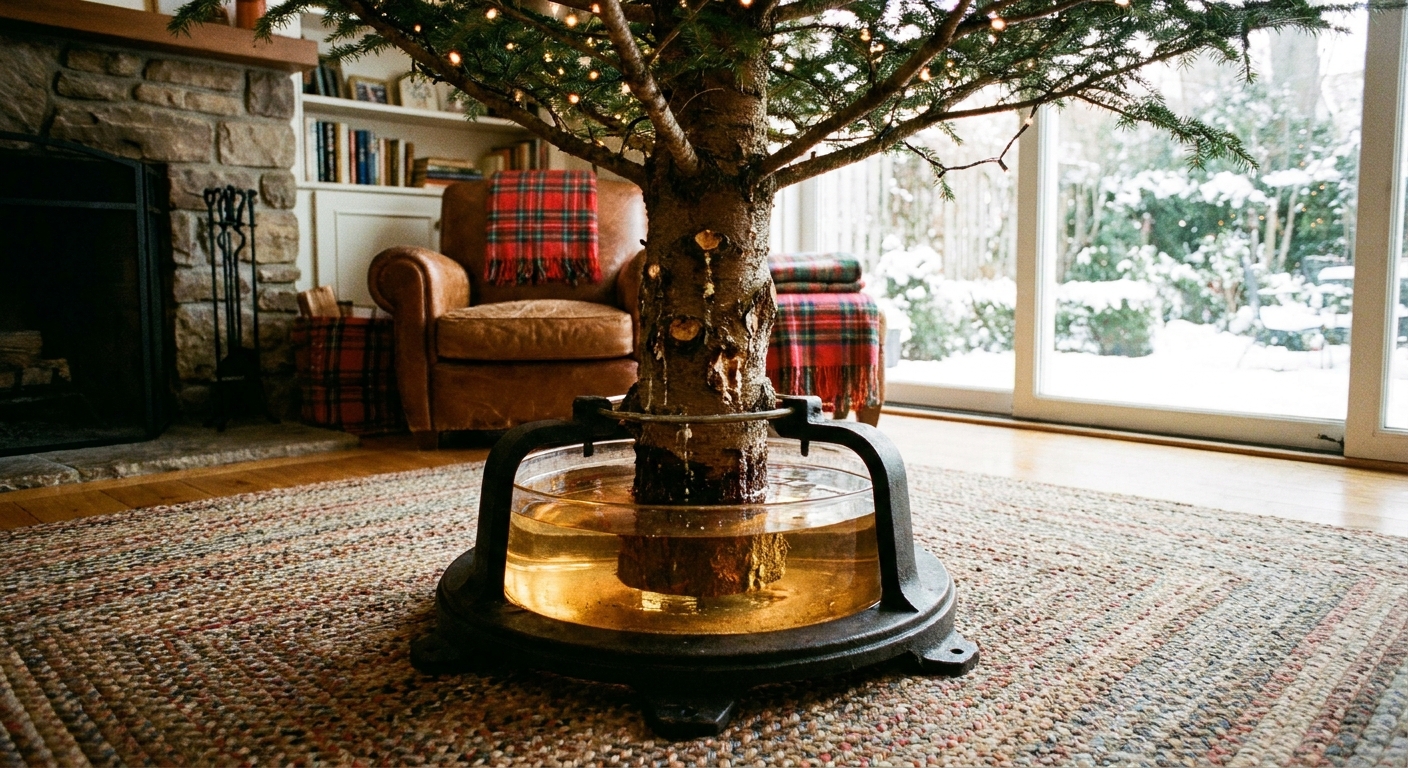
A cut tree drinks through the exposed wood at the bottom of the trunk. Over time, that cut surface can get clogged with resin and dried sap, and air can also reduce how efficiently the trunk pulls water up. Add warm indoor air, dry heat, and direct sun, and the tree loses moisture faster than it can replace it.
Most “my tree won’t drink” situations come down to one (or more) of these:
- The trunk was not recut right before going into water.
- The stand ran dry and the cut end dried out.
- The stand is too small to hold enough water for the tree’s first thirsty days.
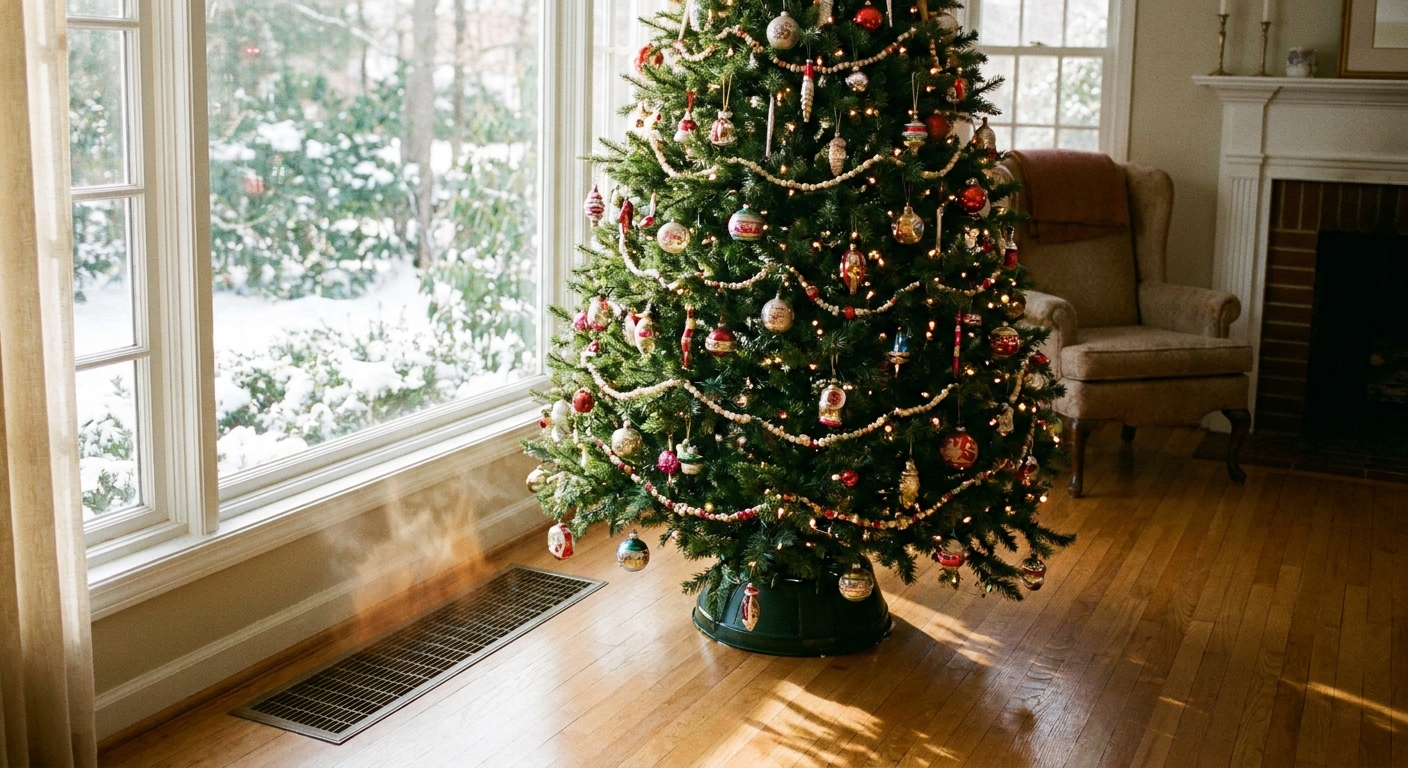
- The tree is too close to heat like a vent, radiator, fireplace, or sunny window.
- The base is not actually in water because the stand is over-tightened or the trunk is sitting on the bottom instead of suspended.
The first-hour routine
If your tree is still outdoors, this is your best shot at a long-lasting display. Think of it like conditioning cut flowers, but bigger and spikier.
1) Make a fresh cut
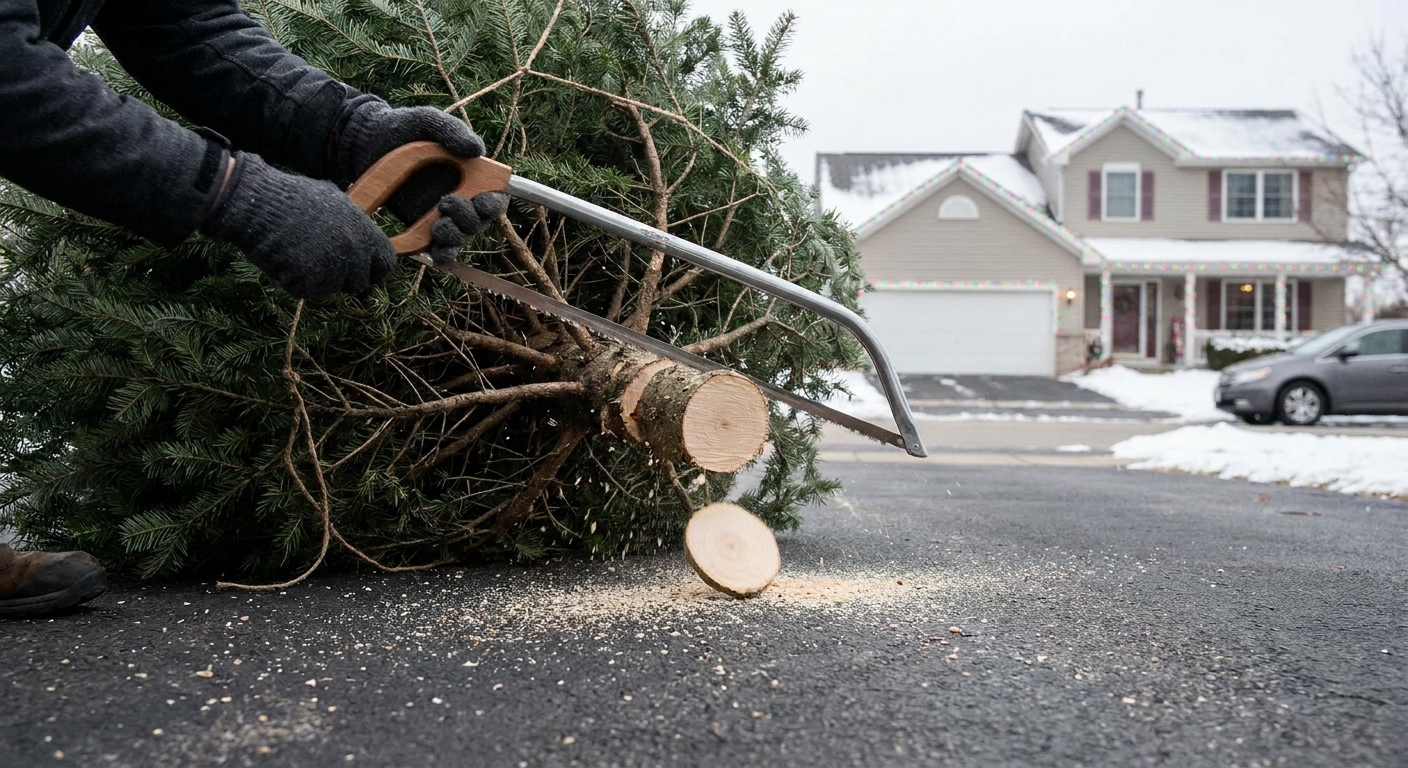
Cut about 1 inch off the bottom of the trunk right before placing it in water. (If the tree has been cut for a while or the end looks really glazed over, taking a bit more is fine.) This exposes fresh tissue and helps the tree start drinking again.
- Use a handsaw or a fresh, sharp blade.
- Cut straight across. No angles needed.
- Do not shave the sides of the trunk. The tree drinks from the end grain, not the bark.
2) Get it into water fast
After the recut, try to get the trunk into the stand with water within minutes. The longer the cut end sits in air, the more likely uptake will slow.
3) Start with plain water
Plain tap water is perfect. You do not need sugar, aspirin, soda, or anything else.
If you want one simple optional tweak, some tree growers recommend using slightly lukewarm water for the first fill to encourage initial uptake, then switching to cool water after that. If that feels fussy, skip it. Consistent water matters more.
4) Fill the stand fully
A tree can drink a surprising amount in the first couple of days. If the stand is not full, it can run dry quickly and that is when problems start.
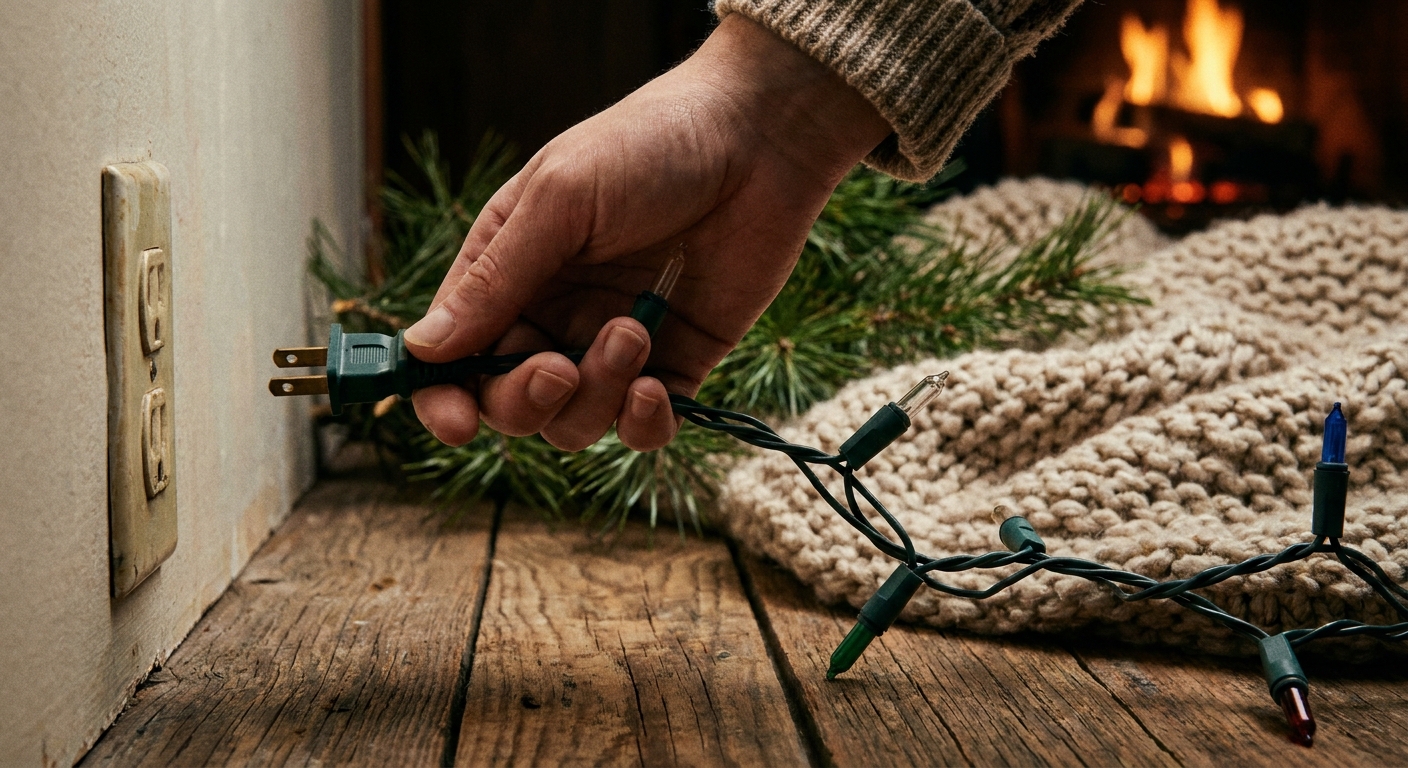
Safety note: keep the water level contained in the stand reservoir and away from power strips, extension cord connections, and low-hanging plug connections near the base.
How much water does it need?
There is no single number for every tree, but here is what to expect:
- First 24 to 48 hours: the thirstiest period. Many trees drink a lot during this window.
- After it stabilizes: daily water use typically becomes more predictable.
My rule of thumb is simple: check the stand morning and night for the first three days. After that, once a day is usually fine if your home is not overly warm or dry.
If you like a quick guideline, many growers use this rough expectation: a healthy tree can drink around a quart of water per day for each inch of trunk diameter, especially early on. Your mileage will vary by species, room conditions, and how fresh the tree was when it was cut, but it is a helpful reality check for stand size.
Quick reality check
If you refill the stand and the level never seems to drop at all, the tree may not be taking up water. Jump to the troubleshooting section below.
Placement matters
I love a tree by the fireplace visually, but heat is a hydration bully. If you want maximum needle retention, treat your tree like it is on a cool, calm retreat and out of direct sun.
Keep it away from
- Fireplaces and wood stoves
- Radiators and baseboard heaters
- HVAC vents that blow warm air
- Sunny windows that heat the tree during the day
Use your thermostat
If you can, keep the room a little cooler than usual, especially overnight. Even a small temperature drop can slow moisture loss.
Basic safety reminder: keep the tree away from open flames, and turn off tree lights when you are asleep or out of the house.
If it is dropping needles
Needle drop happens for a few reasons, but a tree that is not drinking is the one to address immediately. Also, not all trees behave the same. Some species (like Fraser fir) tend to hold needles better indoors, while some spruces can be quicker to shed even with good care.
Here is my step-by-step triage.
Step 1: Make sure the trunk is actually in water
It sounds obvious, but I have seen stands tightened so aggressively that the trunk sits down on the base plate, leaving very little water contact. Loosen, reposition, and make sure the trunk end is surrounded by water.
Step 2: Refill and mark the level
Fill the stand completely, then use a piece of tape on the outside of the reservoir to mark the water line. Check it again in 6 to 12 hours. If it has not budged, uptake is likely blocked at the cut end.
Step 3: If the stand ran dry, recut again
If the stand was empty at any point, assume the cut end dried out and is now struggling to take up water. The most reliable fix is:
- Take the tree out of the stand.
- Cut another about 1 inch off the base.
- Immediately return it to a stand filled with water.
I know this is a hassle when the tree is already decorated. If you are mid-season and the tree is heavy with ornaments, enlist a helper and remove only the fragile items around the lower branches so you can safely tip the trunk out.
Step 4: Consider humidity
If your home is very dry, a humidifier in the same room can help slow moisture loss. This is especially useful in homes with forced-air heat.
If the stand keeps running dry
A stand that runs dry even once can create ongoing problems, because that dried cut end can be harder to get drinking again. Here is how to break the cycle.
Make water checks automatic
- Check water when you make coffee.
- Check water when you turn on the tree lights at night.
Use a bigger reservoir
If your stand holds only a small amount of water, you will be refilling constantly in the early days. A larger reservoir makes success easier because it gives you a cushion if you miss one check.
Stabilize without choking it
If the tree is wobbly, people tend to over-tighten the bolts. Tighten evenly, just until secure, and confirm the trunk end still sits in water.
What not to do
I am all for heirloom holiday wisdom, but some common add-ins create more worry than benefit.
- Skip sugar or soda: it is not necessary and can encourage microbial growth.
- Be cautious with bleach and additives: you do not need them for most homes, and they will not fix a dried-out cut end. If your tree farm or stand manufacturer recommends a specific dose of a tree preservative or biocide, follow their directions rather than improvising.
- Do not drill holes in the trunk: it does not meaningfully improve water uptake for most trees.
- Do not let the stand “almost” run dry: almost is how it becomes dry overnight.
When it is too dry
Even with great care, every real tree has a limit. If you see these signs, it is time to take it down for safety and sanity.
Practical signs
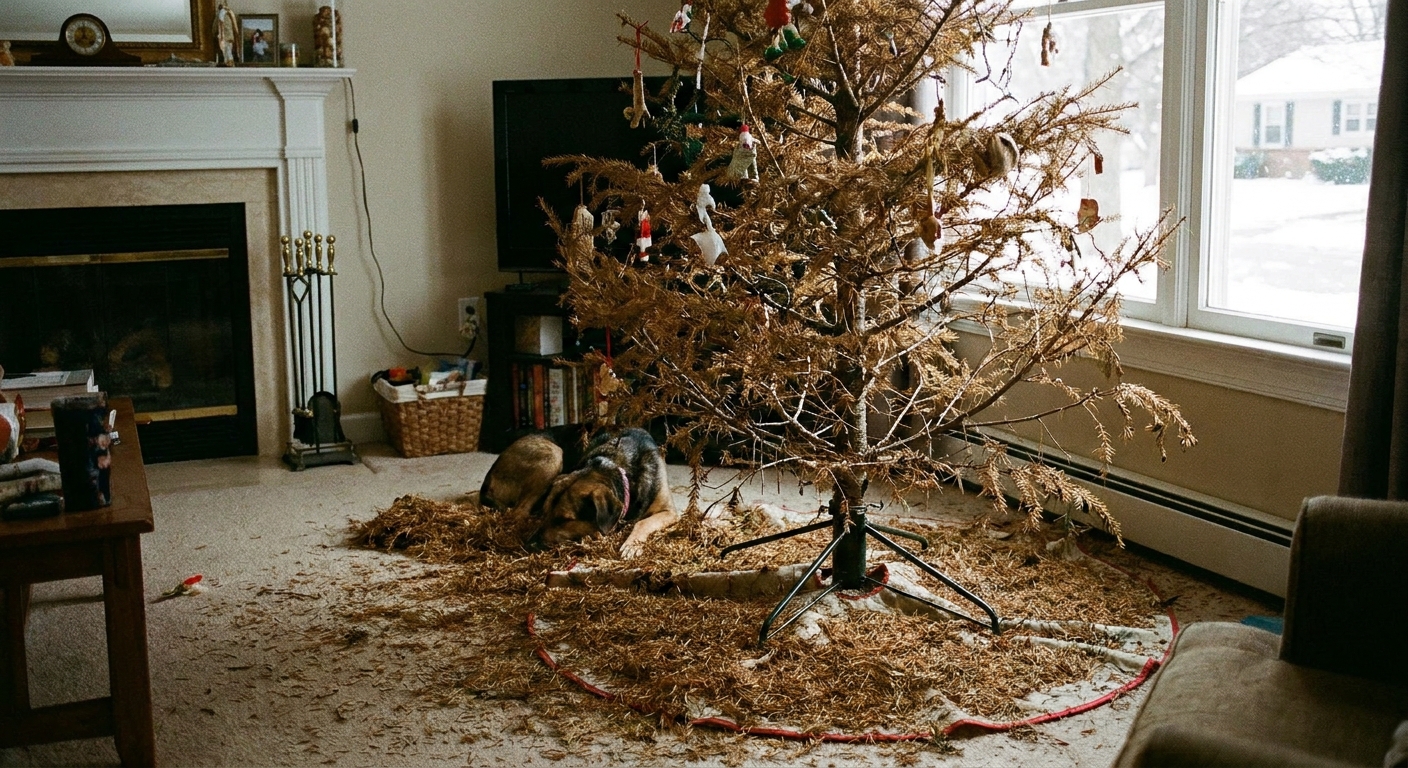
- Needles are brittle and snap easily when you bend them.
- Branches feel light, stiff, and crackly instead of flexible.
- The tree is suddenly shedding heavily with gentle bumps.
- The trunk feels dry and sticky and the tree still will not drink after a fresh recut.
A simple at-home check
Gently tug a small inner branch. If it drops a shower of needles with minimal effort, the tree is drying out fast.
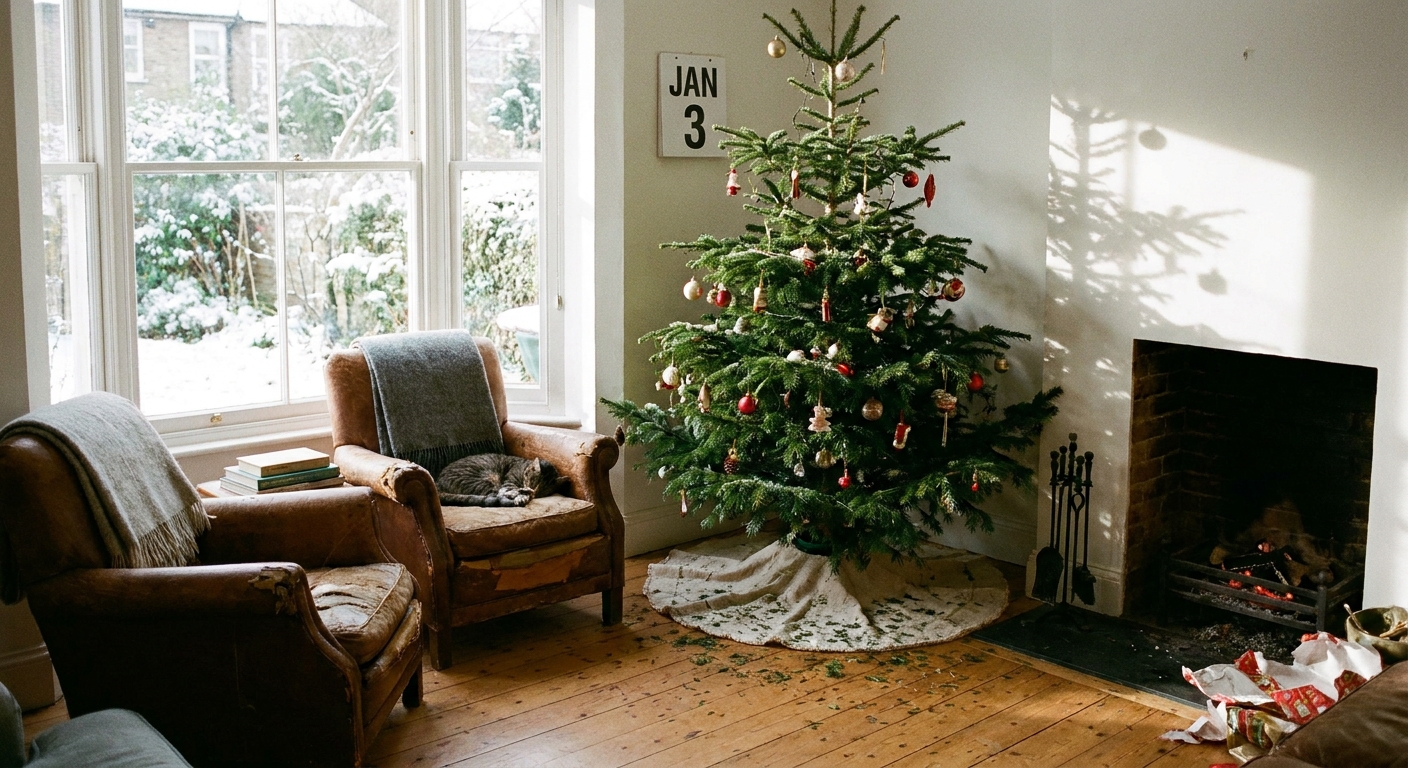
Important: A very dry tree is more flammable. If it is crisping up, do not wait until after the next party to deal with it.
Quick FAQ
How long should a fresh-cut tree last indoors?
With a fresh recut, consistent water, and a cooler placement away from heat, many trees can look good for several weeks. The exact timeline depends on the tree species, how fresh it was when cut, and the conditions in your home.
My tree smells less like pine. Is that a dryness sign?
Sometimes. Scent naturally softens over time, but if scent loss comes with needle drop and brittle branches, your tree is likely drying out.
Can I spray my Christmas tree with water?
Light misting can add a touch of surface humidity, but it is not a substitute for keeping the stand full. If you mist, keep electrical safety in mind and avoid wetting plugs, light connections, or extension cords near the base.
Why does it drink a lot at first, then slow down?
That initial thirst is normal. After the first couple of days, uptake often becomes steadier. What you do not want is a tree that stops drinking entirely, especially if it is also shedding.
My go-to checklist
- Recut about 1 inch off the trunk right before setup.
- Get the trunk into water immediately.
- Fill the stand completely and check water morning and night for the first three days.
- Place the tree away from heat sources and direct sun.
- If the stand runs dry even once, recut the trunk again.
If you do nothing else this season, do the recut and keep the stand full. Those two habits fix the vast majority of “why is my tree drying out?” drama, and they keep your December feeling cozy instead of crunchy.