Make your Thanksgiving buffet station feel abundant, not chaotic. Try these smart, pretty, space-saving setup tricks for food, plates, and decor.
The Festive Dwell
Buffet vs. Sit-Down Holiday Dinner: Decor That Works
Planning a holiday dinner party? Learn how to decorate for a buffet versus a formal sit-down meal with smart space planning, centerpiece tips, and easy styling tricks that won’t crowd the food or the guests.

Clara Jenkins
Clara Jenkins is a former visual merchandiser and lifelong holiday enthusiast who believes every season is worth celebrating. She helps readers transform their everyday spaces into magical, welcoming homes through budget-friendly DIYs, elegant tablescapes, and clever styling tricks. When she isn't untangling fairy lights or hot-gluing autumn wreaths, Clara can be found hunting for vintage ornaments at local flea markets.
Published October 17, 2026
Updated October 17, 2026
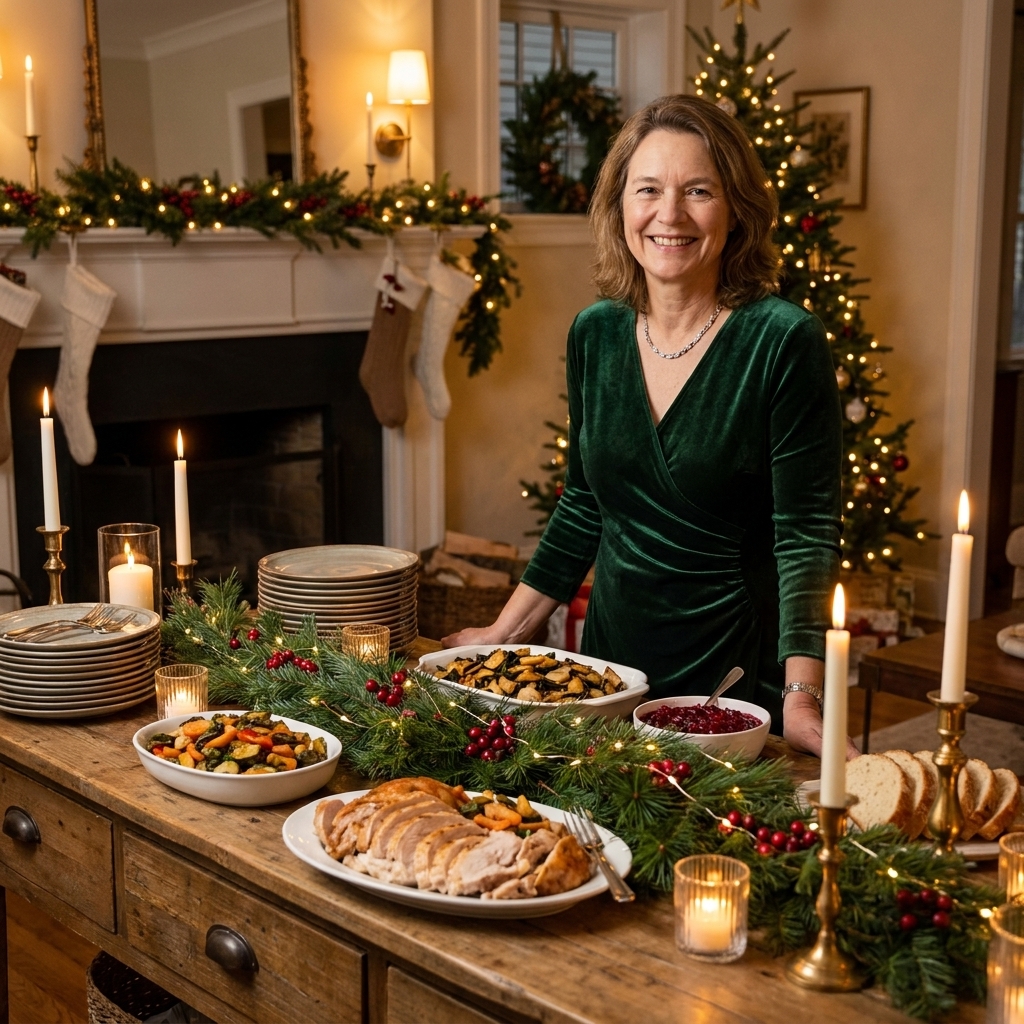
I love a holiday dinner party for the same reason I love a styled mantel moment: it is all about flow. Where people stand, where hands reach, where coats land, where conversation naturally gathers. And nothing changes your decorating strategy faster than one simple decision: are you serving buffet-style, or hosting a formal sit-down meal?
Both can be stunning. Both can be warm and memorable. They just need different space planning and different centerpiece logic. Let’s style each one in a way that feels intentional, festive, and easy to live in all night long.
First, pick your vibe
If you are torn, here is my quick, real-life way to decide. Think about what you want your guests to be doing most of the night.
- Buffet style: mingling, refilling drinks, grazing, moving from room to room, popping into the kitchen to chat.
- Sit-down meal: lingering at the table, telling stories, passing platters, savoring courses, longer stretches of seated conversation.
Neither is more “proper.” One is simply more mobile, and the other is more table-centric. Your decor should match that.
Space planning: buffet
A buffet party lives or dies by traffic flow. Your number one job as the host is to prevent the classic holiday bottleneck where everyone is clutching a plate and trying to squeeze past the same chair.
Where to place the buffet
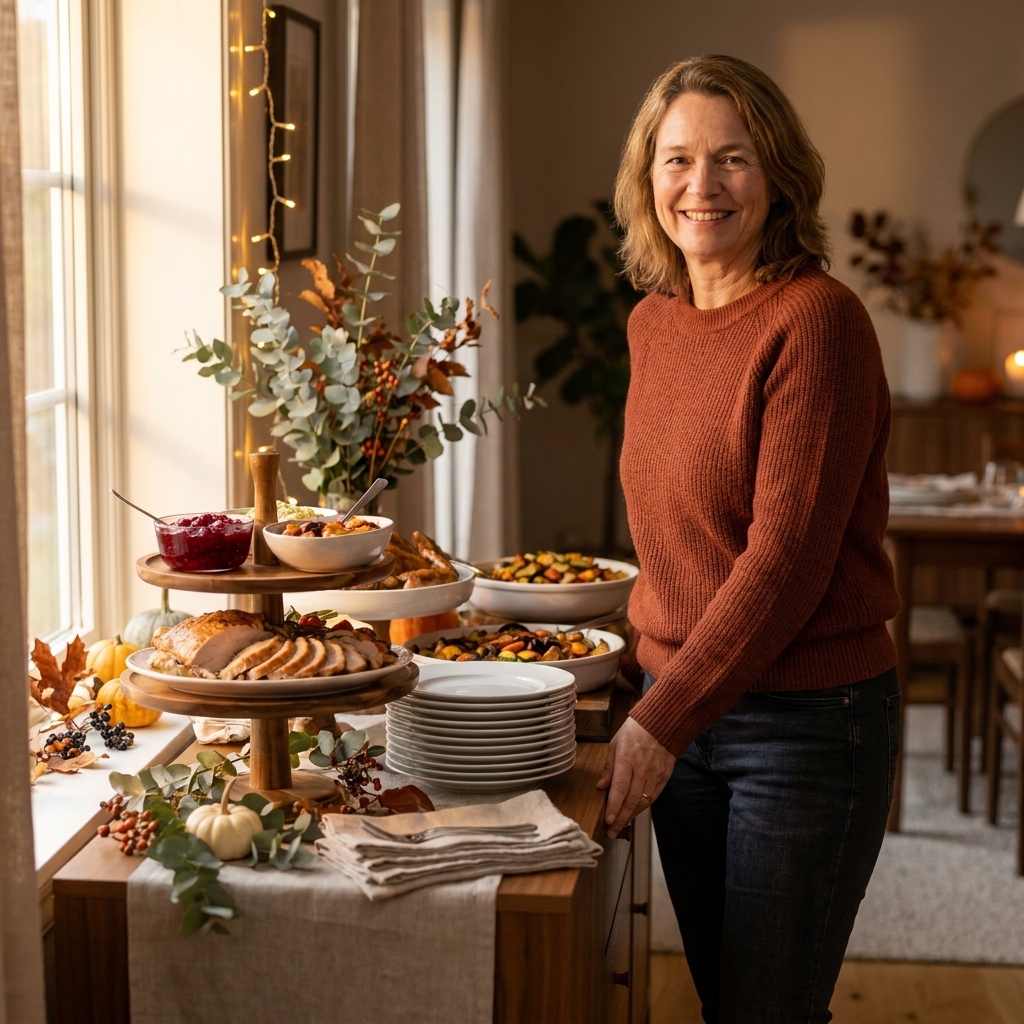
- Best spot: a sideboard, console, kitchen island, or folding table against a wall.
- Leave breathing room: as a guideline, aim for about 30 to 36 inches of clearance in front of the buffet so two people can pass comfortably. If you can do more, do more, especially in a busy kitchen.
- Create an obvious starting point: guests should instantly know where the line begins, especially if they arrive in waves.
Set it up like a calm assembly line
My former visual merchandiser brain loves this part. You want a clear start-to-finish sequence so guests are not circling back over each other.
- Plates first, then napkins and flatware (or roll-ups).
- Salads and sides, then mains.
- Sauces and toppings near what they go with.
- Bread last if it is optional, so it does not clog the start of the line.
If you have a tight space, do a “two-station buffet” by separating plates and drinks from the food. It instantly reduces clustering.
If anyone in your group uses a cane, walker, or wheelchair, build in extra passing space where you can and keep one end of the buffet easy to approach without chairs or decor in the way.
Centerpieces for a buffet
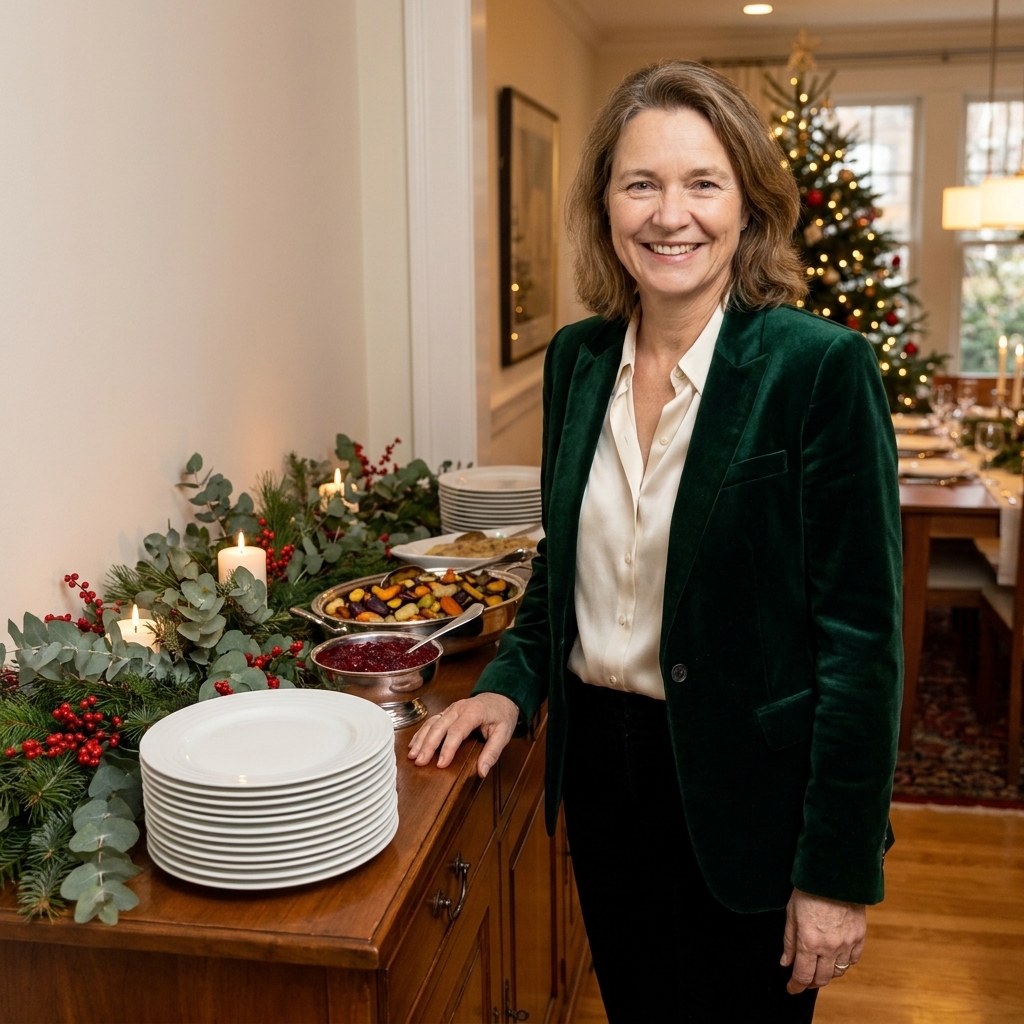
For a buffet, the buffet itself is the star. Your centerpiece strategy should support the scene without stealing precious landing space for platters and serving utensils.
Best centerpiece shapes
- Long and low: a garland runner with tucked-in accents keeps sightlines open and leaves room for serving.
- Tall and narrow: if you want height, do one or two slim arrangements at the back corners, not a big bouquet in the center.
- Backdrop height: instead of crowding the tabletop, add height behind it with art, a mirror, or a wreath hung above the buffet.
My go-to runner formula
This is the one I use when I want it to look elevated without buying a truckload of decor:
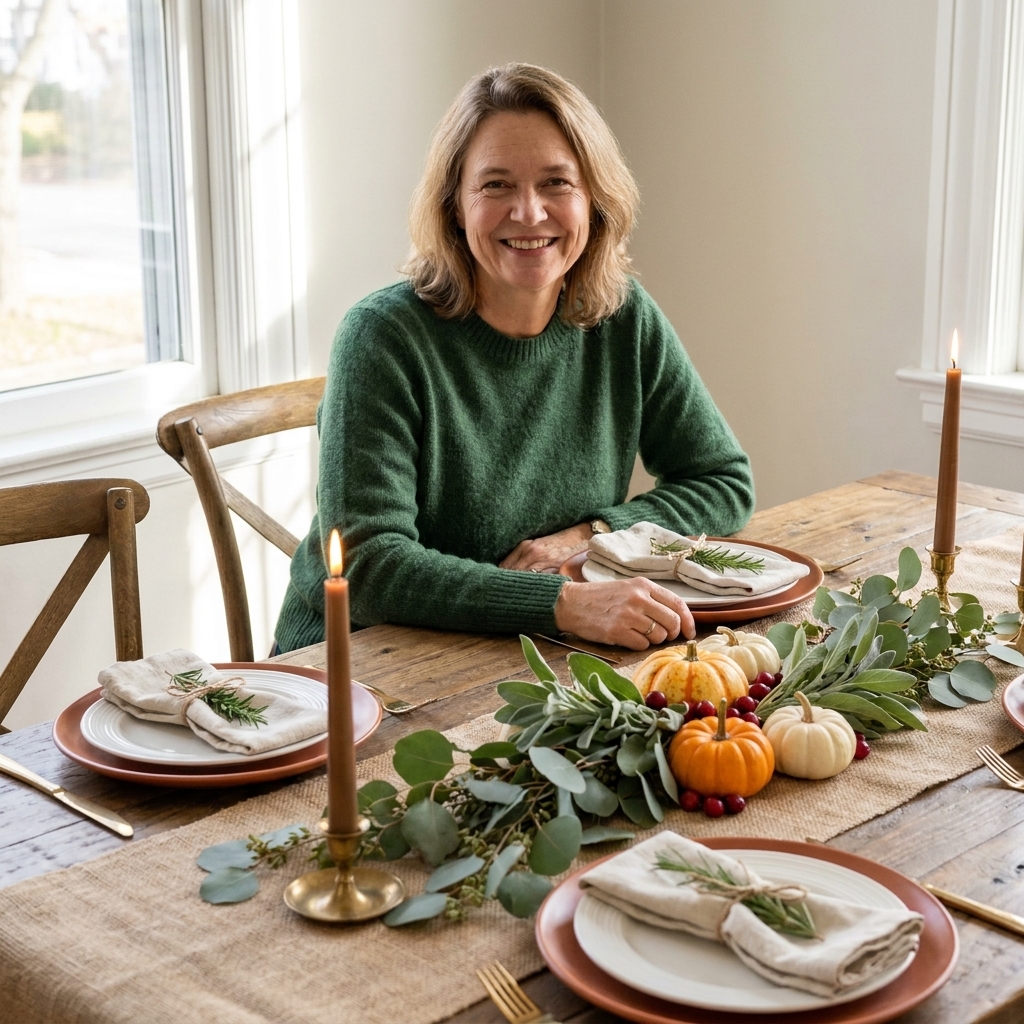
- One greenery garland or a foraged mix of evergreen clippings (keep it sparse in the center).
- Three to five candles in holders, all below platter height.
- One repeating accent: dried orange slices, pinecones, ornaments, cranberries, or mini gourds depending on the season.
Safety note from someone who has singed a ribbon once: if little ones are around or sleeves are flowing, use flameless candles on the buffet and save real flames for a protected coffee table cluster. And if you do light candles, never leave them unattended, and keep flames well away from greenery and anything dried.
What to do with the dining table
This is where people get stuck. If guests are not eating at the dining table the whole night, should you still decorate it?
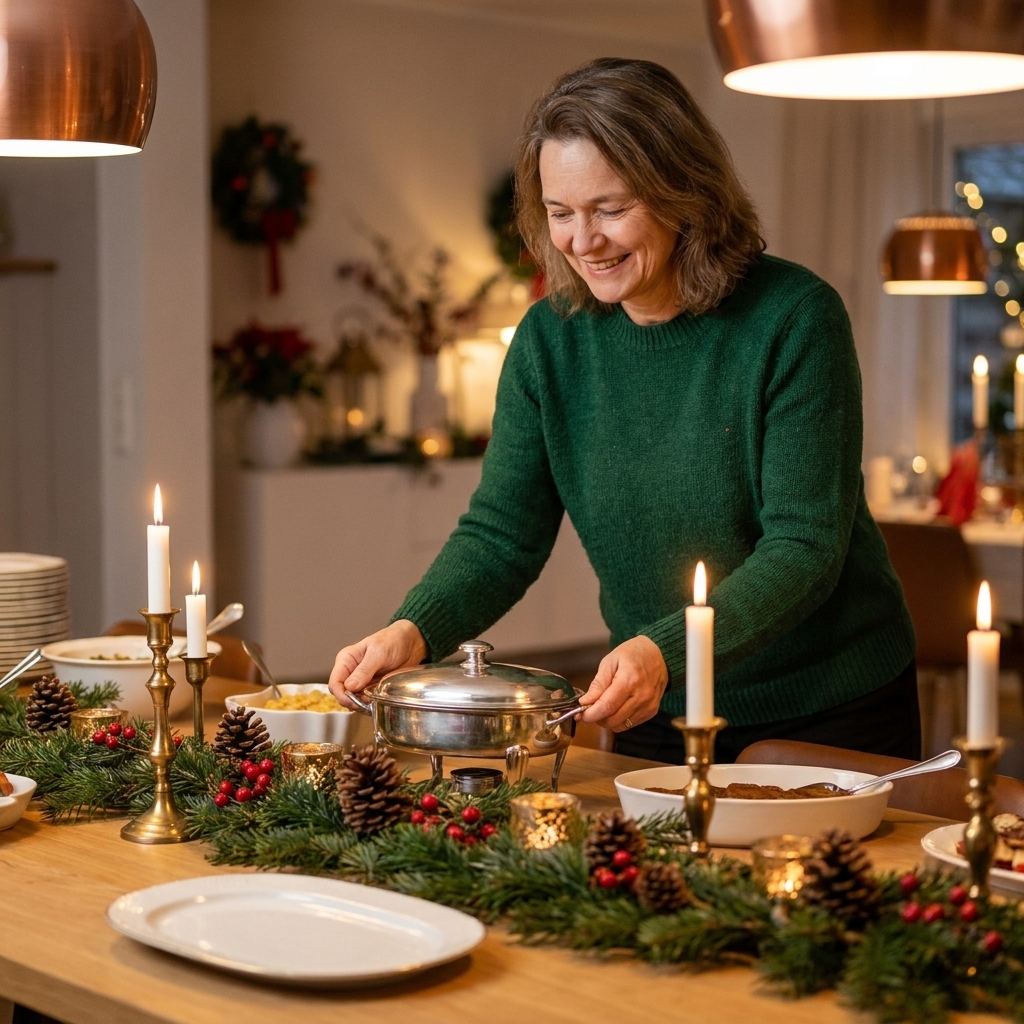
Yes, but decorate it like a landing zone, not like a formal tablescape.
Three buffet-friendly setups
- Cocktail-style: clear the table and add scattered votives plus a simple centerpiece. Guests can perch, chat, and set down drinks.
- Open seating: set plates and napkins at each place, but skip charger plates and tall florals so guests can sit wherever.
- Dessert and coffee table: keep it mostly clear, then reset later with a dessert stand, mugs, and a festive runner.
If space is tight, pull the dining table slightly away from the wall and remove two chairs to open a walking lane. It feels like cheating, in the best way.
Also, give guests a stable spot to set a drink. One or two small side tables (even a cleared nightstand) near seating prevents the inevitable glass-on-the-windowsill situation.
Space planning: sit-down
A sit-down holiday meal is all about comfort at the table. The flow still matters, but the table is the main stage and your decor should make it feel special without forcing guests to play elbow Tetris.
Table spacing I swear by
- Per-person width: as a guideline, plan for about 20 to 24 inches per guest depending on chair size and table shape. If you are squeezing, keep decor minimal and go low.
- Serving space: if you are passing platters, leave at least two open “parking spots” on the table for dishes to land.
- Chair movement: avoid floor baskets, lanterns, or oversized wreaths near chair legs.
Where the food goes
You have two clean options:
- Family style: platters on the table. Keep your centerpiece low and flexible so platters can slide in.
- Plated courses: food is portioned in the kitchen. You can go a bit more decorative at center, because you are not constantly swapping platters.
If your dining area is small, a round table tends to keep conversation easy and makes one centerpiece feel natural. Long rectangular tables look amazing with a runner approach, but they need clear passing lanes at the ends so guests are not trapped in place.
Centerpieces for a sit-down
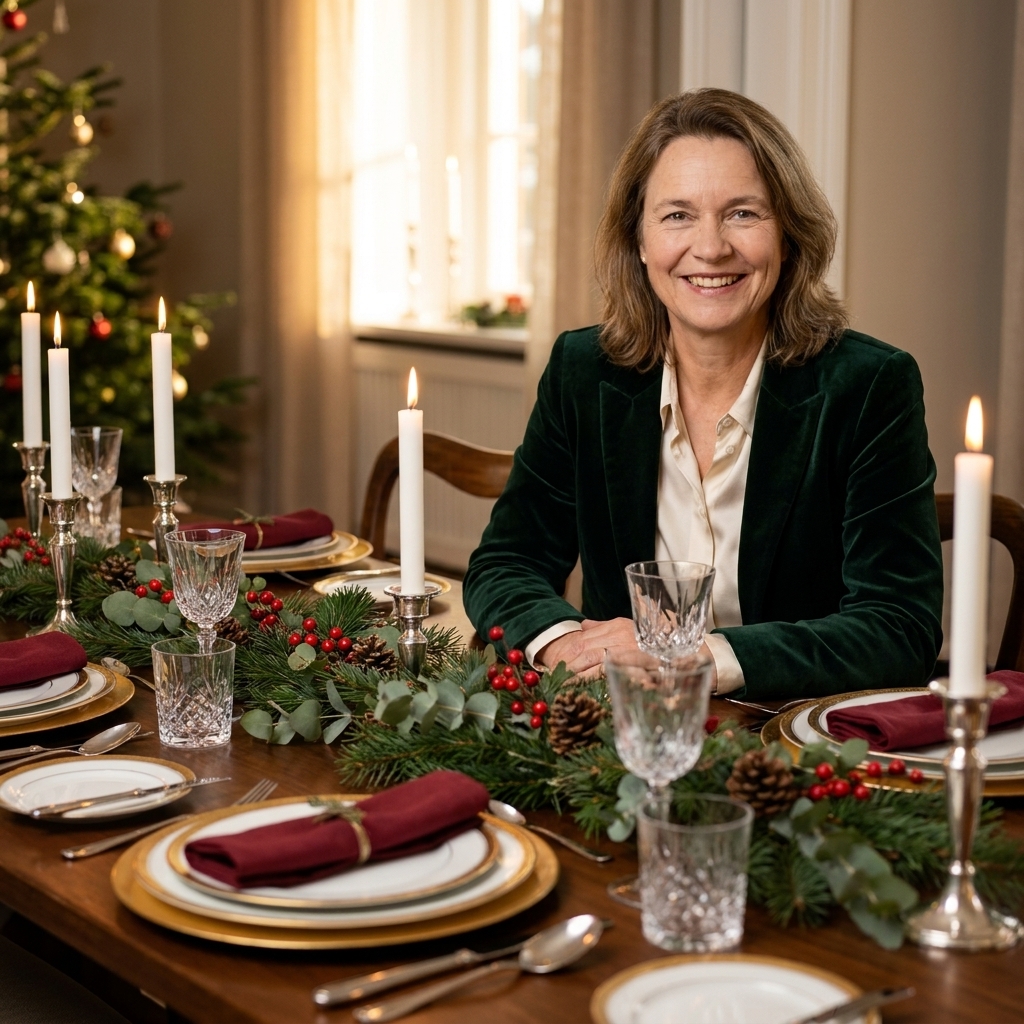
The most beautiful holiday table in the world is not worth it if your guests cannot see each other or smell their dinner because the centerpiece is a perfume bomb. Here is how to get the “wow” without the hassle.
Height: my 12-inch guideline
For a sit-down table, I use a simple guideline: stay under about 12 inches, or go tall enough that guests can see under it. The awkward middle height is what blocks sightlines.
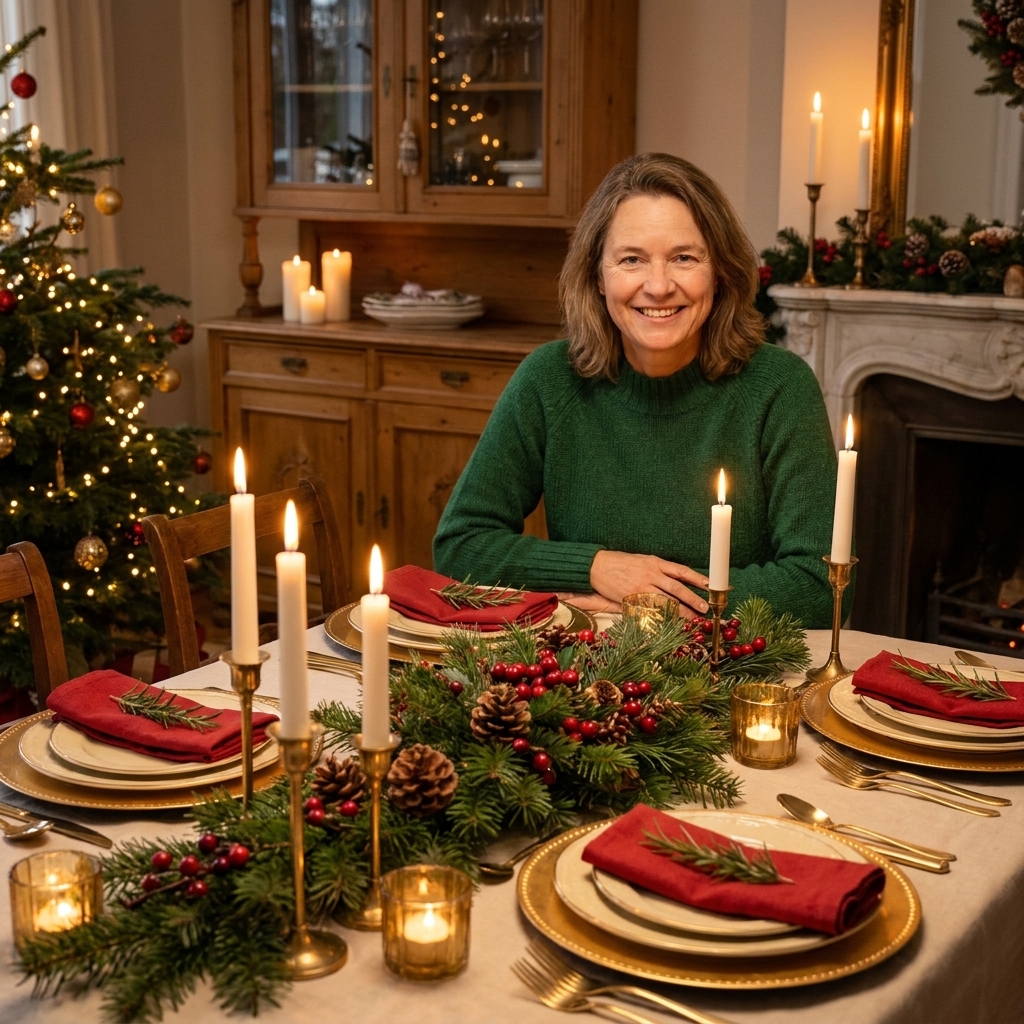
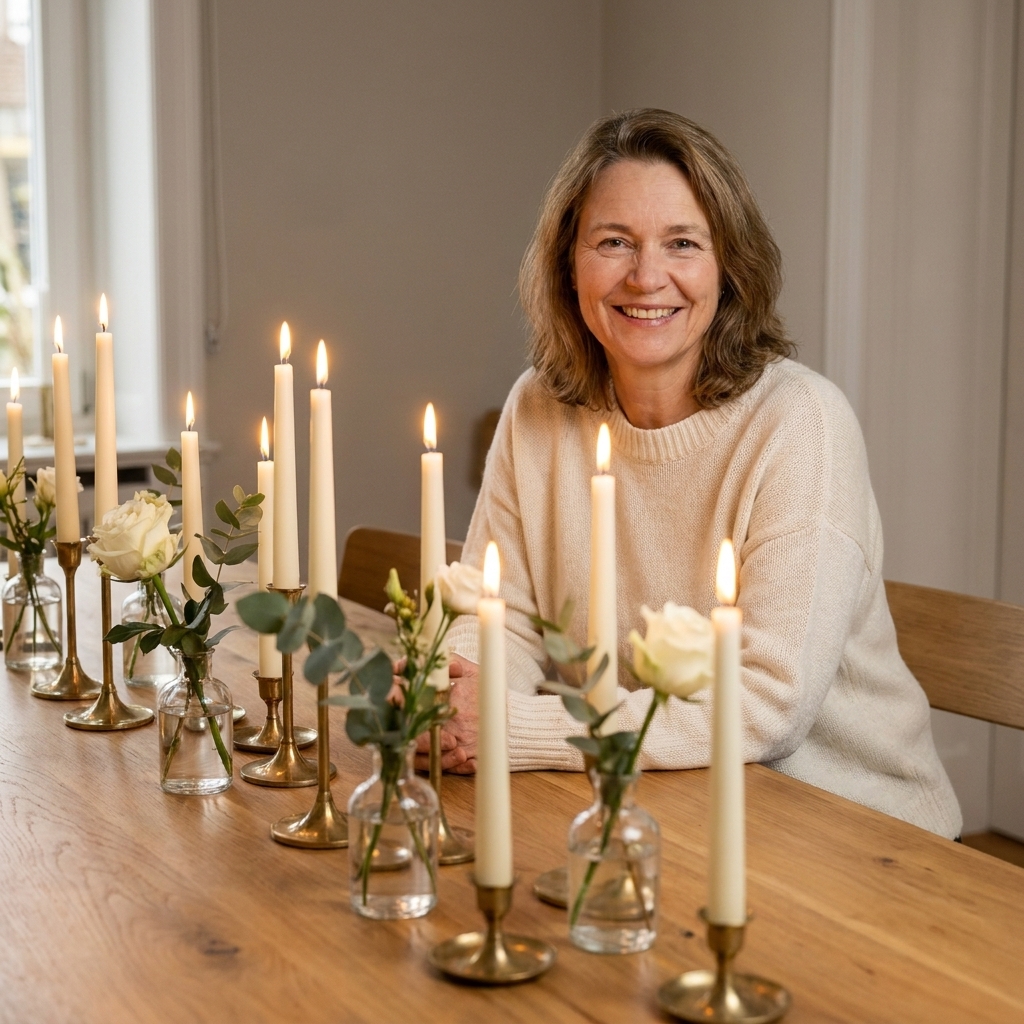
- Low option: a continuous runner of greenery with small bud vases and candle clusters.
- Tall option: slim compotes or elevated arrangements that leave open space underneath.
My favorite centerpiece structures
- Mini moments down the center: instead of one big piece, do three to five small groupings. It looks styled, and you can remove one if the table feels tight.
- Fruit and foliage: pears, pomegranates, citrus, or apples tucked into greenery reads abundant and smells subtle.
- One statement bowl: a footed bowl filled with ornaments, pinecones, or seasonal produce, plus candles at the ends.
Skip heavily scented flowers or candles at a dinner where the food is the star. Unscented tapers are your best friend.
Lighting tips
Lighting is the secret sauce, especially during winter holidays when it gets dark early.
Buffet lighting
- Brighter at the buffet so guests can see what they are serving.
- Use task lighting like under-cabinet lights, a nearby lamp, or a picture light over the sideboard.
- Keep candle clusters away from sleeves and serving spoons.
Sit-down lighting
- Go softer at the table with dimmed overheads and layered lamps.
- Use candles as the “sparkle” and keep them consistent for a cohesive look.
- If your overhead chandelier feels harsh, add shades or use warmer bulbs for the season.
Place settings to prioritize
Budget-friendly does not mean bare. It means buying a few pieces that work hard.
Best investments for a buffet
- Pretty serving utensils (they show up in every photo).
- Matching platters in white or neutral stoneware.
- Stacks of cocktail napkins and a couple of small trays for corralling.
Best investments for sit-down
- Cloth napkins in a seasonal color you love.
- Candle holders (tapers instantly say “special occasion”).
- A runner or tablecloth that becomes your yearly tradition piece.
My personal philosophy: let the basics be timeless, then rotate seasonal accents like ribbon, napkin rings, or place cards.
Common mistakes and fixes
Buffet mistakes
- Mistake: decor takes up serving space.
Fix: push styling to the back edge and use a narrow runner down the center. - Mistake: too many signs, risers, and props.
Fix: limit yourself to one “hero” styling element, like a wreath above the buffet. - Mistake: drinks too close to food.
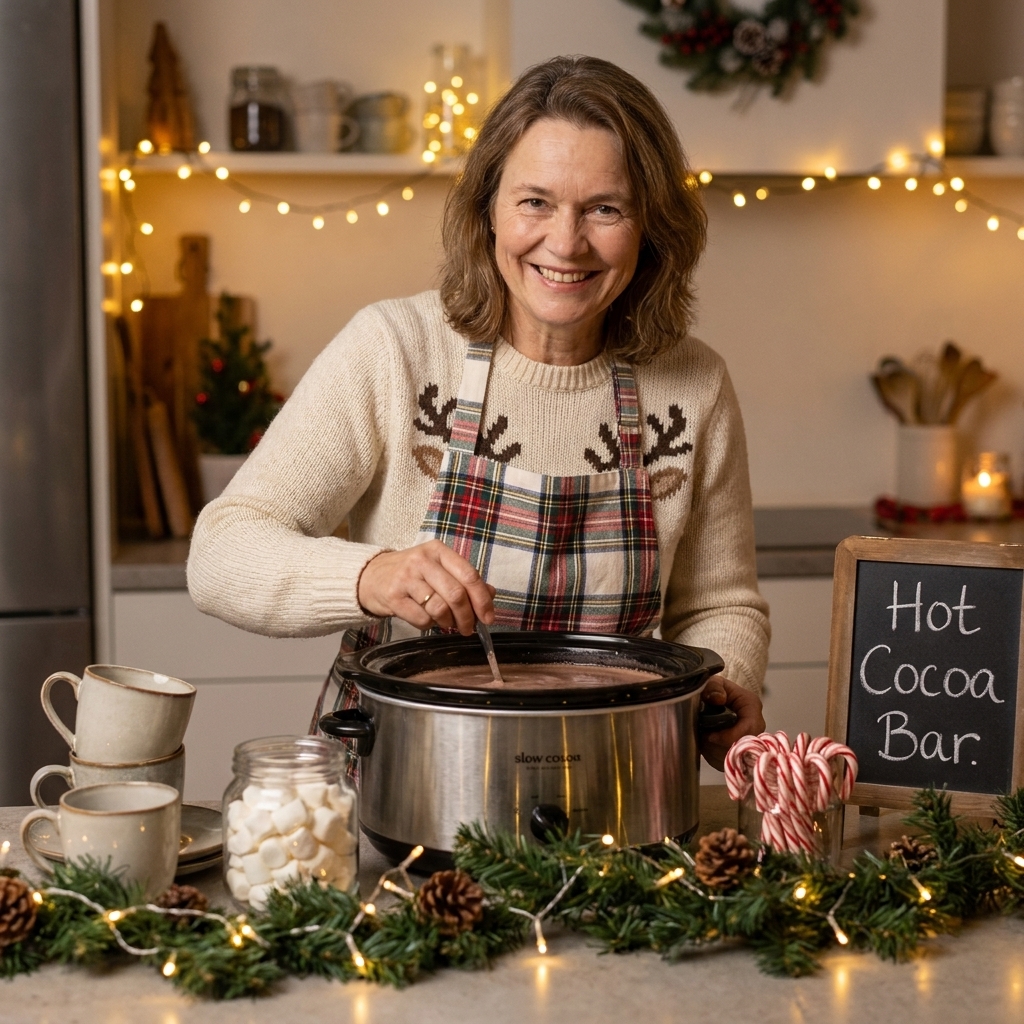
Fix: create a separate drink station with its own trash and napkins.
Sit-down mistakes
- Mistake: centerpiece blocks conversation.
Fix: go low and long, or tall and airy. - Mistake: place settings are so layered guests feel nervous using them.
Fix: set what you will actually use for the meal, and keep extras on a sideboard. - Mistake: candles are too close to greenery.
Fix: use glass hurricanes or keep greenery trimmed back several inches.
My favorite hybrid setup
Sometimes you want a buffet for ease, but you still crave that sit-down table magic. Do this:
- Run a buffet for mains and sides.
- Keep the dining table set with simple place settings, water glasses, and a low centerpiece.
- Seat everyone once they have plated their food, then bring out dessert to the table later.
It gives you the best of both worlds: less serving stress, plus the cozy togetherness of eating in one place.
Quick checklist
If you are hosting a buffet
- Prioritize traffic flow and clear surfaces.
- Decorate low and linear, or push height to the back corners.
- Use the dining table as a landing zone, open seating, or dessert station.
- Consider small labels for dishes and common allergens, especially if guests do not all know each other.
If you are hosting a sit-down meal
- Prioritize elbow room and sightlines.
- Choose a centerpiece that is low, or tall and airy.
- Plan where platters will land, or plate in the kitchen.
FAQ
How do I make a buffet look intentional, not like I pushed food to one side?
Anchor it with a runner or garland first, then build in layers: stacks of plates, a couple of serving pieces on small risers, and one vertical element behind the buffet like a wreath or framed art. Repetition is what makes it feel styled.
What is the easiest centerpiece that works for both buffet and sit-down?
A low greenery runner with clusters of unscented candles and a few bud vases. It scales up or down, it photographs beautifully, and it never blocks conversation.
Can I use real candles at a buffet?
You can, but I keep them away from the serving edge and I avoid anything that drips. If kids are running around or sleeves are flowy, flameless candles are the stress-free choice. If you do light them, never leave them unattended.