A practical, pretty guide to layering linens, chargers, centerpieces, and place settings for a warm, memorable Thanksgiving table.
The Festive Dwell
15 Space-Saving Decor Tips for a Beautiful Thanksgiving Buffet Station
Hosting in a smaller space? These space-saving Thanksgiving buffet ideas help you serve more food with less clutter, without sacrificing that cozy autumn look.

Clara Jenkins
Clara Jenkins is a former visual merchandiser and lifelong holiday enthusiast who believes every season is worth celebrating. She helps readers transform their everyday spaces into magical, welcoming homes through budget-friendly DIYs, elegant tablescapes, and clever styling tricks. When she isn't untangling fairy lights or hot-gluing autumn wreaths, Clara can be found hunting for vintage ornaments at local flea markets.
Published October 17, 2026
Updated October 17, 2026
Thanksgiving buffet stations have one job: keep the traffic flowing while making the food look irresistible. The problem is, the moment you add gravy boats, stacks of plates, and a “quick little centerpiece,” your counter suddenly feels the size of a postage stamp.
Good news. With a few visual merchandiser tricks, you can gain space and keep that warm autumn vibe. Here are my favorite space-saving decor tips for a buffet that feels intentional and easy to navigate.
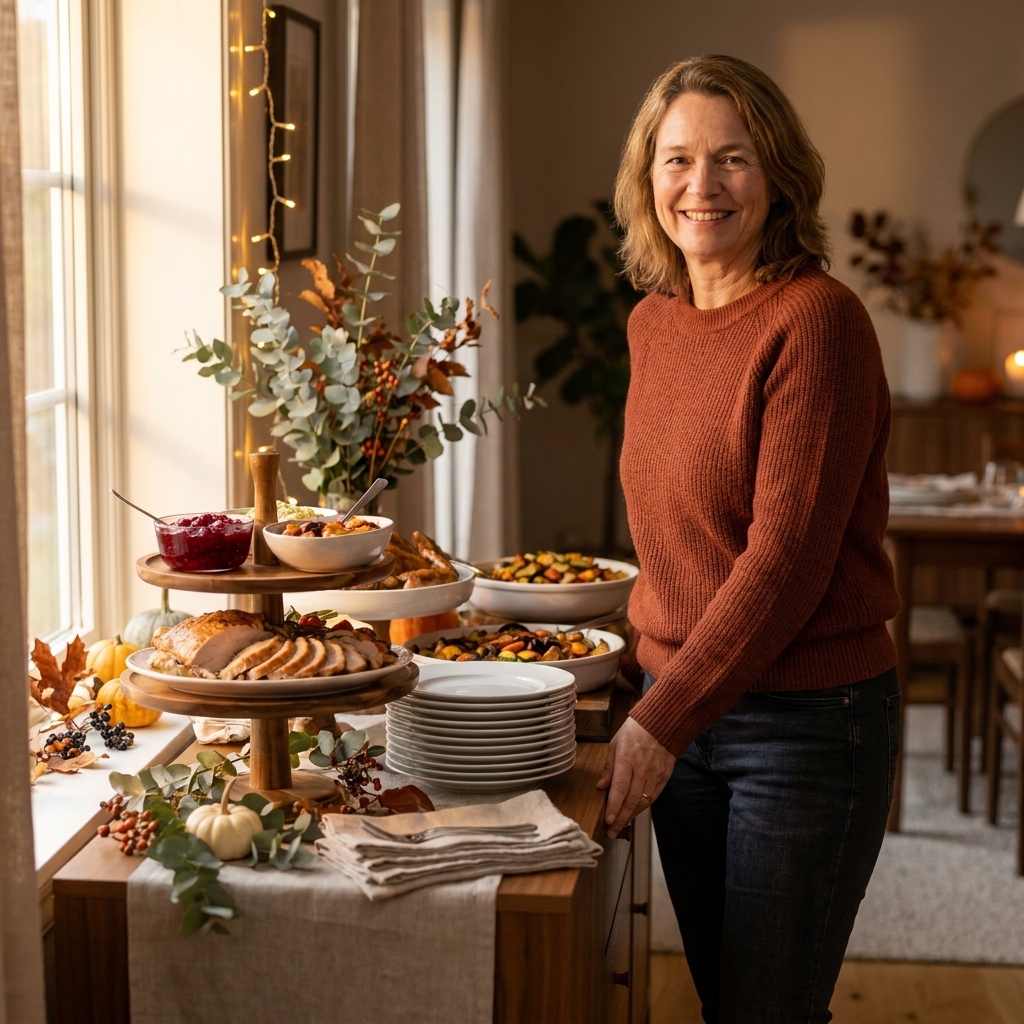
Set up flow first
1) Start with a one-way path
Before you place a single pumpkin, decide how guests will move. I like a left-to-right flow: plates and napkins first, then mains, then sides, then sauces, then finishing touches like rolls and butter. If your room layout forces a U-turn, put plates on a separate small surface (even a bar cart) so people are not blocking the food.
2) Create zones with invisible boundaries
Instead of spreading items evenly (which reads messy fast), group by function. Use one runner, one tray, or one long board per zone. These boundaries keep things tidy and prevent the dreaded buffet creep where a spoon ends up in the dessert area.
3) Keep the centerline open
The buffet’s “spine” should be food. Decor lives at the back edge of the table or up high. If it sits in the middle, it becomes an obstacle, especially with kids and full plates.
Go vertical for space
4) Use a tiered stand for appetizers or rolls
A two-tier stand is basically free real estate. Put rolls on top, butter below. Or stack small appetizer bowls on one tier and napkins on the other. Bonus: it adds height, which makes the whole display feel styled on purpose.
5) Prop up platters with sturdy risers
Risers can be pretty (acacia blocks, marble slabs) or secretly practical (an upside-down loaf pan under a tablecloth). The point is to lift one or two key platters so you can slide smaller items underneath or around them without crowding.
- Try this: Put mashed potatoes on the riser, then tuck gravy and toppings at the base.
6) Hang a simple backdrop
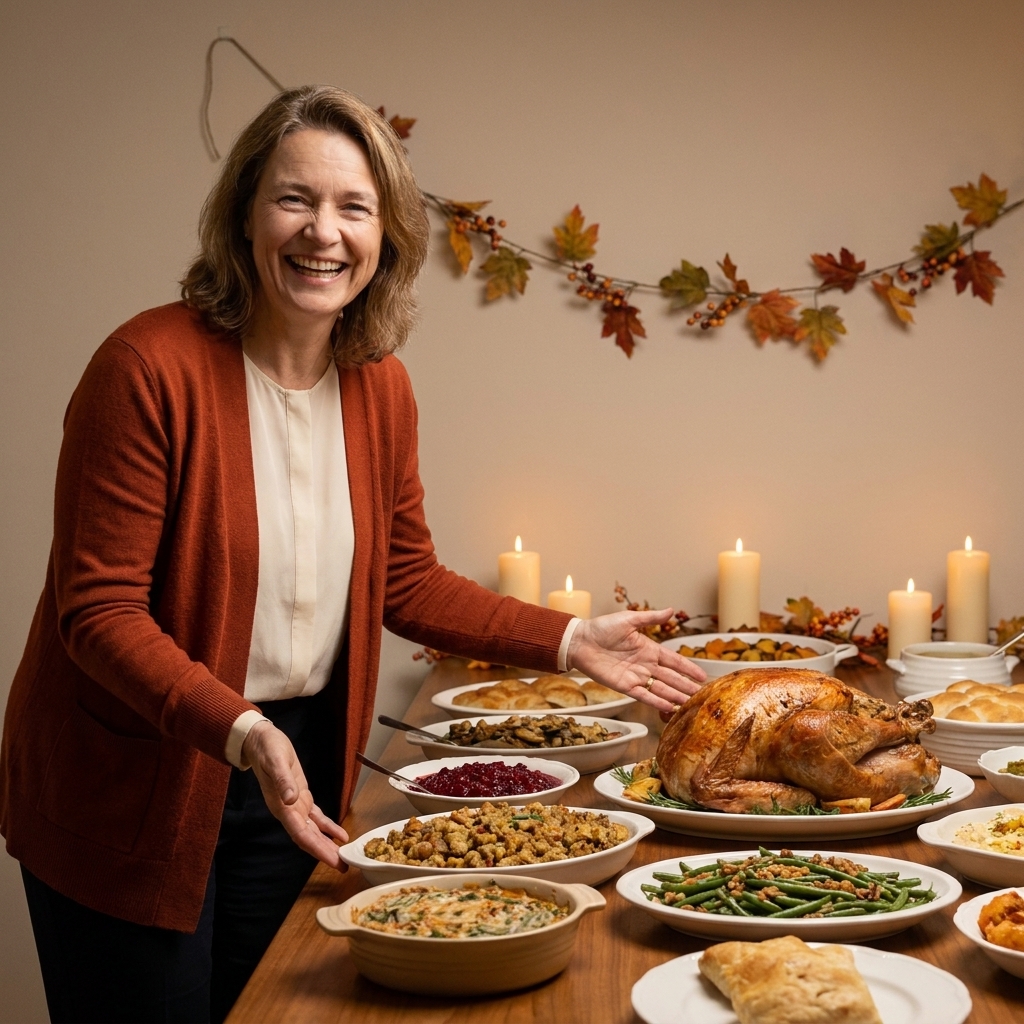
When surface space is tight, go up. A simple fall garland taped or lightly tacked along the wall behind the buffet gives you big seasonal impact with zero table footprint.
Safety note: Keep garlands well away from open flames, hot appliances, and steam. If you are using fresh greenery, make sure nothing can shed onto uncovered food.
Contain clutter with trays
7) Put small items on a tray
Gravy boat, cranberry sauce, pickles, extra spoons. All of it should live on one tray so it reads as one intentional moment, not a bunch of scattered extras. Guests also know where to look, and you can move the whole tray if you need to refill food.
8) Use one long board for bread and butter
A long wooden board holds rolls, sliced baguette, cornbread, and a butter dish in one neat line. It’s space-efficient, and it gives you that cozy, abundant harvest look without extra bowls.
9) Corral utensils in one crock
If you do not have enough counter space for a spoon next to every dish, use one utensil crock placed along the back edge between zones. Choose a cute stoneware pitcher or a tall ceramic jar and keep it loaded with serving spoons and tongs. For a little extra polish (and fewer drips), set a folded tea towel under the crock to catch splashes.
Make decor do more
10) Swap big centerpieces for back-edge styling
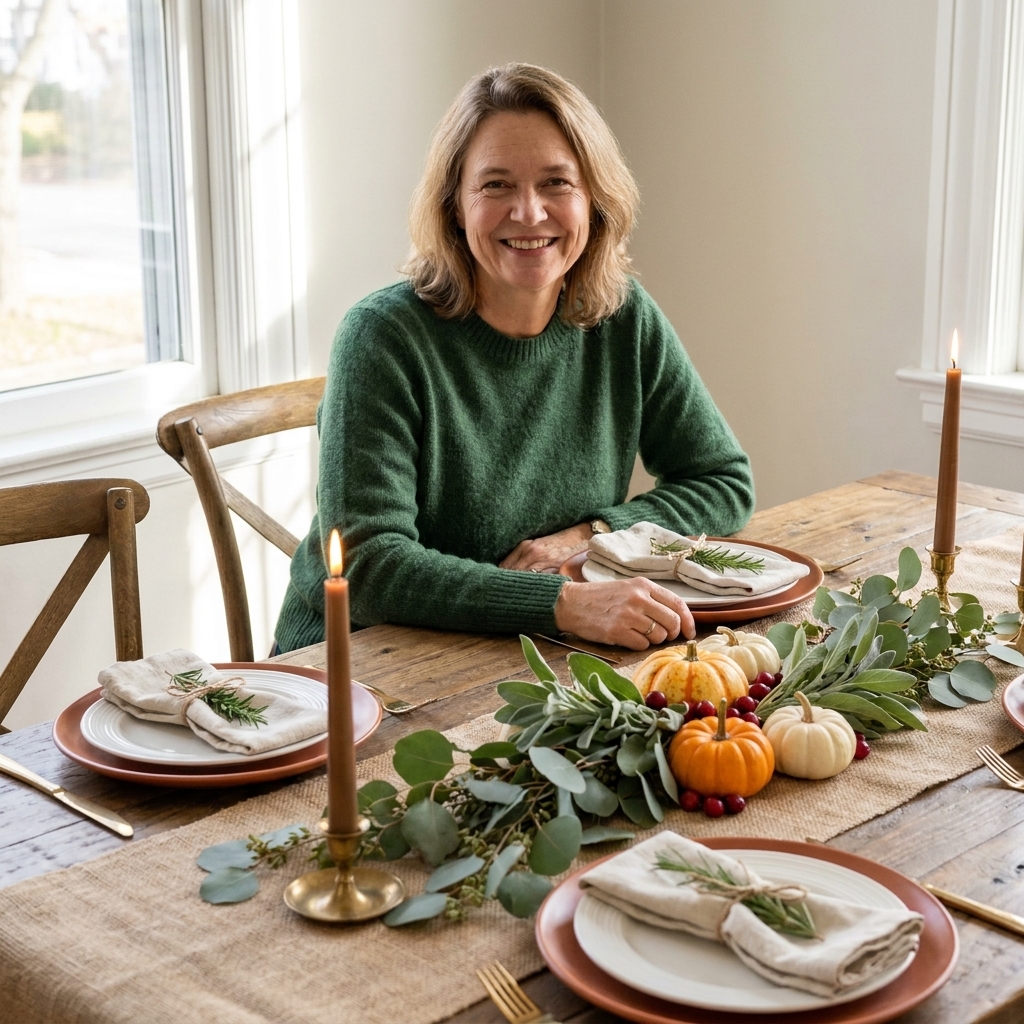
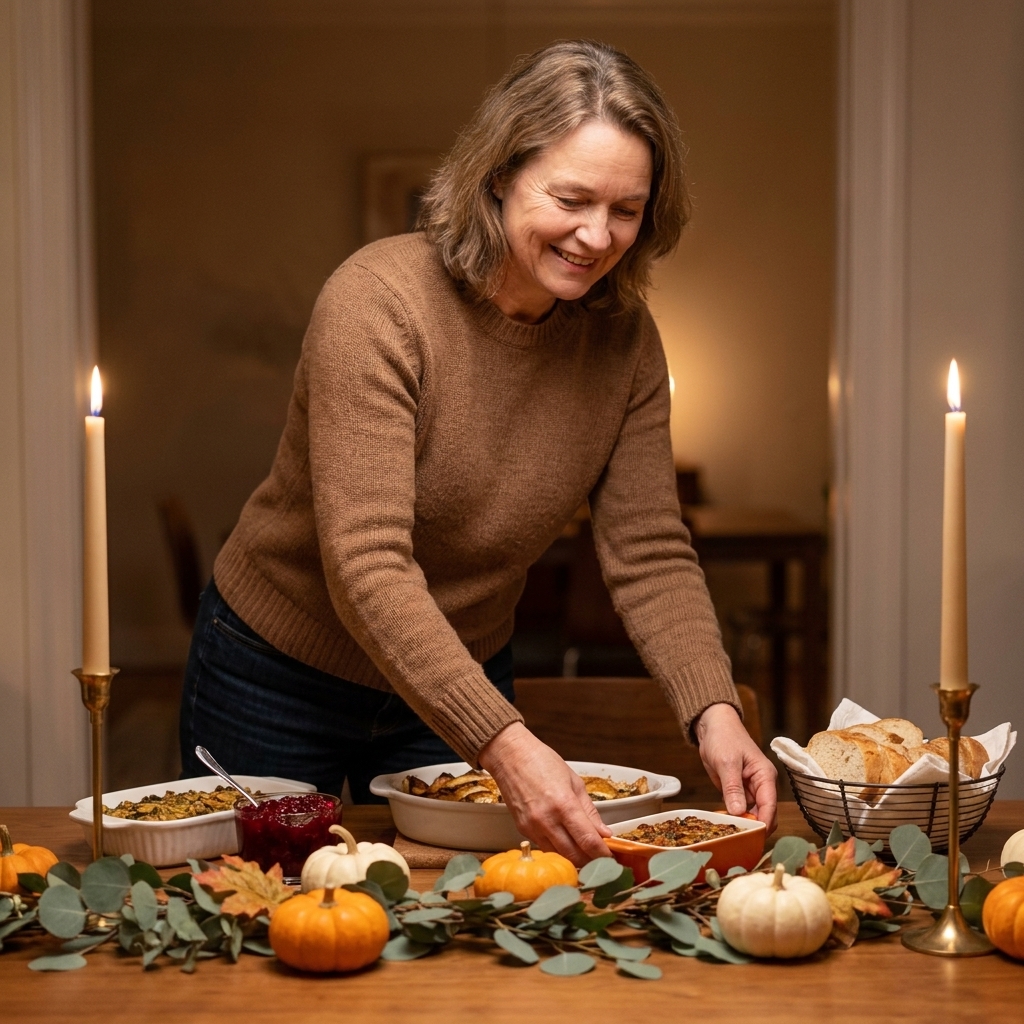
Instead of a chunky centerpiece, run a narrow line of eucalyptus (fresh or faux) along the back edge of the buffet. Tuck in mini pumpkins and pears. You get the full fall look, but your serving zone stays wide open.
11) Use candle height strategically
Two taller candleholders at the far left and far right frame the station and add glow without eating up space. Skip a dozen small votives if you are short on room. They look cute but they create clutter and steal landing spots for plates.
Candle safety, always: Keep flames away from garlands, paper napkins, sleeves, and high-traffic corners. If kids are in the mix or the buffet is tight, I swap in flameless candles and call it a win.
12) Choose decor you can move fast
Anything decorative should be easy to relocate during the meal rush. I love a low bowl filled with faux gourds and a few real apples. It’s seasonal, it’s inexpensive, and if you suddenly need room for the stuffing, you can pick it up and move it in seconds.
Shrink the non-food footprint
13) Pre-roll silverware in napkins
If you are doing a buffet, pre-roll forks and knives in cloth or paper napkins and place them in a basket at the start of the line. It saves space, looks tidy, and guests can grab-and-go without hovering.
- Extra pretty: Tie each bundle with twine and tuck in a rosemary sprig.
14) Stack plates with a purpose
Do one sturdy stack of dinner plates and one smaller stack of salad plates. Do not create three different plate stacks “just in case.” If you need extra, stash backups in a nearby drawer or cabinet and replenish as needed.
15) Put drinks somewhere else
This is the single biggest space-saver. Drinks create lingering crowds. Set up a separate drink station on a bar cart, kitchen island corner, or even a small side table. Your buffet stays focused on food, and your guests stop bottlenecking.
Two extras that help
16) Add simple labels
A tiny label in front of each dish makes the line move faster. It also helps guests with dietary needs (nuts, dairy, gluten) feel comfortable without having to ask you mid-bite. A folded card, a sticky label on a tray, even a little piece of masking tape on the bottom of a platter works.
17) Plan heat zones
Small spaces get crowded fast when you add cords and hot lids. If you are using slow cookers or warming trays, park them at one end of the buffet (or on a separate “hot food” side table) so people are not reaching over heat. Leave a little breathing room around anything hot, and keep it away from garlands, towels, and napkin baskets.
My small-space buffet layout
If you want an easy blueprint, here’s a setup I’ve used in apartments, small dining rooms, and one memorable year in my aunt’s narrow galley kitchen:
- Start of line: plates, napkins, silverware bundles
- Main platters: turkey or ham first, then stuffing, then potatoes
- Sauces and toppings: all on one tray
- Sides: two to three bowls, slightly elevated on one riser
- End of line: rolls on a tiered stand, butter on the bottom tier
Keep decor to the back edge only and let the food be the star.
Quick troubleshooting
My buffet table is too short. What do I do?
Add a “satellite” surface. A small end table can hold plates and napkins, and a bar cart can hold desserts or coffee. Your buffet does not have to do everything.
How do I keep it pretty when dishes get messy?
Build in one “reset zone”: a small empty area at one end where you can temporarily park a serving spoon, wipe a spill, or swap in a fresh bowl. Also keep a stack of extra spoons nearby so you are not washing mid-meal.
What’s an easy fall palette that looks cohesive?
Pick one neutral (cream or warm white), one warm tone (rust, amber, or terracotta), and one natural green (olive or eucalyptus). Repeat those three colors in napkins, a runner, and one decor element and you will look wildly pulled together.