
Make a magical first impression with garland-draped stairs, lantern lighting, a hot cocoa landing zone, and easy, elegant foyer styling tricks for your Chris...
The Festive Dwell
How to Keep a Poinsettia Fresh Through the Holidays
Keep your poinsettia perky all season with the right light, watering routine, and steady temperatures. Learn how to prevent leaf drop, fix drooping, and avoid foil-wrap sogginess.

Clara Jenkins
Clara Jenkins is a former visual merchandiser and lifelong holiday enthusiast who believes every season is worth celebrating. She helps readers transform their everyday spaces into magical, welcoming homes through budget-friendly DIYs, elegant tablescapes, and clever styling tricks. When she isn't untangling fairy lights or hot-gluing autumn wreaths, Clara can be found hunting for vintage ornaments at local flea markets.
Published November 15, 2026
The week I worked my first big holiday floor set as a visual merchandiser, we had a table stacked with poinsettias that looked perfect at opening and slightly tragic by closing. Same plants, same day, totally different vibe. The difference was not magic plant powers. It was light, temperature, and (almost always) water trapped where it should not be.
If you want your poinsettia to stay lush on an entry table, kitchen island, or dining buffet through the whole season, you only need a simple routine and the right placement. Let’s keep those bracts (the colorful “petals”) looking crisp and those leaves firmly attached.
Start with the right spot
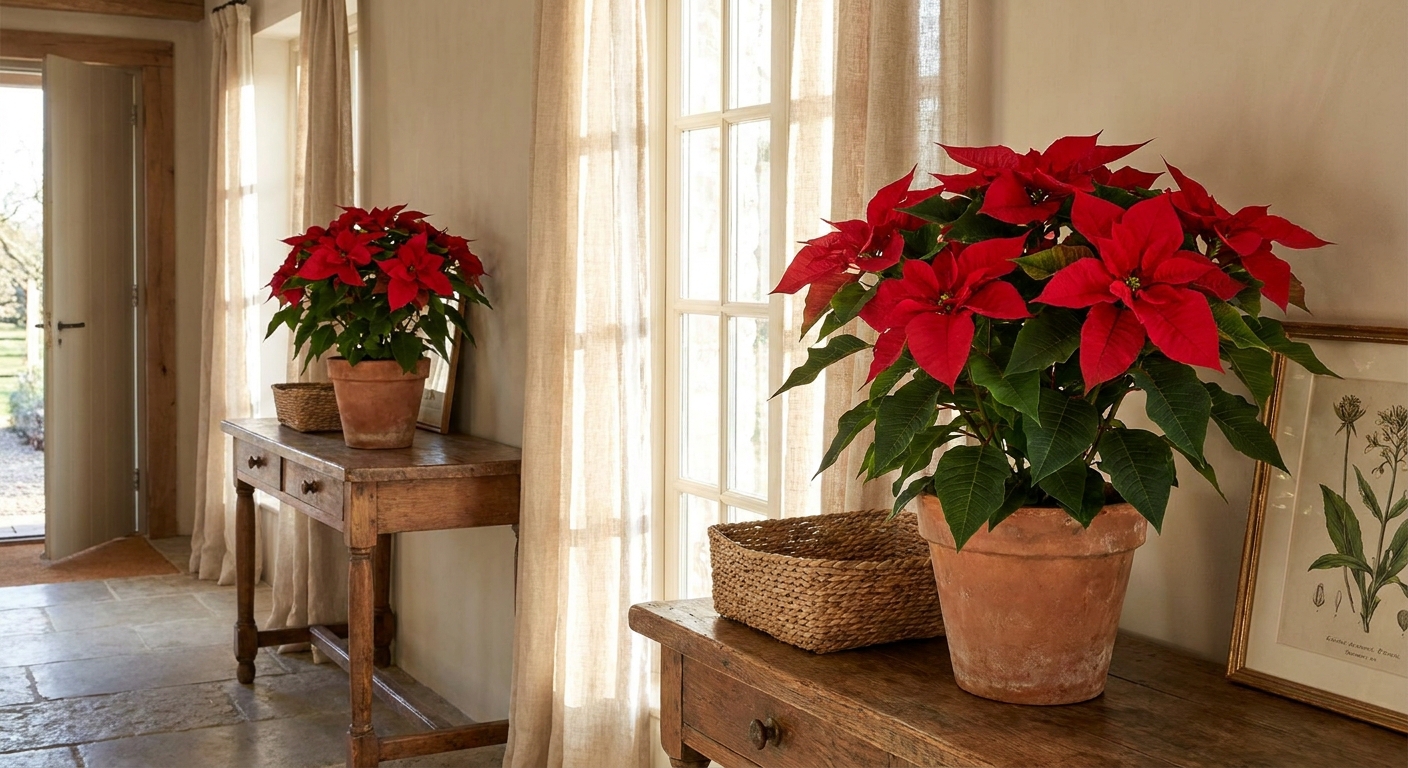
Give it bright, indirect light
Poinsettias hold their color best in bright, indirect light. Think “next to a sunny window,” not “sunbeam spotlight.” Too little light and you may see stretching, yellowing, and faster leaf drop. Too much strong direct sun through glass, especially midday, can fade the bracts and dry the plant out quickly. Gentle morning sun is usually fine if the plant is not overheating.
- Best placement: near an east or south window with a sheer curtain, or a few feet back from a bright window.
- Rotate regularly: give the pot a quarter turn every few days so it grows evenly and doesn’t lean.
Keep temps steady
Poinsettias hate temperature drama. To keep them fresh:
- Aim for 65 to 70°F during the day when possible.
- At night, 60 to 65°F is ideal. Avoid prolonged temps below about 60°F.
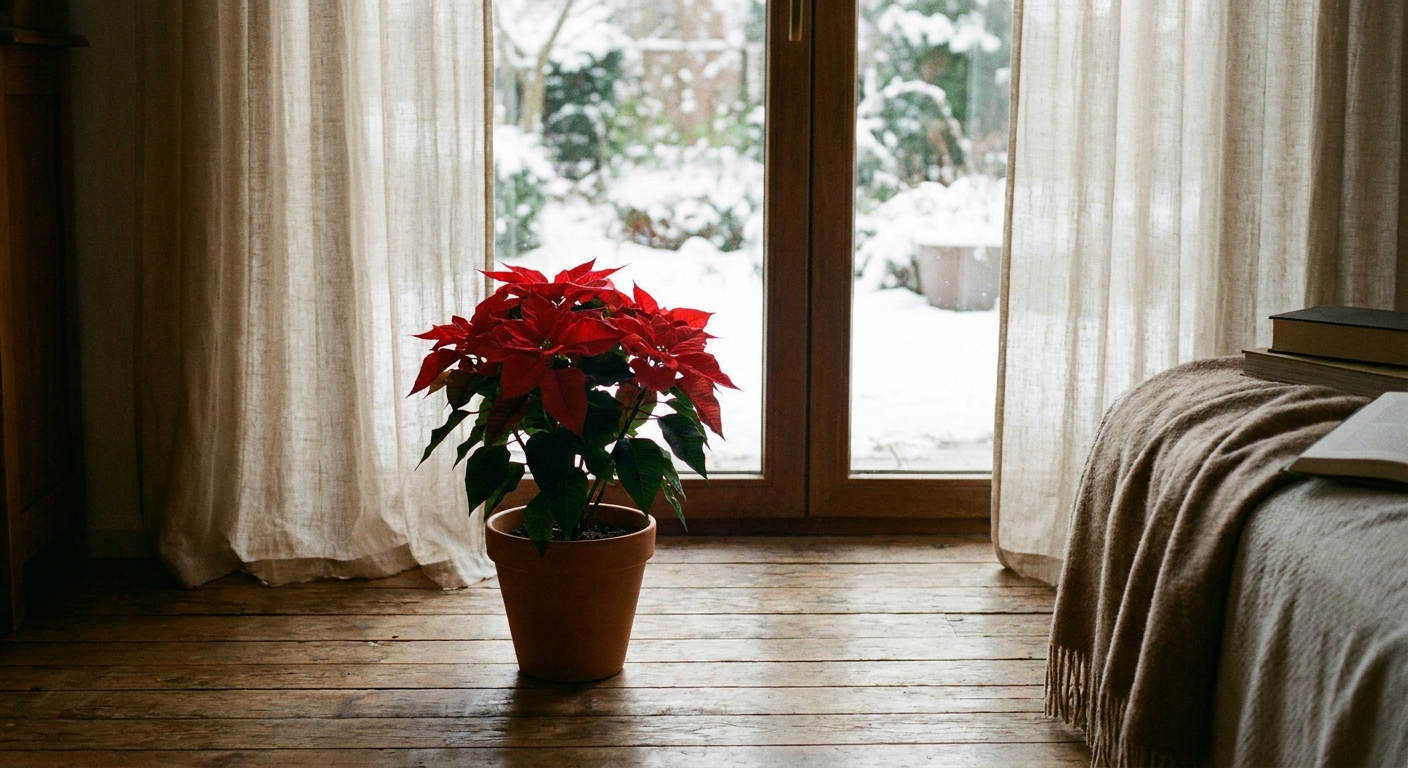
- Keep it away from drafty doors, cold glass, and heat or AC vents.
If your poinsettia is right by the front door because it “looks best there,” you can still make it work. Just pull it a foot or two deeper into the room at night or whenever the door is opening constantly for guests.
Watering that works
The golden rule: water when the surface is dry
The easiest, most reliable poinsettia routine is this: water when the top inch of soil feels dry. Not bone dry through the pot, not constantly damp.
- Stick your finger into the soil up to your first knuckle.
- If it feels dry, water.
- If it feels cool and damp, wait a day or two and check again.
How to water without drowning it
Poinsettias like a thorough drink, but they do not like sitting in water.
- Take the pot to the sink (or set it on a watering tray that can catch runoff).
- Water slowly until you see water run out of the drainage holes.
- Let it drain for 10 to 20 minutes.
- Empty any runoff, then put it back in its decorative container only after it stops dripping.
If your poinsettia came in a decorative cachepot (a pretty outer pot with no drainage), treat it like a sleeve: lift the plant out for watering, drain fully, then place it back.
The foil-wrap problem
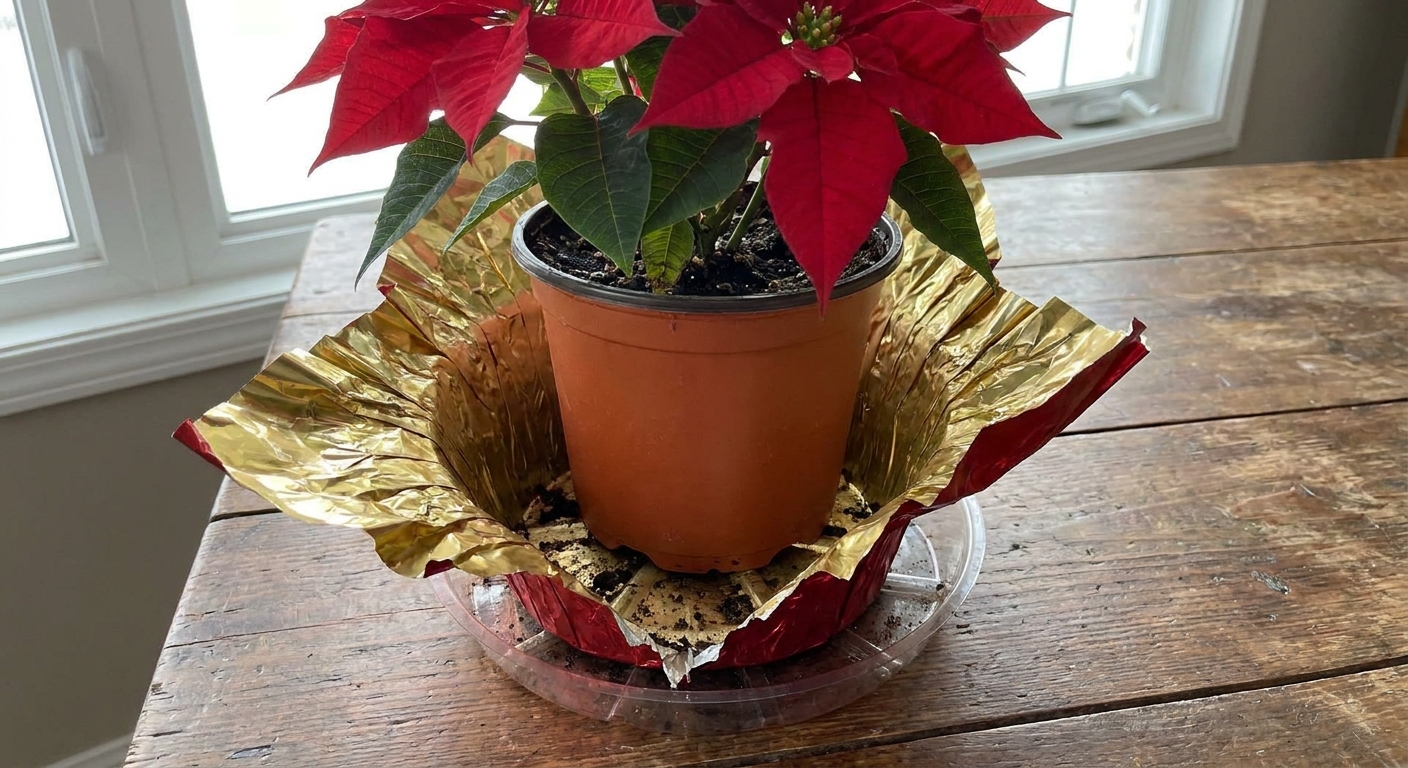
Many holiday poinsettias come wrapped in shiny foil. Cute, festive, and also a common reason they decline early.
Foil often traps water at the bottom, turning the root zone soggy. That leads to yellow leaves, sudden wilting, and a general “why is this happening, I watered it once!” situation.
- Quick fix: remove the foil entirely, or punch several drainage holes in the bottom of the foil and set the plant on a saucer.
- Check for hidden water: after watering, lift the pot and see if water is pooled inside the foil wrap.
Why poinsettias drop leaves
A poinsettia that starts shedding leaves is not being dramatic. It is giving you a very specific clue. Here are the usual culprits and the fastest fixes.
Drafts and heat blasts
What it looks like: leaves drop seemingly overnight, especially after a cold snap or a party where the door opened constantly.
What to do: move the plant to a stable spot away from doors, cold windows, and vents. If it is in a foyer, tuck it farther from the door or bring it into a warmer room for the coldest nights.
Watering issues
Overwatering signs: yellowing leaves, limp stems, soil that never dries, musty smell.
Underwatering signs: drooping, crispy edges, soil pulling away from the pot, plant perks up after watering.
What to do: check moisture at the top inch and adjust. If it is waterlogged, make sure it can drain and let it dry slightly before the next watering.
Low light
What it looks like: gradual leaf yellowing and drop, leggy growth, plant leans hard toward the window.
What to do: move it to a brighter location with indirect light, and rotate it every few days.
Bracts and leaves looking tired
The colorful parts of a poinsettia are bracts, not petals. When bracts look tired, your plant can still be alive and healthy, but it is telling you it is not loving its conditions.
Wilting or fading bracts
- Most common causes: strong direct sun, heat from a vent or heater, or inconsistent watering.
- Try this: move it to bright indirect light, keep it away from heat sources, and settle into the “water when the surface is dry” rhythm.
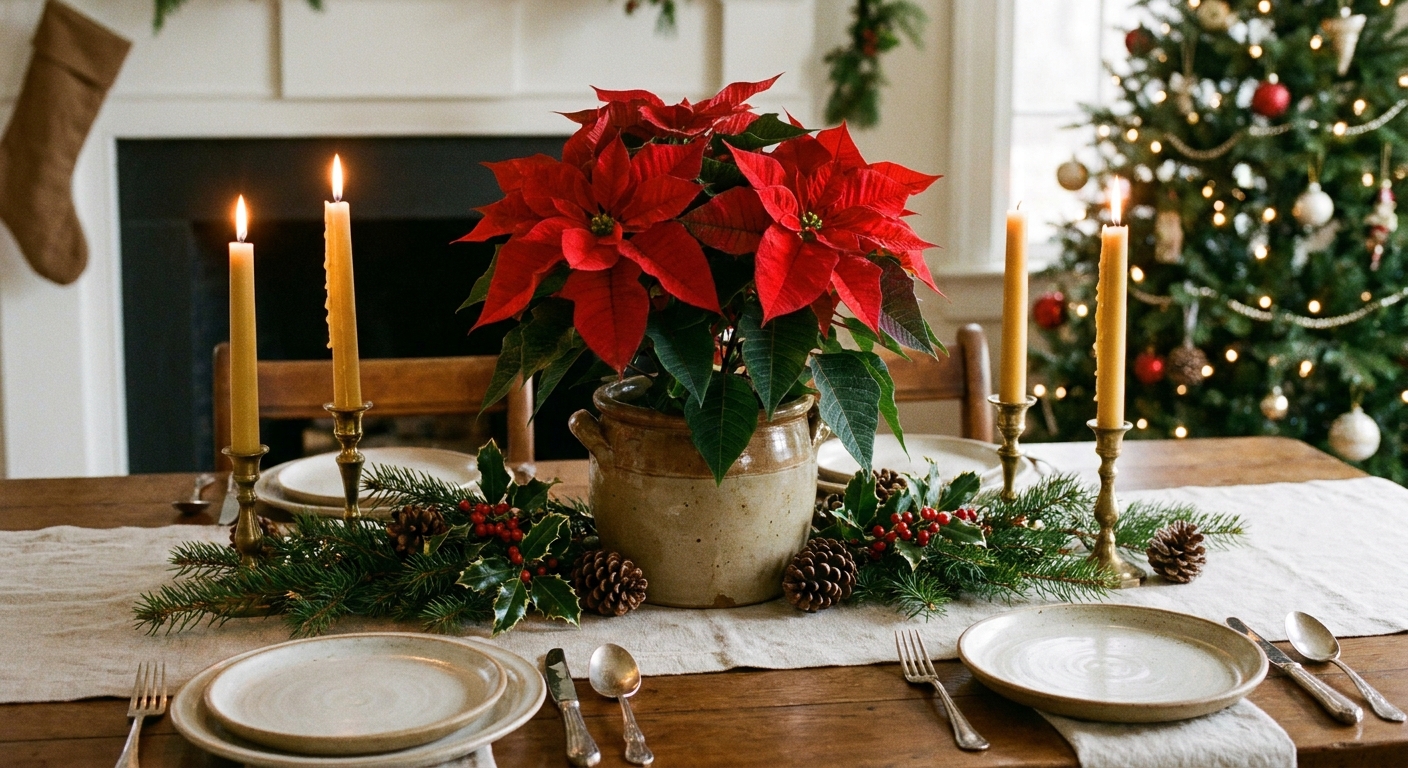
What fading means for decor: a little softening or fading is normal as the season goes on. For a table centerpiece, it may simply mean you should shift the poinsettia to a supporting role and bring in fresh evergreen clippings, candles, or ornaments around it to keep the moment looking intentional.
Curling leaves
Curling can point to dry air plus heat, a plant pressed up against a cold windowpane, or watering stress (too wet or too dry). Slide it a bit back from the glass and away from forced air, then double-check the top inch of soil before you water again.
Also take 30 seconds to look for pests. Whiteflies can flutter up when you bump the plant, and spider mites can leave faint webbing under leaves. If you suspect pests, isolate the plant and rinse leaves gently with room-temperature water.
You can cluster a few plants together to slightly raise local humidity. Skip spraying the bracts directly since water sitting on them can sometimes leave spots, especially in cooler rooms or with mineral-heavy water. A humidifier nearby works better.
Keep it full on a table
My favorite poinsettia styling trick is also the one that keeps it healthier: treat it like a living guest and give it a comfortable seat.
- Raise it off cold surfaces: set the pot on a small tray, cork mat, or wood slice so it is not sitting directly on a chilly stone console.
- Leave breathing room: do not wedge it tight against a window or vent “for the look.” A few inches of space protects it from hot and cold extremes.
- Use a real saucer: even if you place it in a pretty basket or cachepot, keep a saucer underneath the grow pot so drainage is controlled.
- Skip constant moving: moving it from warm to cold rooms repeatedly can trigger stress. Pick a good spot and let it settle.
Quick rescue plan
If you look over and your poinsettia suddenly seems sad and slumpy, do this before you give up on it.
- Check the soil: if the top inch is dry, water thoroughly and let it drain completely.
- Dump trapped water: remove foil or lift it out of the decorative pot and empty any pooled water.
- Move it to comfort: bright indirect light, stable temperature, away from drafts and vents.
- Give it 12 to 24 hours: a thirsty poinsettia often rebounds quickly. A waterlogged one improves more slowly once it can dry out.
Poinsettia care FAQ
How often should I water a poinsettia?
There is no perfect calendar schedule. Water when the top inch of soil is dry. In many homes that ends up being about once a week, but heat, light, and pot size can change that.
Can poinsettias handle cold windows?
They do better a bit back from cold glass. If the leaves touch a cold windowpane, it can stress the plant and trigger leaf drop. Keep it close for light, not pressed against the glass.
Why are the leaves turning yellow and falling off?
The most common reason is roots staying too wet, often because water is trapped by a foil wrap or a decorative pot with no drainage. Check for standing water, improve drainage, and let the surface dry slightly between waterings.
Should I leave the foil on my poinsettia pot?
Only if it is not trapping water. Either remove it or punch drainage holes in the bottom and keep the plant on a saucer so excess water has somewhere to go.
Do I need to fertilize during the holidays?
Not for short-term holiday display. If you plan to keep it as a houseplant after the season, you can start a light, balanced fertilizer routine later, once it is in active growth and you are past the heavy blooming period.
How long should a poinsettia last indoors?
With decent light, steady temperatures, and good drainage, a poinsettia can look good for weeks and often through the season. A little bract fading over time is normal. Sudden leaf drop, mushy soil, or a limp plant that stays limp is usually a care issue you can correct.
Are poinsettias safe around pets?
Poinsettias are not the deadly plant rumor makes them out to be, but they are not a snack either. The sap can irritate mouths and stomachs and can bother skin. If you have a persistent nibbler, place the plant up high and wash hands after handling.
Is my poinsettia done when the bracts fade?
For holiday decorating, fading bracts usually mean the plant is moving past its showiest moment. It can still look nice as greenery for a while, but if you want that bold color on display, it is totally reasonable to swap it for a fresher plant and let this one live on in a bright spot as a houseplant.