
Recreate 15 elevated Christmas tree themes with simple shopping lists: color palettes, ornament counts, ribbon lengths, plus step-by-step ribbon and bow tech...
The Festive Dwell
When to Take Down Christmas Decorations
Wondering when to take down Christmas decorations? Here are three common dates (New Year’s Day, Epiphany, and Candlemas), where each tradition comes from, plus practical cues, disposal tips, and an easy take-down order.

Clara Jenkins
Clara Jenkins is a former visual merchandiser and lifelong holiday enthusiast who believes every season is worth celebrating. She helps readers transform their everyday spaces into magical, welcoming homes through budget-friendly DIYs, elegant tablescapes, and clever styling tricks. When she isn't untangling fairy lights or hot-gluing autumn wreaths, Clara can be found hunting for vintage ornaments at local flea markets.
Published November 12, 2026
I love a twinkly house as much as anyone, but every year there’s a moment when I look at the tree and think: we’ve had a beautiful run, and now it’s time to let the living room breathe again. If you’re wondering when you’re “supposed” to take down Christmas decorations, you’re not alone, and the honest answer is that there are a few widely recognized dates depending on your tradition, plus some very practical, real-life cues that matter just as much.
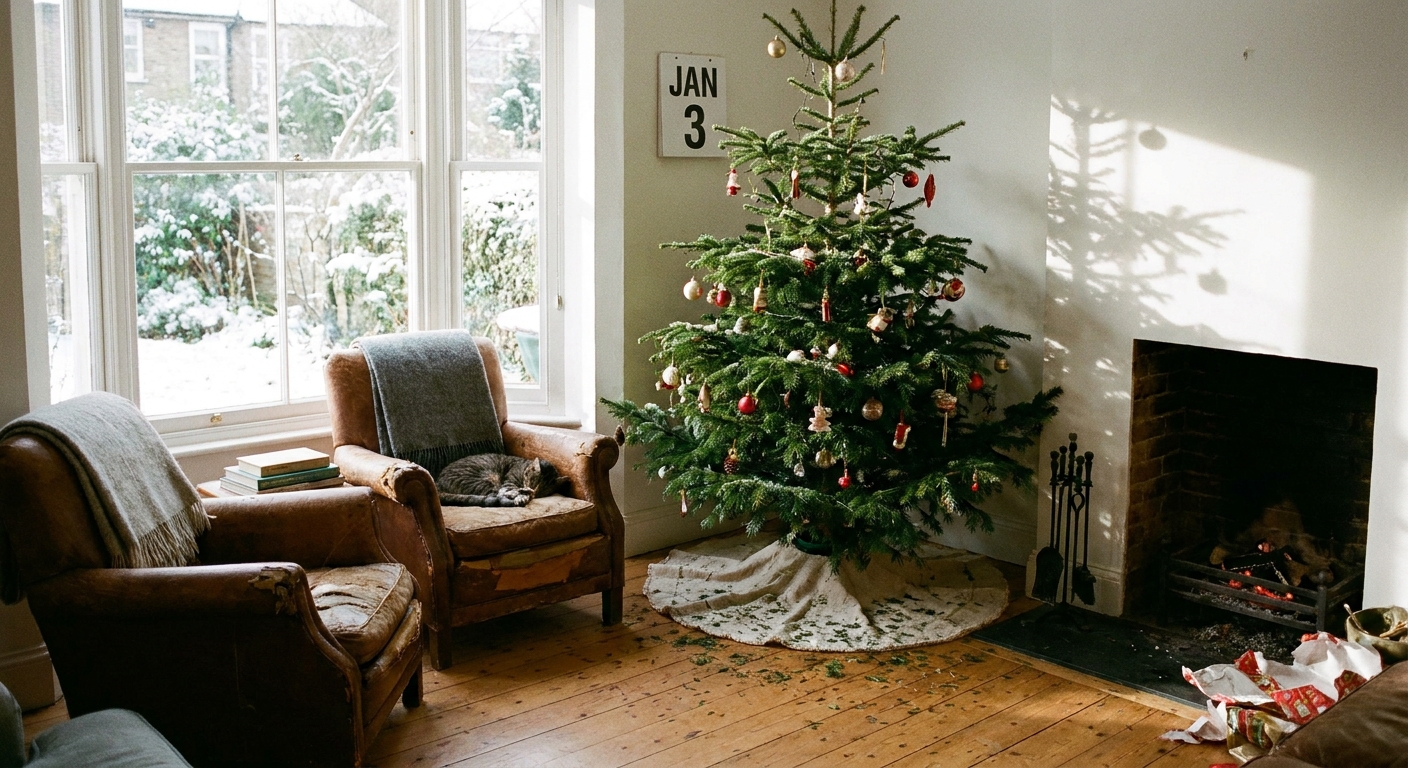
Below are the three most common calendar choices, where each custom comes from, and an organized, room-by-room order for taking everything down without turning your home into a box-and-tinsel obstacle course.
The three classic dates
If you want a simple rule that still feels meaningful, pick one of these and call it your house tradition. I’m a big believer that the best traditions are the ones you can actually keep.
Option 1: New Year’s Day (January 1)
Why people choose it: This is a very common modern “reset” date. The holiday season closes, routines restart, and taking decor down on January 1 (or that first weekend) feels like a fresh page.
Where it comes from: It’s less about one specific religious feast day and more about the cultural rhythm of the calendar year. In many households, especially in the U.S., decor goes up around late November to early December and comes down when the new year begins and school and work schedules return in full force.
Best for you if: You love a clean start, you travel after Christmas, or you feel stressed when your home feels visually “busy” once regular life is back.
Option 2: Epiphany (January 6)
Why people choose it: Epiphany marks the traditional close of the Twelve Days of Christmas. For many Christians, it commemorates the visit of the Magi to the Christ child, and it has long been a natural endpoint for Christmas celebrations.
Where it comes from: The Twelve Days are counted from Christmas Day through January 5, with Epiphany on January 6. In some Christian communities, Epiphany is also observed on the nearest Sunday. In places where Epiphany is widely celebrated, keeping decor up through the 6th is common, and in some countries, like Spain, January 6 is a major gift-giving day.
Best for you if: You like honoring tradition, you enjoy extending the cozy glow just a little longer, or you want a date that feels intentional but still practical.
Option 3: Candlemas (February 2)
Why people choose it: Candlemas is celebrated on February 2 and is tied to the Presentation of Jesus at the Temple. In some traditions, especially historically in parts of Europe, greenery and certain Christmas decor stayed up until Candlemas, and then came down as a final close to the season.
Where it comes from: Historically, midwinter celebrations and church calendar observances influenced how long evergreen decor stayed in the home. Candlemas also has themes of light returning, which pairs beautifully with the emotional vibe of keeping candles, white lights, and winter greenery around a bit longer.
Best for you if: You lean into winter decorating as its own season, you live somewhere with long, dark winters, or you simply want permission to keep the magic going without calling it “late.”

So what date is right?
Here’s my organized-but-bubbly answer: the right date is the one your household can repeat each year without resentment. If you like structure, choose New Year’s Day, January 6, or February 2 and make it your tradition. If you prefer flexibility, let the condition of your decor and your schedule decide.
Also, if you ever grew up hearing “bad luck if you take them down too early or too late,” you’re in good company. Those beliefs show up in different forms across regions and generations. I treat them like old folklore: interesting, worth respecting if it’s part of your family story, but not worth stressing over.
Practical signs it’s time
Even the most tradition-loving decorator has to answer to gravity, weather, and the reality of building rules. These are the cues I watch for in my own home and in friends’ homes when I’m doing the post-holiday “we can do this together” pep talk.
Your tree is drying out (real or faux)
- Live tree: If needles drop when you brush past, branches feel brittle, or the water level drops more slowly than it did earlier in the season, it’s time. Keep watering as long as it’s up, keep it away from heat sources, and take it down promptly if it’s getting dry. A brittle tree is a real fire risk.
- Faux tree: When branches start sagging under heavy ornaments, or you notice the tree looking more “tired” than lush, that’s often a sign it’s overstayed its welcome. Faux trees can absolutely look amazing through January, but they benefit from a reset and fluff next season.
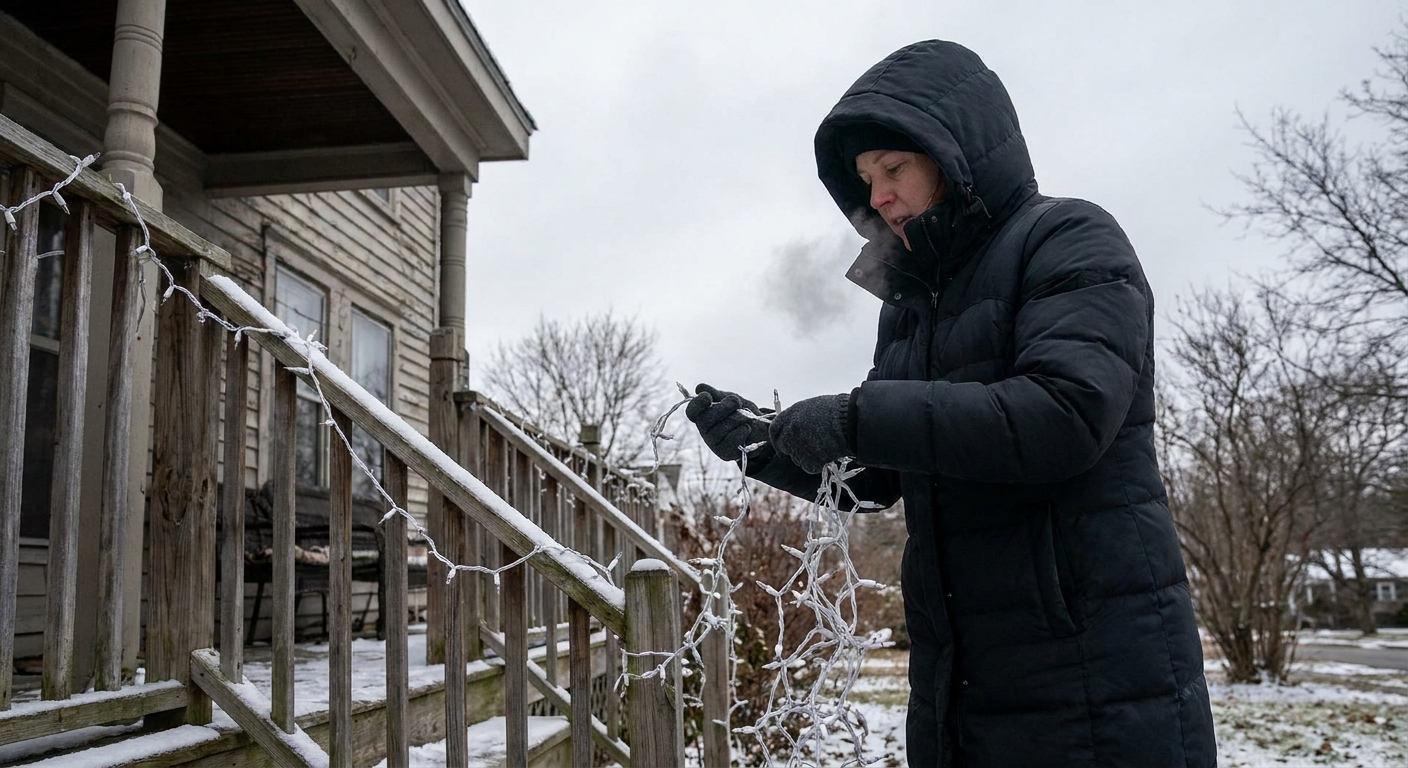
Outdoor weather is working against you
- High winds tangling light strands.
- Ice and snow making ladder work unsafe.
- Moisture affecting outdoor-rated items that still aren’t meant for weeks of freeze-thaw cycles.
If it’s unsafe, wait for a calmer day. If it’s starting to damage your decor, prioritize the outdoors first, even if you keep indoor coziness a bit longer.
Your building or neighborhood has rules
If you live in an HOA community, apartment complex, or historic district with guidelines, those can quietly make the decision for you. I’m not saying those rules are festive, but I am saying they are real. If you need a polite personal policy, try: outdoor decor down by the first week of January, indoor decor by January 6.
Your home needs to shift seasons
As a former visual merchandiser, I can tell you this is a legitimate reason. If your Christmas palette blocks the natural transition into winter, or you’re itching to clear surfaces and simplify, it’s a sign you’re ready. You can still keep warmth with winter whites, pinecones, candles, and cozy throws without a full-on Santa vibe.
Room-by-room order
This order keeps your home functional while you work, and it helps you avoid the classic mistake of taking down the tree first and then realizing you still have to deal with mantel garland, stair rail greenery, and outdoor lights.
1) Outdoors and entryway
- Front door wreaths, porch planters, outdoor light strands, yard decor.
- Entry console displays and any decor that blocks daily flow.
Why first: weather and safety, plus your entry is what you see every time you come and go. Clearing it feels instantly refreshing.
2) Dining area and kitchen
- Tablescapes, countertop vignettes, chair backs, window swags.
- Holiday hand towels and themed linens if you’re ready for a clean slate.
Why next: you’ll want clear surfaces for normal meals and lunches, and these items are usually quick wins that build momentum.
3) Living room accents (leave the tree for a moment)
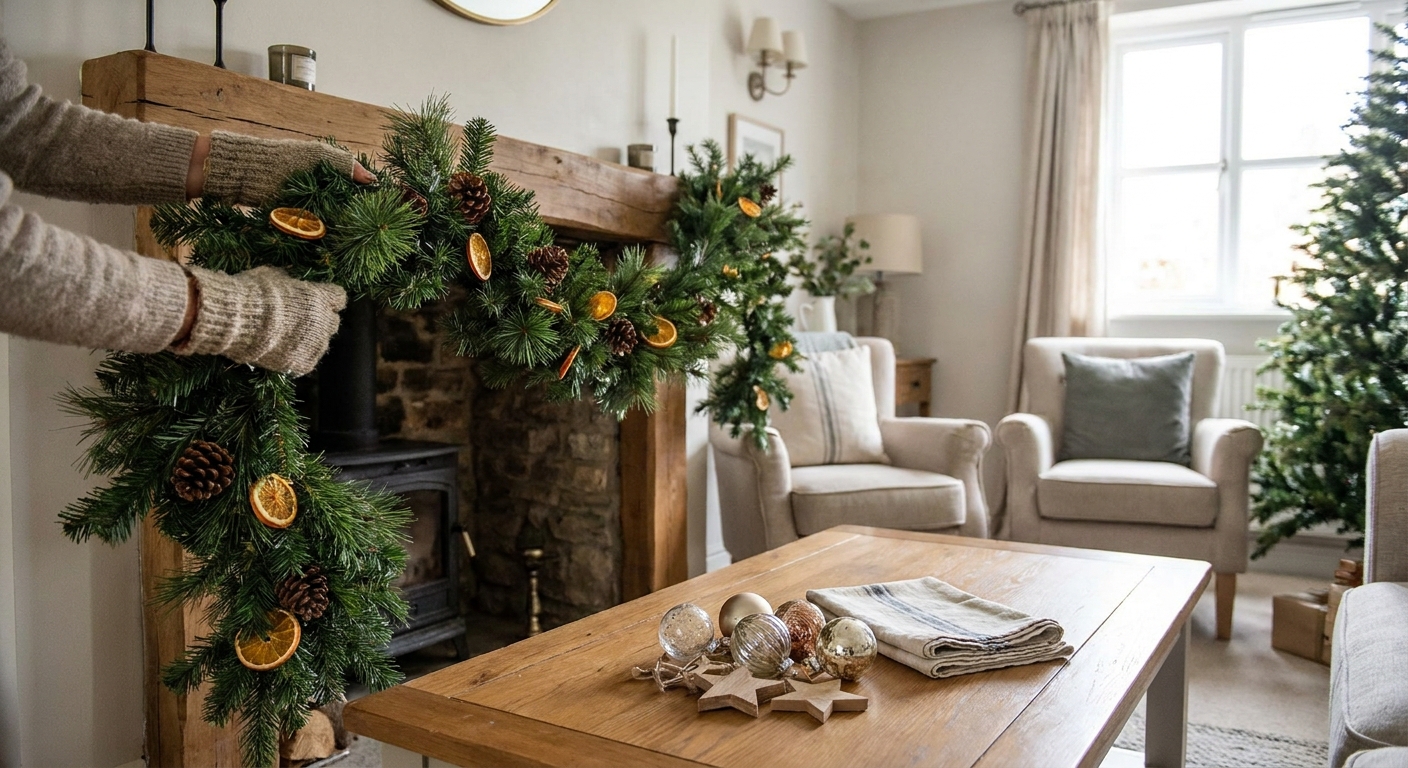
- Mantel decor, garlands, stockings, side table vignettes.
- Throw pillows and blankets that read strongly “Christmas,” if you want to pivot to winter neutrals.
Why before the tree: taking down the supporting cast makes the tree feel less like the one lonely holdout when you finally tackle it.
4) The tree and anything tied to it
- Tree topper, then ornaments, then lights, then tree skirt.
- Tree itself last, especially if it’s real and you want to minimize mess.
If you’re keeping the tree up longer than the rest of the decor, that’s totally valid. A “January tree” can be gorgeous if you simplify it and let it read wintry rather than intensely Christmas.
5) Bedrooms and hallway decor
- Mini trees, guest room touches, hallway garlands.
Why last: these areas are less public and less urgent, so you can save them for when you have time without disrupting daily life.
Tree disposal and storage
What to do with a real tree
Check your city or county for curbside pickup dates, drop-off sites, or chipping and mulch programs. Many programs require you to remove tinsel, garland, and lights first, and some won’t accept flocked trees, so it’s worth a quick look at local rules before you drag it to the curb.
Quick storage tips you will thank yourself for
- Label by room: “Living room mantel” beats “Christmas misc” every time.
- Protect breakables: Use ornament dividers, egg cartons for tiny ornaments, or tissue paper for delicate pieces.
- Tame the lights: Wrap strands around a piece of cardboard or a plastic light reel so they do not become a January knot puzzle.
- Do a fast safety check: Before you store lights, toss strands with frayed wires, damaged plugs, or loose bulbs. Future-you deserves better.
If you want my take
In my house, I aim for Epiphany, January 6. It gives me a few extra cozy evenings after the rush of December, and it feels like a clean, traditional finish line. That said, I will absolutely start earlier if the real tree dries out fast, or later if we’ve had a busy week and the twinkle lights are the only thing keeping January from feeling like a long, gray sock.
The goal is not perfection. The goal is a home that supports your life. Sometimes that means a hard reset on January 1, and sometimes it means keeping a soft winter glow until Candlemas. Both can be beautiful.
Quick FAQ
Is it bad luck to take down decorations before New Year’s?
Some families and cultures have superstitions around timing, but there’s no universal rule. If it’s part of your family tradition, honor it. If it stresses you out, choose a date that works for your schedule and safety.
Is it okay to leave lights up all winter?
Indoors, yes, especially if they’re part of a winter look. Outdoors, it depends on weather exposure, local rules, and the condition of your light strands. If cords are getting brittle, connections are exposed, or you spot damage, it’s time to take them down. I also recommend unplugging outdoor lights during storms, and turning all lights off before bed.
What if my partner or kids want decor up longer than I do?
Compromise by taking down the most overt Christmas pieces first (Santa figurines, red-and-green everything) and leaving a simpler winter setup (white lights, greenery, candles) through January. It keeps the cozy feeling without feeling like you’re stuck in December.