A former retail visual merchandiser shares the versatile party decor basics that flex from Halloween to the winter holidays to spring brunch without overflow...
The Festive Dwell
Create a Neutral Home Base for Easy Seasonal Decorating
Build a calm, neutral foundation with staple furniture, flexible textiles, and simple styling zones so swapping seasonal pillows, art, and accessories is quick and stress-free.

Clara Jenkins
Clara Jenkins is a former visual merchandiser and lifelong holiday enthusiast who believes every season is worth celebrating. She helps readers transform their everyday spaces into magical, welcoming homes through budget-friendly DIYs, elegant tablescapes, and clever styling tricks. When she isn't untangling fairy lights or hot-gluing autumn wreaths, Clara can be found hunting for vintage ornaments at local flea markets.
Published October 17, 2026
Updated October 17, 2026
If you love seasonal decorating but hate the “whole-house upheaval” that can come with it, a neutral home base is your best friend. Think of it like a great pair of jeans: it goes with everything, it always feels like you, and you can dress it up for any occasion. After eight years of merchandising for a big home decor retailer, I can tell you the secret is not owning more seasonal stuff. It is choosing everyday pieces that make seasonal swaps feel effortless.
Below is the exact approach I use in my own home to keep things warm and welcoming year-round, while still letting Halloween, Thanksgiving, winter holidays, and spring shine the second I am ready for them.
What a neutral base is
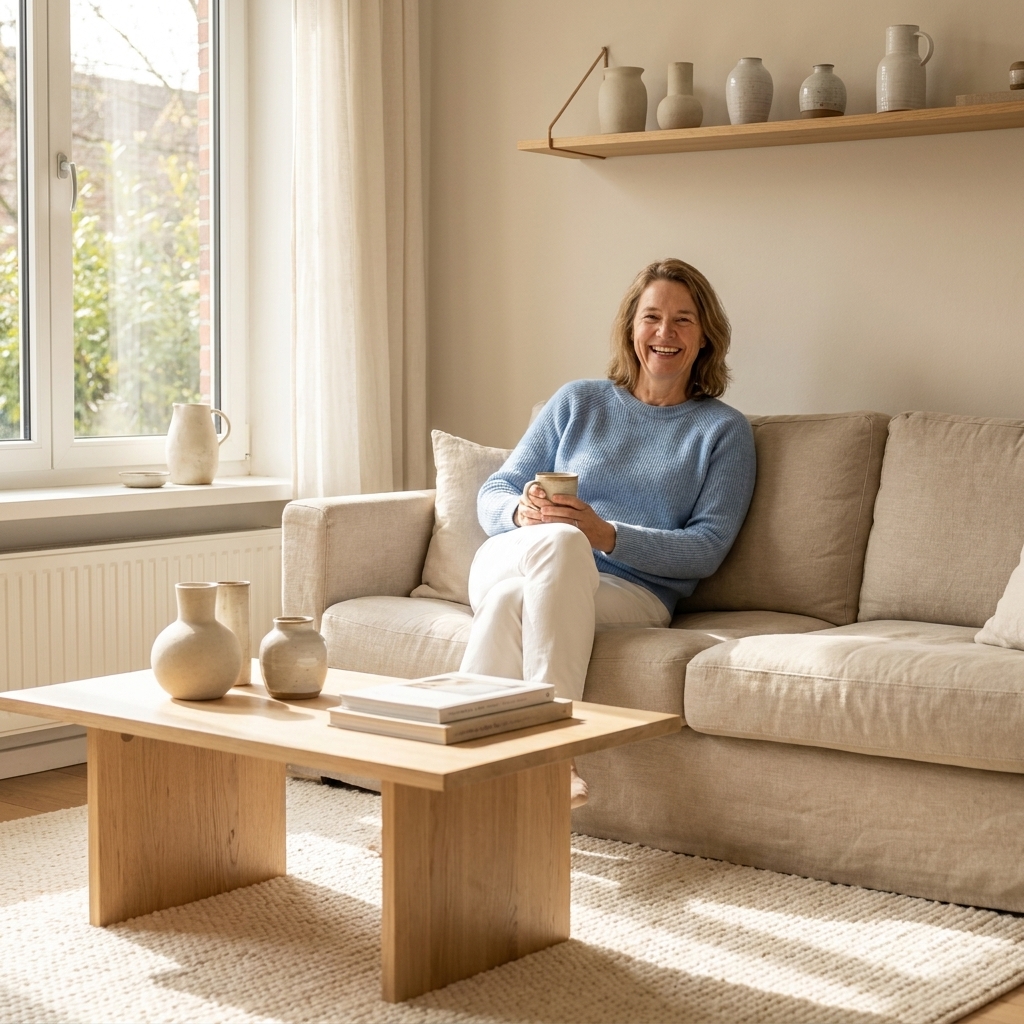
Neutral does not mean bland. It means your large, expensive, hard-to-replace items stay visually quiet enough to support whatever seasonal layer you add. Your base can still have personality. It just relies more on texture, shape, and materials than on loud color.
- Base layer: big pieces and finishes you live with every day (sofa, rug, curtains, key lighting, bed frame).
- Bridge layer: everyday accents that tie your home together (baskets, trays, candles, greenery, neutral art).
- Seasonal layer: quick swaps (pillows, throws, tabletop decor, wreaths, art prints, stems).
When the base and bridge layers are consistent, the seasonal layer becomes a fun refresh, often in about 20 minutes, instead of a three-day project.
Start with the big three
If you only focus on three categories, make it these. They do the heavy lifting, visually and practically.
1) Upholstery: choose forgiving neutrals
Your sofa, armchairs, and dining chairs set the tone. My favorite “works-with-everything” upholstery colors are:
- Warm ivory (cozy with autumn, crisp with winter)
- Oatmeal (soft, welcoming, hides life better than pure white)
- Greige (a balanced mix of gray and beige that adapts to warm or cool accents)
- Soft camel (adds depth without locking you into a color palette)
Clara tip: If your household is messy in a lovable way, prioritize performance fabrics, slipcovers, or a textured weave. Texture often disguises crumbs and pet hair better than smooth flat weaves, though very loopy fabrics can also trap it.
2) Rugs: pick a pattern that reads neutral
A rug can have pattern and still act neutral if the contrast is low and the color family is calm. Look for:
- Vintage-style prints in sand, clay, taupe, and faded charcoal
- Natural fiber rugs (jute, sisal blends) for texture
- Subtle stripes or micro-patterns that do not compete with seasonal decor
Skip bold seasonal colors for rugs. A pumpkin-orange rug in October sounds fun until April shows up.
3) Window treatments: keep them light and consistent
Curtains take up a lot of visual space. In most rooms, I recommend:
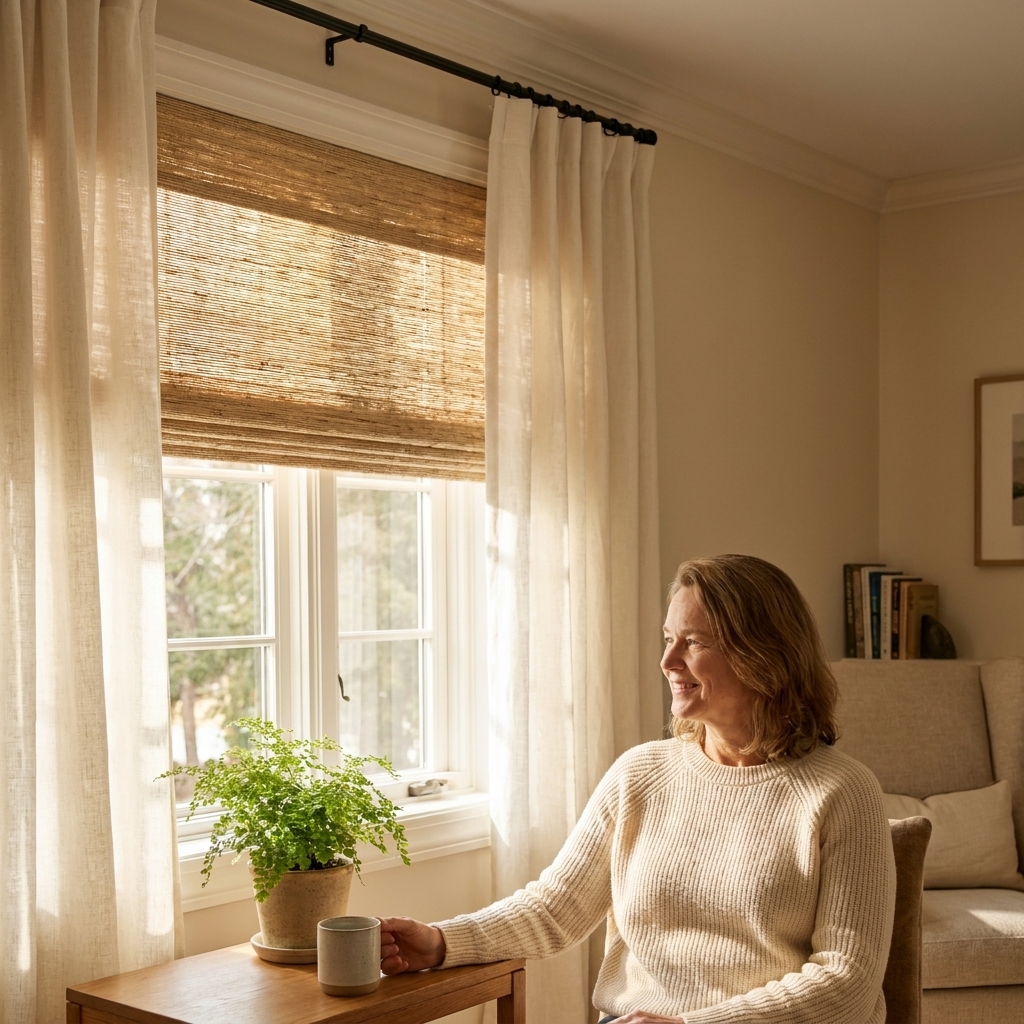
- Off-white or flax linen-look panels
- Simple woven shades in natural tones
- Hardware in a classic finish you can repeat (matte black, aged brass, or brushed nickel)
Try to keep finishes to one or two metals across a space so the backdrop feels calm, not patchy.
This gives you a clean backdrop for seasonal garlands, wreaths, and twinkle lights without visual chaos.
Use a flexible palette
The easiest neutral bases use a tight palette with built-in variety. Here is my go-to recipe:
- Two neutrals: one light (cream) and one mid-tone (oatmeal or greige)
- One wood tone: light oak or warm walnut, pick the one you love and repeat it
- One metal: aged brass for warmth or matte black for crisp contrast
- One “quiet color” accent: olive, muted navy, terracotta, or dusty rose in tiny doses
That quiet accent is a lifesaver. It keeps the home from feeling like a blank rental, and it makes seasonal colors feel intentional. For example: olive looks gorgeous with fall copper, winter cranberries, and spring florals.
One more base detail that matters: consistent lighting. Swapping to the same warm white bulb color (and matching temperatures within a room) instantly makes neutrals feel cozier and more intentional.
Build a bridge decor kit
This is a common merchandising trick: you create an everyday styling kit that stays out year-round. Seasonal items rotate in and out around it.
Bridge staples that work anywhere
- Trays: one for the coffee table, one for the kitchen island, one for the entry
- Candle holders: simple glass hurricanes or matte ceramic
- Vases in two sizes: one bud vase, one medium vase for stems
- Baskets: for throws, extra pillows, and quick “tidy up” moments
- Books: neutral spines, or (if you like a uniform look) covered in kraft paper
- Greenery: faux olive or eucalyptus, or a real plant that makes you feel successful
When the bridge kit is consistent, seasonal styling is as simple as swapping what is inside the tray, what is in the vase, and what is on the mantel.

Create swap zones
Instead of spreading seasonal decor everywhere, choose a few high-impact spots and make them your official seasonal zones. This keeps your home calm and keeps your storage bins from multiplying like gremlins.
My favorite swap zones
- Front door: wreath and doormat, maybe a lantern or two
- Entry table: one tray, one vase, one seasonal moment
- Fireplace mantel or console: garland, art swap, candle lineup
- Coffee table: a bowl or tray that changes with the season
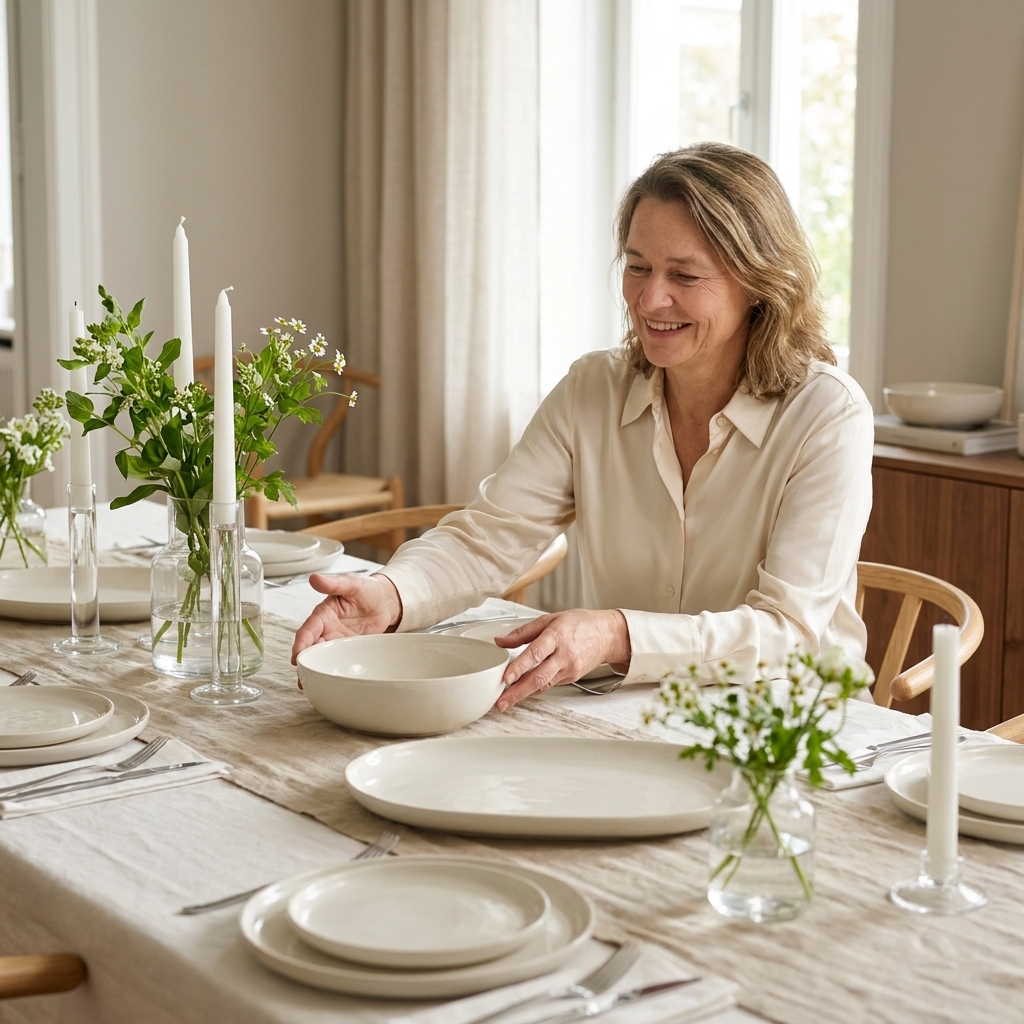
- Dining table: runner and centerpiece
- Powder room: hand towel, soap label color, small stem
Give yourself permission to leave bedrooms and less-used corners alone. A few strong moments make the whole home feel seasonal.
Quick swap example: My entry tray in fall is amber glass + a little bowl for candy and keys. In winter, I keep the same tray but switch in a tiny evergreen, a brass candle, and matches. Same footprint, totally different mood.
Keep anchors neutral
Anchor pieces are the items that would be annoying to replace each season. Keep these neutral and high quality when possible:
- Large lamp bases
- Dining table runner (choose flax or natural linen)
- Everyday dinnerware (white, ivory, or stoneware)
- Basic throw blankets (cream, taupe, or camel)
- Artwork frames (wood or black)
Then go playful with the easy stuff:
- Pillow covers
- Stems and florals
- Candles
- Mini figurines and tabletop accents
- Seasonal art prints you can swap into existing frames
Real-life example: I keep two 20x30 frames in my living room year-round. The only thing that changes is the print inside. Pumpkins and sketchy bats in October, snowy landscape in December, soft botanicals in spring. Same frames, same nails, totally different vibe.
Make swaps fast
This is where “organized Clara” shows up. If you want seasonal decorating to feel light and fun, the system matters as much as the style.
Use pillow inserts and rotate covers
Instead of storing bulky pillows, store covers. Invest in a set of good inserts (feather or down-alternative) and buy seasonal covers in the same sizes. Your linen closet will thank you.
Standardize your frame sizes
Choose 2 to 4 frame sizes you repeat around the house. Then print seasonal art to fit those exact sizes. No new frames every holiday.
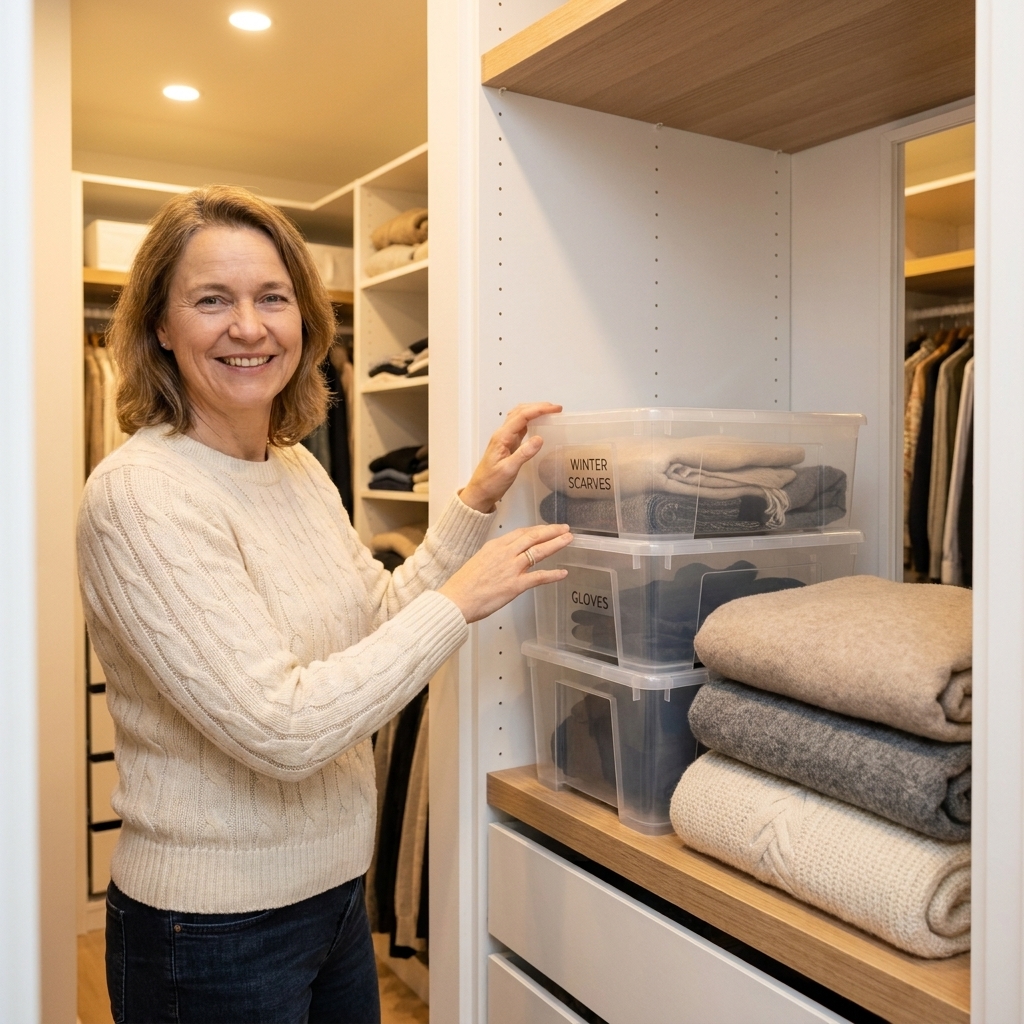
Label bins by zone, not by holiday
Here is my favorite trick: label storage by where it goes, not the holiday. Examples:
- “Mantel”
- “Front Door”
- “Dining Table”
- “Kitchen Touches”
When you decorate, you grab the bin for the zone and you are done. No dumping five bins on the floor to find one candle holder.
Rotate with intention
If a seasonal item did not make you happy this year, donate it, gift it, or recycle it responsibly so it does not become clutter you store forever. I also love reusable faux stems and sturdy garlands for this reason: you get the “moment,” minus the annual rebuy.
Seasonal color swaps
If choosing seasonal colors stresses you out, lean on classic pairings that play nicely with a neutral base.
Fall
- Rust, copper, amber, and deep olive
- Textures: chunky knits, wood, dried stems, matte ceramics
Halloween
- Black, bone, smoky gray, and muted orange
- Textures: velvet pillow covers, taper candles, branches
Winter holidays
- Evergreen, cranberry, champagne gold, and ivory
- Textures: glass, brass, twinkle lights, faux fur
Spring
- Sage, buttercream, blush, soft blue
- Textures: rattan, fresh florals, light linen
Summer
- White, sand, ocean blue, sunny citron
- Textures: woven baskets, crisp cotton, citrus in a bowl
Because your base is neutral, you can go a little bolder in the seasonal layer without it feeling like your living room is wearing a costume.
Common mistakes
- Buying a trendy base color you do not truly love. If you are sick of it by February, you will resent every seasonal swap.
- Mixing too many wood tones with no plan. Pick one dominant wood tone and one supporting tone. Repeat them on purpose.
- Letting seasonal decor become the bridge decor. If your everyday look relies on seasonal items, your home will feel “undone” in the off-season.
- Storing by holiday only. You will waste time. Store by zone so setup is quick.
A simple weekend plan
If you want a clear starting point, here is the two-day plan I recommend.
Day 1: Edit and calm the visuals
- Choose your base palette (two neutrals, one wood, one metal).
- Remove decor that fights your palette and feels visually loud year-round.
- Group what you are keeping into “bridge” (everyday) and “seasonal” (rotate).
Day 2: Build the swap zones
- Pick 3 to 5 seasonal swap zones.
- Create a simple bridge setup for each zone (tray, vase, candle, bowl).
- Choose one storage bin per zone and label it.
By the end of the weekend, you will have a home that looks finished every day, and is ready to turn festive on command.
Budget-friendly note: You do not have to replace big-ticket items to make this work. If you already have a bold sofa or busy floors, treat that as your anchor and quiet the rest with a neutral rug, simple curtains, and a tight metal and wood plan. Slipcovers and pillow covers can do a lot of heavy lifting for not a lot of money.
FAQ
Can a neutral base still feel cozy?
Absolutely. Cozy comes from texture and warmth, not loud color. Layer linen, knits, woven baskets, warm bulbs, and natural woods. A neutral room with the right textures feels like a soft landing pad.
What if my house already has bold permanent finishes?
Work with what you have. If you have strong floors, countertops, or a colorful couch, treat that as your “anchor” and keep everything else calmer. You can still use the swap-zone method, just choose seasonal colors that harmonize with your permanent feature.
Do I have to get rid of my colorful decor?
Nope. Just decide what is year-round and what is seasonal. You might keep a couple of colorful art pieces you love, and make everything around them more neutral so seasonal accents do not clash.
What are the easiest items to swap for a seasonal look?
Pillow covers, throws, stems in a vase, a wreath, and one framed print. Those five changes can carry an entire room into the next season, often in under an hour.
My favorite mindset shift
Seasonal decorating feels overwhelming when every holiday requires a full reset. A neutral home base gives you a steady, calming backdrop so the seasons feel like a joyful accessory, not a home makeover.
And if you ever feel behind, remember: you do not need to decorate every surface to create memories. One beautiful swap zone, a candle lit at dusk, and a wreath on the door can do more than a dozen cluttered knickknacks ever could.