
From shaping stems to choosing the right vase and mixing lifelike greenery, these easy pro techniques make faux spring arrangements look completely natural.
The Festive Dwell
Faux vs. Dried Flowers for Spring Wreaths
Choosing between faux and dried flowers for a spring DIY wreath? Compare cost, realism, durability, placement, and crafting tools so your door decor looks fresh all season.

Clara Jenkins
Clara Jenkins is a former visual merchandiser and lifelong holiday enthusiast who believes every season is worth celebrating. She helps readers transform their everyday spaces into magical, welcoming homes through budget-friendly DIYs, elegant tablescapes, and clever styling tricks. When she isn't untangling fairy lights or hot-gluing autumn wreaths, Clara can be found hunting for vintage ornaments at local flea markets.
Published October 17, 2026
Updated October 17, 2026
Spring wreath season always sneaks up on me. One minute I am still brushing pine needles out of my entryway rug, and the next I am craving tulips, soft greens, and something cheerful on the front door. The big decision that changes everything (budget, mess, how long it lasts, even where you can hang it) is your flowers: faux or dried.
I have made wreaths with both, and I truly love both for different reasons. Below is the real-life, craft-table comparison so you can pick the best florals for your space, your schedule, and your patience level.

Quick answer: which should you choose?
- Choose faux flowers if you want a wreath that stays crisp for years, you want maximum control over color and shape, or you need something that generally handles the outdoors better than dried. For an exterior door, look for outdoor-rated or UV-resistant faux when you can.
- Choose dried flowers if you love natural texture, want that airy, gathered-from-the-garden look, enjoy working with organic materials, and you can display it in a protected spot (or indoors).
- Choose a hybrid if you want the best of both: faux greenery for structure plus dried or preserved accents for texture.
When faux wins
Faux florals have come a long way from the shiny silk daisies of my childhood craft bin. Today you can find foam tulips with veining, realistic ranunculus, and peonies that read beautifully from the street.
Pros
- Longest lifespan: With basic care, a faux wreath can be your spring “investment piece” for multiple seasons.
- Beginner-friendly: Stems are predictable, petals do not crumble, and you can reposition things without destroying them.
- Fuller look with less volume: Faux blooms stay open, so you get that lush look without needing as many stems.
- Color control: You can match your door color, porch pillows, or indoor palette exactly.
- Allergy-friendly: No pollen, no scent, no surprises.
Cons
- Upfront cost can be higher: High-quality faux stems add up quickly, especially for big blooms.
- Sun and heat can be tough: Direct sunlight can fade certain dyes over time, and some plastics can warp in extreme heat. Outdoor-rated faux helps, but nothing loves nonstop UV.
- Can look “too perfect”: The fix is easy (mix textures, add natural elements), but it is something to watch for.

When dried wins
Dried flowers bring instant romance and texture. They are imperfect in the best way: wispy, papery, airy. If you love a slightly vintage, cottagey vibe, dried florals practically do the styling for you.
Pros
- Natural texture and movement: Dried florals look collected, not manufactured.
- Often lightweight: Especially if you are working on a smaller hoop or delicate base.
- Beautiful muted palettes: Dried colors lean soft and earthy, which reads very “spring” without being loud.
- Satisfying to craft with: If you love arranging stems like a mini florist, dried is a dream.
Cons
- Fragility: Petals can shed and stems can snap. Handling and storage matter.
- High humidity is the enemy: Damp, unventilated spaces can soften stems, deepen colors, and in worst cases encourage mold.
- Outdoor exposure is tricky: Wind and rain can shorten the lifespan fast.
- Pests are possible: It is uncommon with reputable, properly processed botanicals, but it can happen. If you are worried, inspect bundles before crafting and store extras sealed and dry.
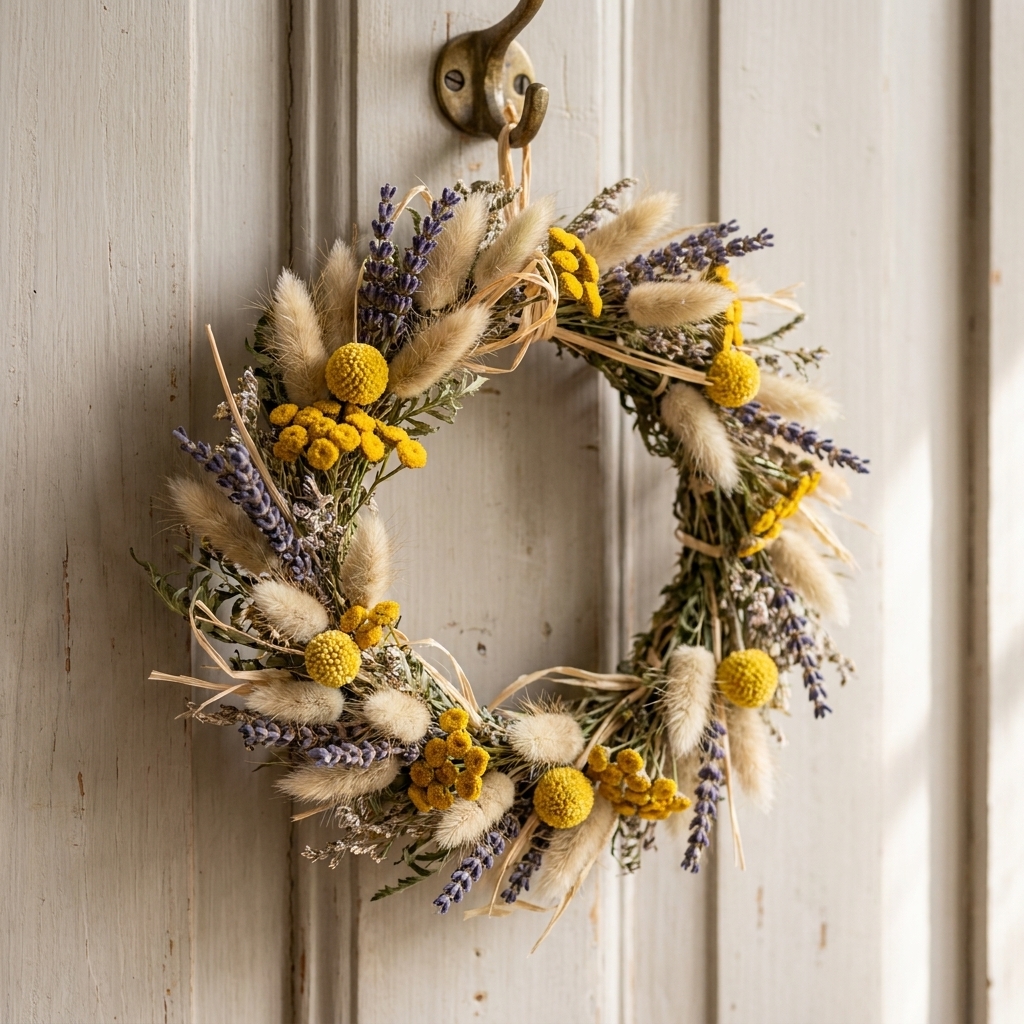
Dried vs preserved: quick note
A lot of what is sold as “dried” is actually preserved (especially eucalyptus, ruscus, and some ferns). Preserved botanicals are treated to stay flexible and hold color longer, so they often shed less than truly dried stems. The trade-off is that preserved pieces can be sensitive to heat and direct sun, and sometimes have a light scent from the preservative. For a front door, I treat preserved like dried: best in a protected spot.
Longevity: what to expect
Here is the honest timeline I share with friends when they ask why one wreath still looks cute in May and the other looks a little tired by Easter Monday. These ranges are based on what I have seen, but your results will depend on sun, rain, material quality, and how sheltered your entry is.
Faux flower longevity
- Indoors: Often 3 to 10 years (and sometimes longer if stored well).
- Covered porch: Often 1 to 5 years, depending on UV exposure, storms, and whether your stems are outdoor-rated.
- Full sun or exposed door: Expect fading sooner. Plan on refreshing a few stems after a season or two.
Dried flower longevity
- Indoors: Often 6 months to 2+ years, depending on humidity and how delicate the blooms are.
- Covered porch: Often 1 to 6 months, with some hardy varieties lasting longer in mild, dry conditions.
- Exposed outdoors: Not ideal. Wind, rain, and big temperature swings usually break them down quickly.
Pro tip: If you want the dried look on an exterior door, hang it on the inside of a glass storm door or in a sheltered entryway where it is not getting rained on or blasted with afternoon sun.
Crafting: which is easier?
Neither is “hard,” but they ask different things from you.
Faux flowers: easiest for beginners
- Stems are sturdy, so you can wire, twist, and reposition.
- You can build slowly over a few evenings without worrying about wilting or crumbling.
- Hot glue works well on many faux stems and picks, especially when paired with a base that has texture.
Dried flowers: easiest for patient perfectionists
- You will want a gentler touch and a little more time.
- Florist wire and floral tape are your best friends because glue can be messy on delicate stems.
- Expect some shedding. I always craft dried wreaths over kraft paper so cleanup is quick.
If you are the kind of crafter who likes to “audition” flowers and move things ten times before committing (hello, it is me), faux is more forgiving. If you love the slow, mindful arranging part, dried is incredibly rewarding.
Materials and tools
The base and the adhesive matter just as much as the flowers. Pick the right combo and your wreath will survive door slams, temperature swings, and curious delivery drivers.
Best wreath bases for faux flowers
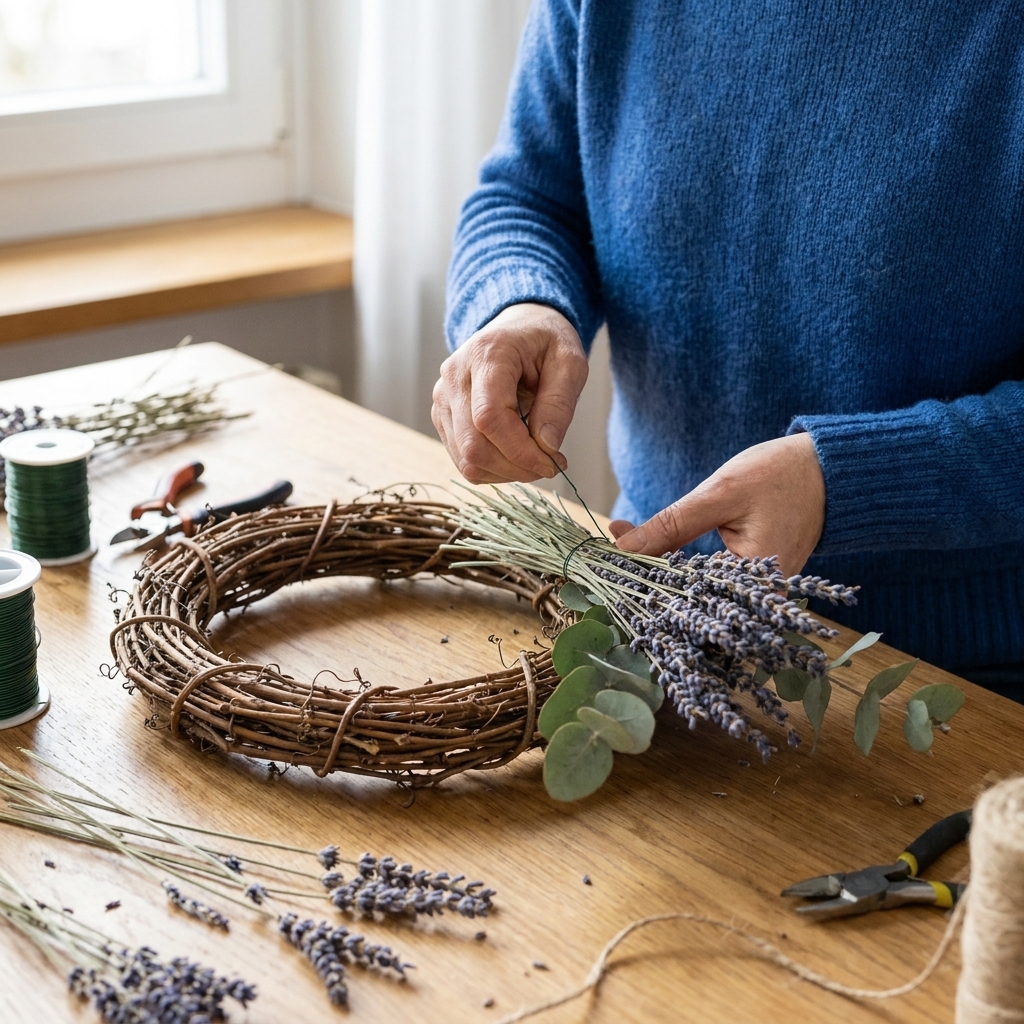
- Grapevine: My top pick. Lots of nooks for wiring stems and hiding glue.
- Wire frame: Great for airy designs. Use floral wire and bundle stems into small picks.
- Foam ring: Works, but can look bulky. Cover it with ribbon, moss, or greenery first.
Best wreath bases for dried flowers
- Grapevine: Again, a winner. It grips stems naturally and looks organic.
- Metal hoop: Perfect for a modern half-wreath. Wrap with twine or floral tape where you will attach stems.
- Straw base: Traditional and lightweight. Great if you like a fuller, garden-style ring.
Adhesives and fasteners
- Floral wire: Best for both, especially outdoors. Wire is what keeps things on when glue softens in heat.
- Hot glue: Great for faux, and for attaching small dried accents, but do not rely on it alone outside.
- Floral tape: Excellent for bundling dried stems into neat little clusters before attaching.
- Wire cutters: Non-negotiable. Your scissors deserve better.
Hanging and hardware
This is the unglamorous part that saves your paint job.
- Over-the-door hangers: Quick and sturdy, but they can scuff paint. A small felt pad where it touches the door helps.
- Adhesive hooks: Convenient, but check the temperature rating. Some adhesives fail in high heat or deep cold.
- Suction cups on glass storm doors: Useful, but they can pop off with temperature swings. I only trust them for lightweight wreaths.
Realism and style
This is where personal taste takes the lead, but here is my merchandiser brain take.
Faux looks best when you mix textures
If your wreath is all identical faux blooms, it can read flat from the curb. The trick is adding variation.
- Combine two to three flower types (like tulips + ranunculus + small filler blooms).
- Add at least two greenery textures (eucalyptus + fern, or boxwood + wispy spring grass).
- Work in one natural element (twigs, a grapevine base, a raffia bow) to soften the “store-bought” vibe.
Dried looks best when you embrace the airiness
Dried wreaths shine when they are not overpacked. Let stems stick out. Let things be a little wild. That is the charm.
- Use one statement dried flower (like strawflower or dried roses) plus supporting grasses.
- Choose a limited palette for a calm look: creamy whites, soft yellow, sage, blush.
- Consider a half-wreath on a hoop for a modern spring entry.
Budget
Both can be budget-friendly. The difference is how the cost shows up.
Faux flower budget notes
- You pay more up front for realism and fullness.
- You can build slowly by collecting stems on sale, then reuse them by reworking your wreath each year.
- One or two premium stems (like realistic peonies) plus inexpensive filler is a smart balance.
Dried flower budget notes
- Small bundles can be affordable, but specialty dried varieties can get pricey.
- You may need extra because breakage happens.
- If you have access to a garden or can forage responsibly (fallen branches, safe greenery), dried can be very economical.
My favorite “splurge and save” combo: Faux greenery garland cut into pieces for structure, then dried bunny tails or lavender for that natural, springy texture.
Weather and placement
Before you commit, stand where your wreath will hang and notice the conditions for a full day.
- Full sun: Faux can fade, dried can bleach and become brittle. Consider an indoor placement or choose a shaded spot.
- Rain exposure: Faux usually wins. Dried can sag or discolor fast.
- Wind: Faux holds up better. Dried pieces can snap or shed.
- High humidity: Faux is safer. Dried prefers dry, ventilated spaces.
If your front door is exposed, faux is usually the low-stress choice. If your door is under a deep overhang or you want a spring wreath for inside your home, dried is absolutely worth it.
Care and storage
Whatever you make, storage is the secret to a wreath that looks “new” next spring.
How to store faux wreaths
- Blow off dust with cool air (a hair dryer on cool works) before storing.
- Store in a wreath box or a large plastic bin with the wreath lying flat.
- Avoid crushing blooms. I like to nest tissue paper lightly around larger flowers.
How to store dried wreaths
- Keep it dry. Avoid basements and humid garages.
- Store in a box with plenty of space. Do not press anything against the blooms.
- If you use a dried-flower sealant or preservative spray, test first on a small piece. Some formulas can deepen color or add shine.
My 60-second checklist
- Will this hang outdoors? If yes, lean faux (and ideally outdoor-rated).
- Do I want muted, natural tones? If yes, lean dried or preserved.
- Do I have time for careful, delicate work? If no, lean faux.
- Do I want to reuse it for several springs? If yes, lean faux or a hybrid.
- Do I want a collected, airy, organic look? If yes, lean dried or preserved.
Hybrid wreaths
If you are torn, do what I do for a “pretty from the curb, charming up close” look:
- Use faux greenery (eucalyptus, lamb’s ear, fern) as your durable base layer.
- Add dried or preserved accents (bunny tails, lavender, strawflower, preserved ruscus) in small clusters.
- Finish with a natural bow (raffia, linen, or cotton) to bridge both worlds.
This combo holds up better on a porch than fully dried, but still has that natural texture that makes guests lean in for a closer look.

FAQ
Do dried flowers attract bugs on a wreath?
It can happen, but it is uncommon when you buy properly dried or preserved botanicals and store them in a clean, dry place. If you are drying your own, make sure everything is fully dry before crafting, and keep unused bundles sealed until you are ready. If you want extra peace of mind, a quick inspection and a few days in a sealed container in a cool, dry spot can help you catch issues early.
Can I hot glue dried flowers?
Yes, especially for small accents, but I prefer wiring dried stems whenever possible. Glue can look messy on delicate materials, and wire is more reliable if the wreath gets bumped.
What looks more realistic from the street?
From the curb, a well-made faux wreath usually reads more “fresh” because the blooms keep their shape and color. Up close, dried often looks more naturally nuanced. This is why hybrids are so popular in my house.
What are the best dried flowers for a wreath?
Look for sturdier options like strawflower, statice, bunny tail grass, preserved eucalyptus, lavender, and small dried craspedia. Extremely delicate petals (certain dried roses, for example) can shed more.
What faux flowers look best for spring wreaths?
Tulips, ranunculus, anemones, cherry blossoms, and small wildflower sprays are my go-tos. Choose a few “hero” blooms, then fill with buds and greenery so it does not look too uniform.
Bottom line
If you want a spring wreath that stands up to weather, handling, and multiple seasons, faux flowers are usually the easiest win, especially if you choose outdoor-rated stems for an exterior door. If you want that soft, organic, gathered feel and you can display it in a protected spot, dried (and preserved) flowers are pure spring magic. And if you want my most repeated recommendation, go hybrid: faux for structure, dried for texture, and a bow that ties it all together.
Now excuse me while I go “organize” my craft room, which is what I call pushing ribbon spools into a drawer so I can start the next wreath.