A cozy, budget-friendly Christmas wreath made with foraged pinecones, with safer drying options, glue and wire tips, and easy ways to style it for your front...
The Festive Dwell
How to Hang a Wreath Without Damaging Your Front Door
Hang a wreath on wood, metal, fiberglass, or glass without scratches or sticky residue. Use damage-free options for storm doors, tight clearances, and windy porches.

Clara Jenkins
Clara Jenkins is a former visual merchandiser and lifelong holiday enthusiast who believes every season is worth celebrating. She helps readers transform their everyday spaces into magical, welcoming homes through budget-friendly DIYs, elegant tablescapes, and clever styling tricks. When she isn't untangling fairy lights or hot-gluing autumn wreaths, Clara can be found hunting for vintage ornaments at local flea markets.
Published November 14, 2026
I have styled more front doors than I can count, and I still get a tiny jolt of panic when someone says, “Just use a nail.” If you love your door finish (or you rent), you can absolutely hang a wreath securely without holes, scuffs, or that gummy adhesive ghost that lingers until July. The key is matching the hanging method to your door material, your clearance at the top, and your wreath weight.
Before you start: quick checklist
These three minutes of prep save the finish and prevent the dreaded wreath slide.
- Weigh (or estimate) your wreath. Wreath weight varies widely by size and materials. Faux greenery on a metal frame often lands in the few-pound range, while heavily decorated wreaths can climb much higher. Choose hardware that is clearly rated above your wreath weight.
- Clean the mounting spot. Oils and dust are why hooks fail. Wipe the area with a lint-free cloth lightly dampened with isopropyl alcohol (especially for glass and metal). If your door has a delicate finish or was recently painted, test in a discreet spot first and avoid harsh solvents. Let it fully dry.
- Check door clearance. If your door is tight to the frame at the top, an over-the-door hanger can rub paint or prevent the door from latching. In that case, jump to “If there is no top clearance at all” below.
Damage-free methods
These are the options I reach for again and again because they are removable and kind to finishes when used correctly.
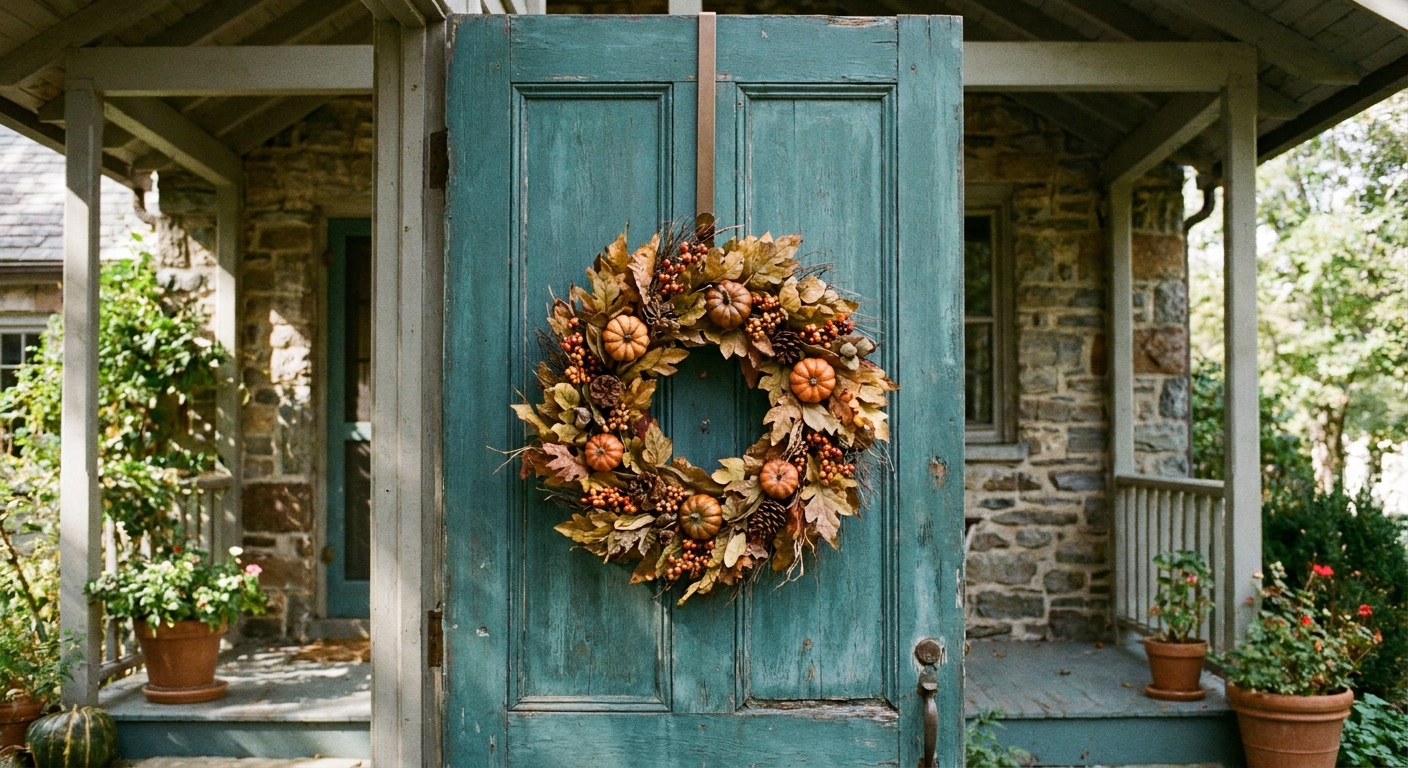
1) Over-the-door wreath hanger
Ideal for: wood, metal, and fiberglass doors with enough top clearance and no storm door interference.
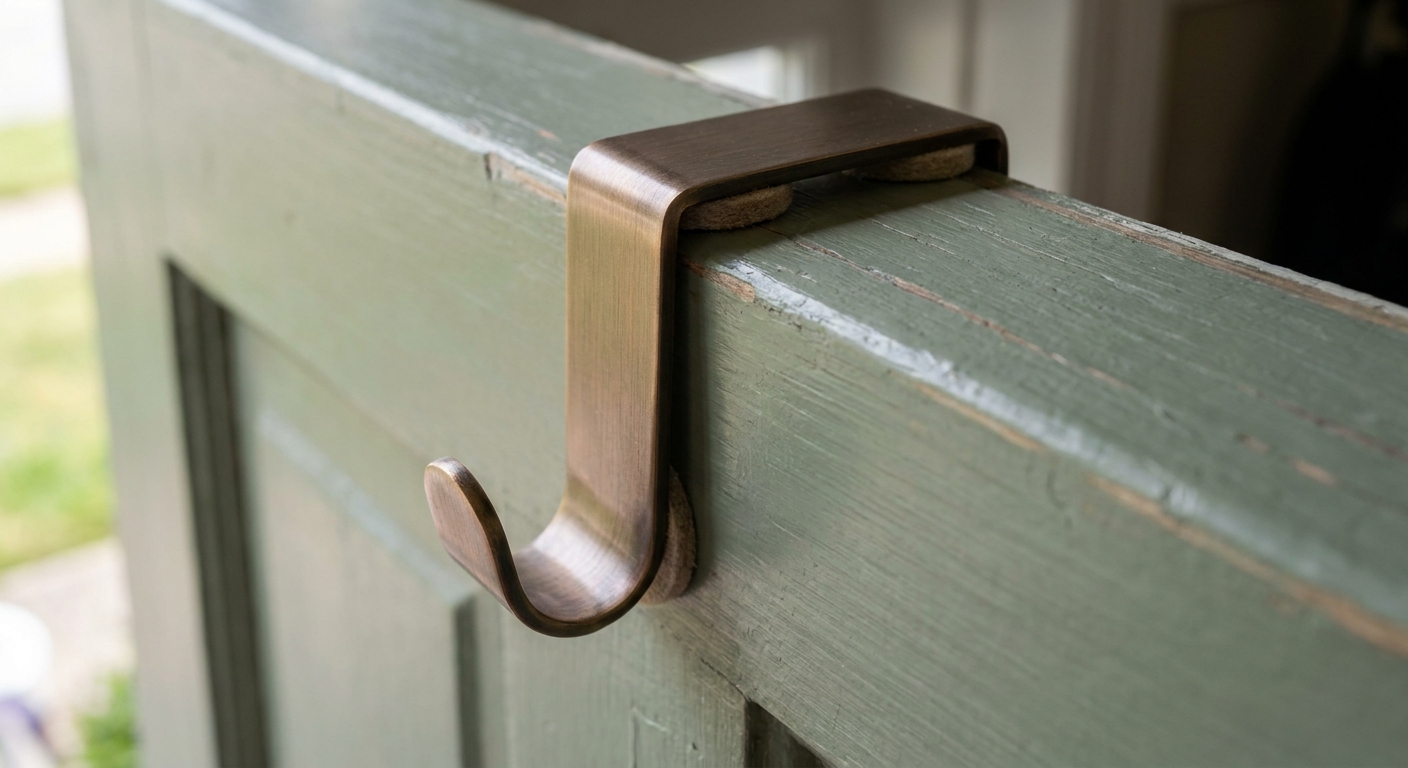
- Choose a hanger with a smooth back and a finish that will not flake.
- Add a thin strip of felt or soft gripper pads to any contact points to prevent scuffs.
- Hang the wreath from the lower hook, then close the door slowly to confirm it does not bind or scrape.
Prevent slipping: If your wreath shifts when the door moves, tighten the hang point by looping floral wire or a zip tie around the wreath form to create a smaller hanging loop that sits neatly on the hook.
2) Ribbon over the top
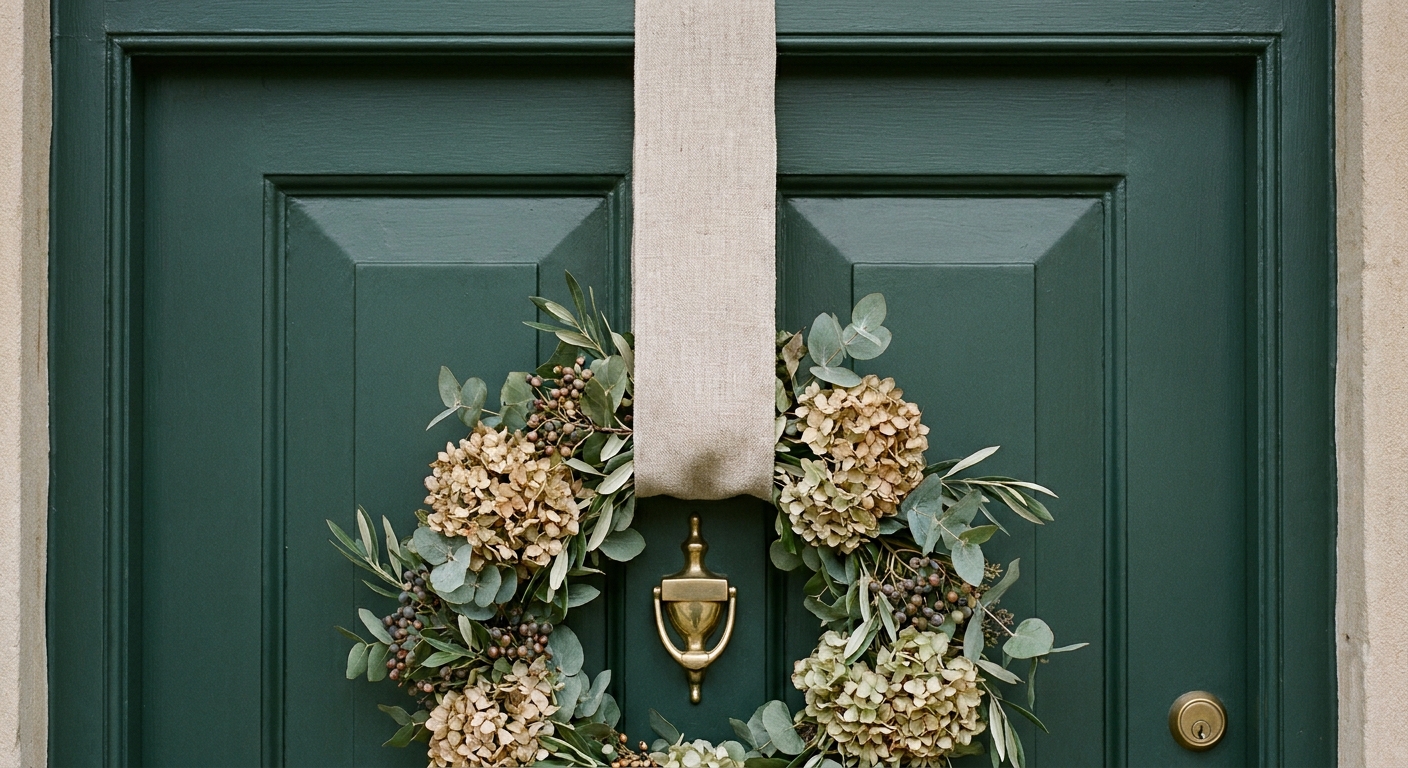
Ideal for: painted wood, stained wood, fiberglass, and doors where you want the hanger hidden.
- Use a wide ribbon (about 1.5 to 2.5 inches) or a sturdy fabric strap. Thin ribbon can bite into finishes and tends to creep.
- Feed the ribbon over the top of the door and attach the wreath to the outside end.
- On the inside end, tie the ribbon to a secure anchor such as a small dowel, a sturdy interior hook, or a stable object that cannot tip or slide when the door moves. Keep it out of traffic areas, and away from kids and pets.
Protect the top edge: Place a strip of soft felt where the ribbon crosses the top of the door. This is especially important on stained wood.
Prevent latch issues: Keep the ribbon aligned near the hinge side, not the latch side, so it does not interfere with weatherstripping.
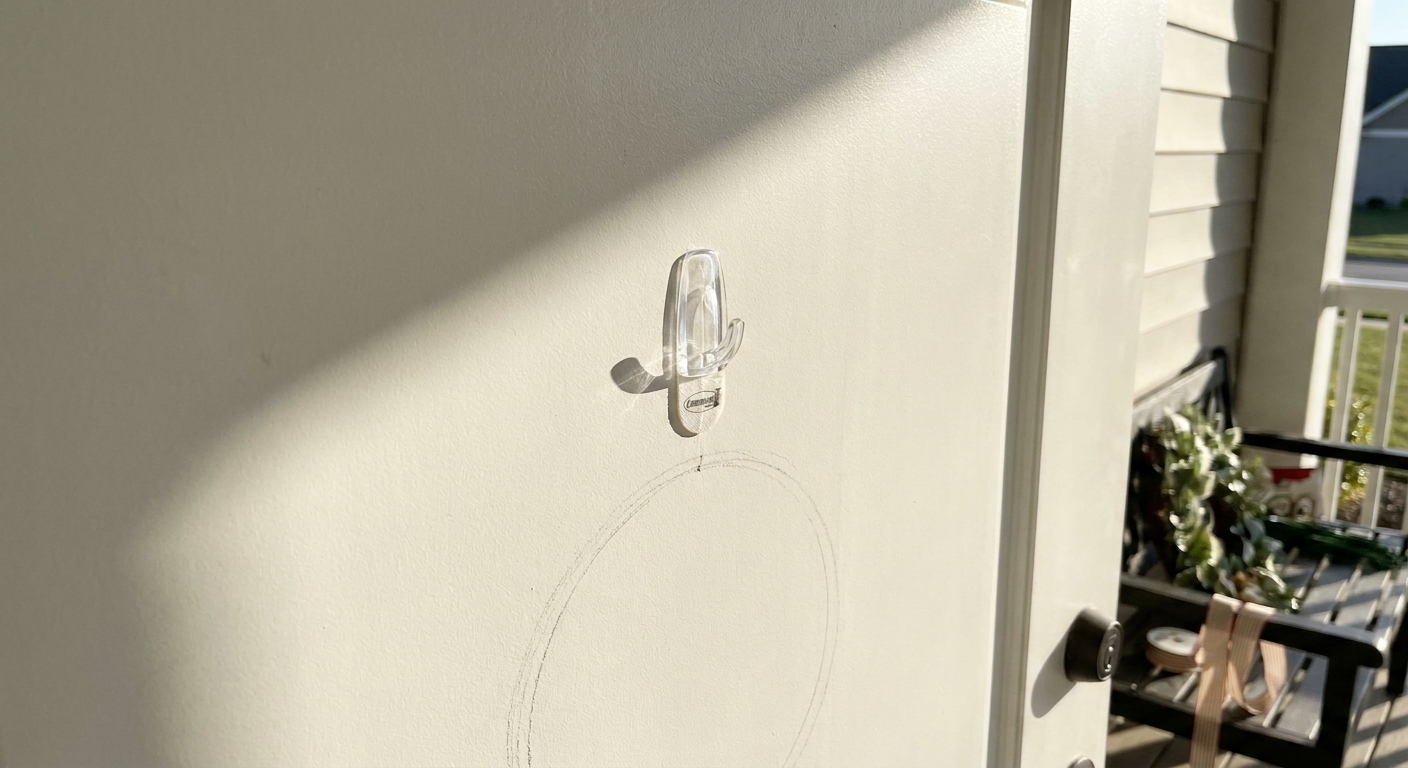
3) Removable hooks
Ideal for: smooth painted doors, metal doors, glass inserts, and some fiberglass finishes.
- Use hooks that are explicitly removable and rated to hold more than your wreath weighs.
- Apply to a clean, dry surface and press firmly for the recommended time.
- Wait the full curing time listed on the package. Depending on the product and conditions, this can be anywhere from about 1 to 24 hours for best hold.
Removal tip: When the season ends, pull the adhesive tab straight down, slowly (not out toward you). This reduces the chance of lifting paint.
4) Magnetic wreath hanger
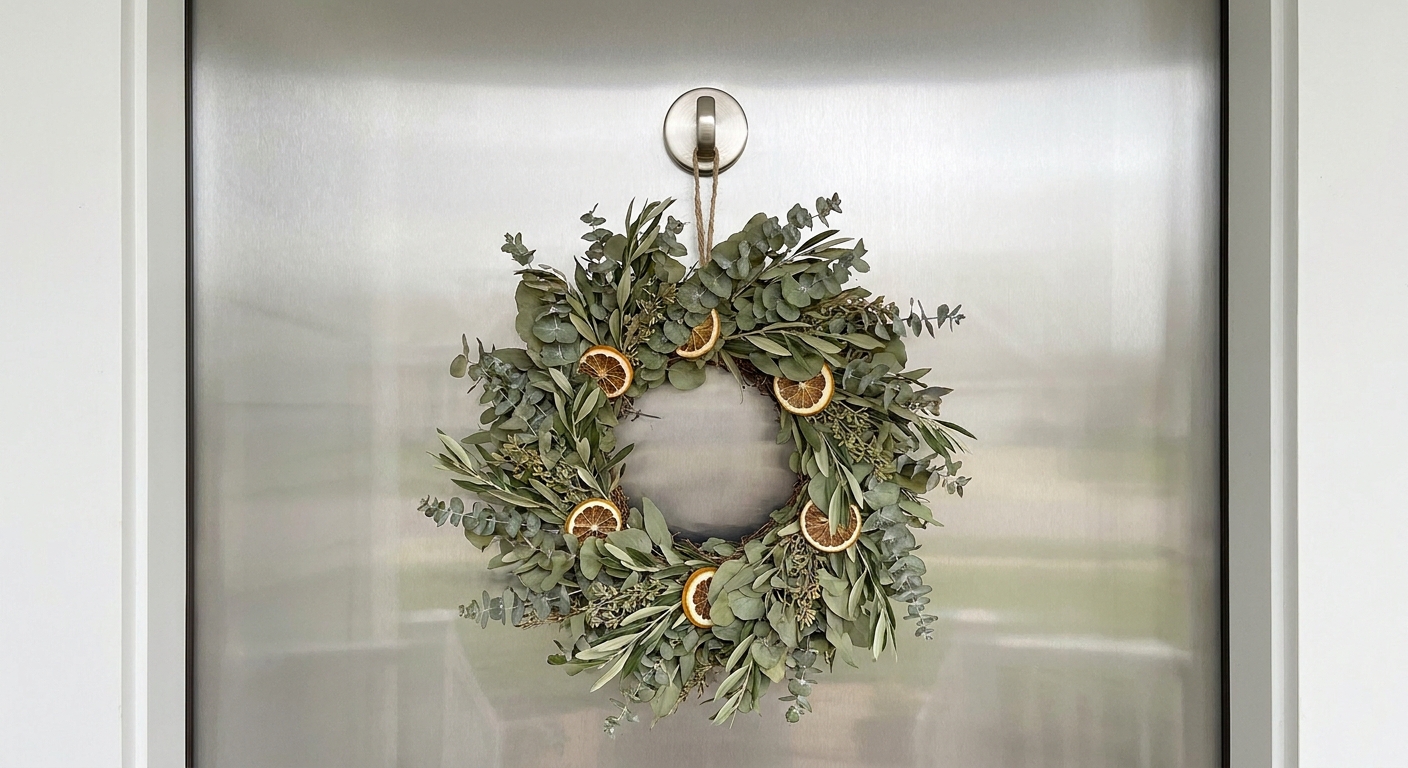
Ideal for: steel front doors where you want truly no-contact hardware.
- Confirm your door is steel: a fridge magnet should stick strongly.
- Choose a magnet rated well above your wreath weight.
- Place it, test it with a gentle tug, then hang the wreath.
Prevent sliding: Clean the door first. Dust acts like tiny ball bearings. On very slick paint, condensation and temperature swings can also encourage creeping. If it still moves, use a magnetic hook with a rubberized backing.
Best method by door type
Wood doors
Wood finishes can scratch and stain easily, so prioritize methods that spread pressure and avoid adhesive contact with delicate finishes.
- Safest: ribbon over the top with felt protection.
- Also good: over-the-door hanger with felt pads.
- Use caution with: removable hooks on older paint or flaky varnish. Test in an inconspicuous spot first.
Metal doors
Metal is typically durable, but paint can still scuff. Direct sun and extreme heat or cold can also reduce adhesive performance, so follow cure times and product directions.
- Safest: over-the-door hanger with felt pads.
- Great option: removable hooks if the surface is smooth and you follow cure times.
- If steel: magnetic hanger is wonderfully clean and easy.
Fiberglass doors
Fiberglass can be smooth, or it can have a woodgrain texture. That texture looks great, but it can make adhesives less reliable and can even imprint if something presses hard in one spot.
- Safest: over-the-door hanger with padding, if you have clearance.
- Also good: ribbon over the top with felt at the edge.
- Use caution with: removable hooks on textured or faux-woodgrain finishes. If you try one, test first and do not push past the rating.
Glass doors or glass inserts
Glass is perfect for removable hooks, as long as you prep it properly.
- Best: removable hook applied to glass after cleaning with alcohol.
- Avoid: over-the-door hangers that press against glass or create torque on a glass insert frame.
Stop swinging and scratching
If your wreath is behaving like a pendulum every time the door closes, these quick tweaks make it look professionally styled and keep the finish safe.
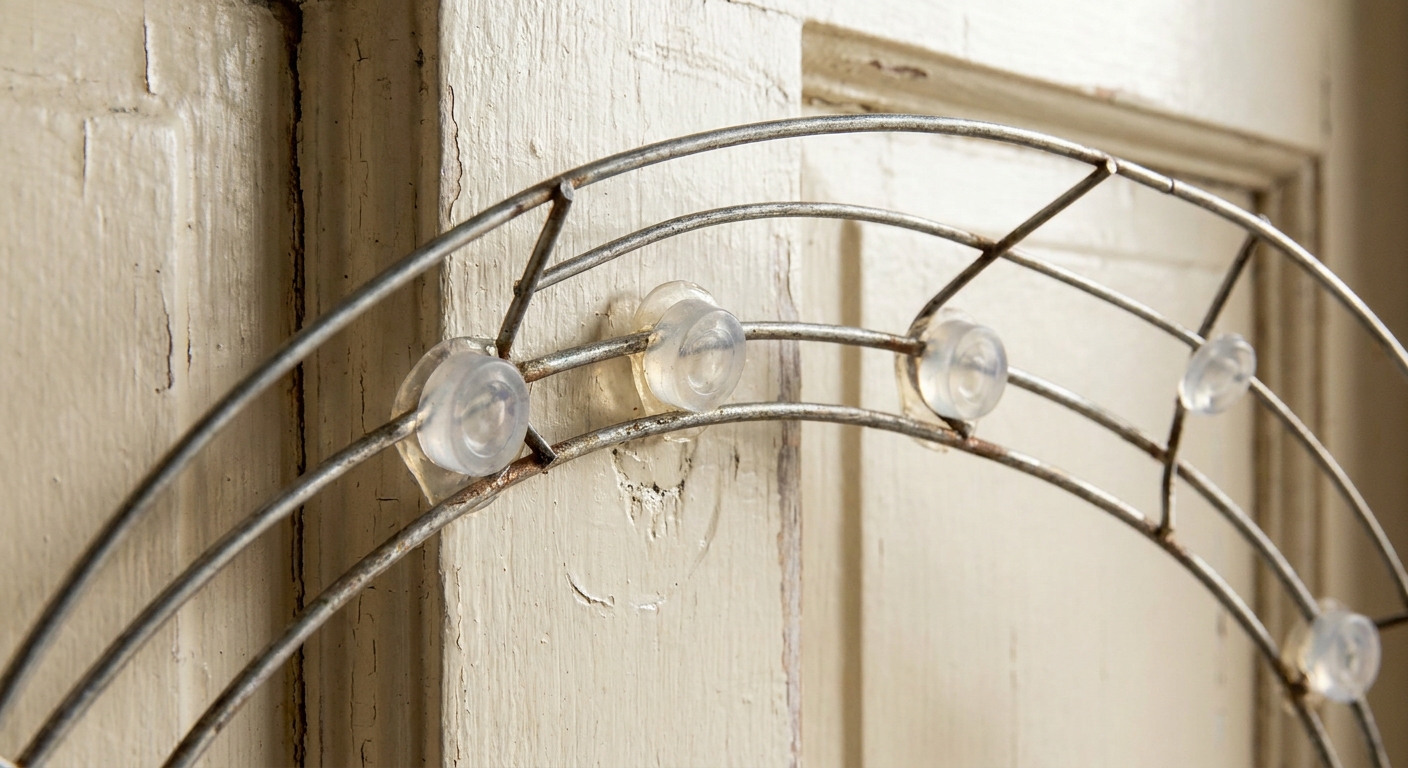
- Add bumpers: Stick small clear silicone bumpers to the back of the wreath frame so it sits off the door slightly and does not scrape.
- Anchor the bottom: Use a small removable hook low on the door and a short piece of clear fishing line from the wreath frame to the hook. Place it where it will not get kicked, caught on clothing, or hit during cleaning.
- Adjust the hang point: A wreath that hangs too far forward swings more. Shorten the loop so it sits closer to the door surface.
- Mind the placement: Aim for a height that looks centered on your door panels or glass. A classic “eye level” range (roughly 57 to 60 inches) is a helpful starting point, but the door design matters more than the number.
Storm doors and tight fits
Storm doors are a very common reason people accidentally scuff their main door. The good news is you still have damage-free options.
If you have a storm door
- Hang the wreath on the storm door using a removable hook rated for the weight, placed on glass or a smooth section.
- Use a storm-door hanger designed to clamp over the top edge with slimmer hardware (this helps clearance).
- Go lighter and slimmer: thickness matters with storm doors. A bulky wreath can bump the glass, interfere with handles, or scrape the main door behind it.
- Watch your hardware: Make sure the wreath does not cover a peephole or collide with a knocker or handle set.
Watch the swing: Storm doors move faster with wind. Add bumpers to the wreath back and anchor the bottom if needed.
If there is no top clearance at all
When the door fits tight inside the frame, skip anything that drapes over the top.
- Best bet: a removable hook at the correct height (on a smooth painted surface, metal, or glass).
- For steel doors: magnetic hanger.
- For delicate paint: the ribbon method can still work if you anchor it to an interior point without compressing the top edge, but only if the door still closes freely. If it rubs, do not force it.
What not to use
- Nails, screws, or cup hooks: even tiny holes can invite moisture into wood and may affect warranties. If your door is new, check the warranty before you drill.
- Hot glue on the door: it can lift paint and leave cloudy spots.
- Regular tape or packing tape: residue and paint lift are common.
- Unrated suction cups outdoors: temperature swings and humidity cause surprise drops.
Troubleshooting
My removable hook keeps falling off
- Clean with alcohol and let it dry fully before reapplying.
- Make sure you followed the product cure time (this can vary a lot).
- Move to a smoother spot. Some doors have subtle texture that reduces grip.
- If your porch gets direct sun or extreme cold, switch to an over-the-door hanger or ribbon method. Adhesives can struggle in temperature swings.
My over-the-door hanger scratched the top edge
- Stop using it immediately and add felt pads before rehanging.
- Check that the hanger is not too thick for your clearance, which causes grinding when you close the door.
My wreath slides down a ribbon
- Use wider ribbon and ensure the knot is tight.
- Add a small zip tie through the wreath frame to create a firm hanging loop.
- Anchor the inside end around a dowel so it cannot creep.
FAQ
Will removable hooks damage paint?
If the paint is fully cured and in good condition, removable hooks usually come off cleanly when you remove them correctly. Problems happen with older paint, lower-quality paint, or surfaces that were not cleaned first. When in doubt, test in a discreet spot and choose the ribbon method for the gentlest option.
Can I hang a wreath on a glass storm door?
Yes. A removable hook on clean glass is one of the most secure, damage-free methods. Just follow cure times and avoid placing the hook where it will interfere with handles or frames.
How heavy is too heavy for damage-free hanging?
Once you get into very heavy wreaths (think large, densely decorated pieces), it becomes harder to guarantee a damage-free hang on every door type and in every season. Use the highest-rated option that suits your surface, follow the product directions, and consider a lighter wreath for everyday use to reduce stress on both the finish and the hardware.